

Woven Wire Versus Barbed Wire: Which Fence?
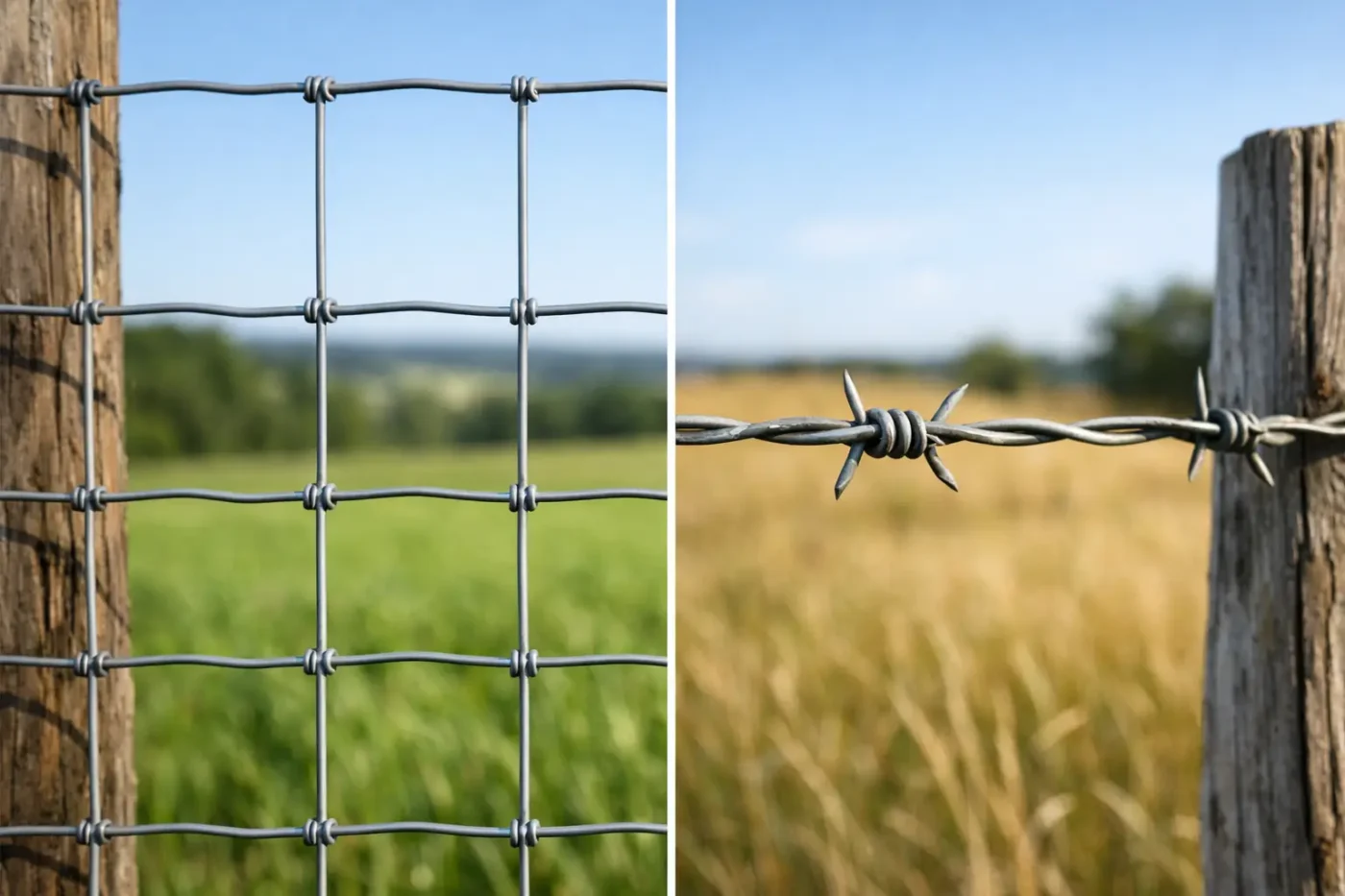
A fence that holds quiet cattle can be completely wrong for sheep, horses or working dogs. The real decision in woven wire versus barbed wire is not which material is tougher. It is which fence suits the animals, pressure points, terrain and daily use of your property.
For rural and acreage owners, fencing is a working asset. It needs to contain stock, protect boundaries, stand up to weather and remain practical to repair years down the track. Choosing the right wire at the start can prevent escapes, injuries and the cost of rebuilding a fence that was never fit for purpose.
Woven Wire Versus Barbed Wire: The Main Difference
Woven wire, also called netting or stock mesh, uses horizontal line wires joined by vertical stay wires. It creates a physical barrier with smaller openings near the bottom and generally larger openings higher up. Different knot styles and wire specifications are available for different jobs, from general livestock fencing through to closer-spaced dog-proof and exclusion fencing.
Barbed wire is made up of plain line wire with sharp barbs spaced along it. It relies less on forming a solid barrier and more on discouraging animals from pushing through, leaning over or rubbing against the fence. It is commonly installed as several strained wires between posts.
That distinction matters. Woven wire stops smaller animals from passing through the fence openings. Barbed wire provides a deterrent, but animals can still go under, between or through the lines if the fence is not properly designed, strained and maintained.
When Woven Wire Is the Better Choice
Woven wire is usually the stronger option where secure containment matters more than the lowest upfront cost. It suits sheep, goats, dogs, alpacas, poultry areas and mixed small-stock properties because it closes off the gaps that plain wires leave behind.
It is also a practical choice for cattle when calves are a concern. A conventional barbed-wire fence may hold mature cattle well enough, but young stock can test the lower space, particularly where feed is greener on the other side. Woven wire gives the fence more stopping power from ground level upwards.
For acreage properties, mesh fencing is often selected around house paddocks, gardens, laneways and boundaries that need a tidier, more secure finish. If neighbouring dogs, wandering pets or regular foot traffic are part of the picture, a well-built woven wire fence provides greater peace of mind than a few barbed strands.
The trade-off with mesh fencing
Woven wire costs more in material and generally takes more care to install. It needs properly set end assemblies, suitable strainer posts, correctly spaced intermediates and even tension across the full length. A mesh fence that is poorly strained can sag, buckle or lose its shape, especially on uneven ground.
It can also trap fallen branches, flood debris and vegetation more readily than plain wire. Along creek flats, heavily timbered blocks or neglected boundaries, keeping the fence line clear is part of making woven wire last. Forestry mulching or targeted vegetation work before fencing can save considerable time and prevent damage once the fence is up.
Where Barbed Wire Still Makes Sense
Barbed wire remains a practical rural fencing material when used for the right application. On larger cattle properties, it can be an economical way to divide paddocks, mark boundaries or create an internal fence where stock pressure is predictable and regular inspections are possible.
It is lighter to transport, generally quicker to install and easier to repair after a tree limb or vehicle damages a section. For a long run across open country, those benefits add up. A well-built multi-strand barbed-wire fence with sound timber, steel or concrete posts can give dependable service for cattle management.
Barbed wire can also work alongside other materials. A barbed top wire is sometimes used to discourage cattle from leaning over a fence, while a plain wire or electric offset can help keep pressure off the main fence line. The best arrangement depends on the stock and the job, rather than following one standard layout everywhere.
The limits of barbed wire
Barbed wire is not a good all-round answer. It is generally unsuitable for horses due to the risk of serious cuts and entanglement. Horses can panic when caught, and sharp wire can turn a minor fence incident into an expensive veterinary problem.
It is also a poor choice as the only barrier for dogs, goats, lambs or animals likely to squeeze through gaps. An energetic dog may go beneath the bottom wire. Goats may climb or force their way through. Sheep can push under a loose line, particularly around low spots and gullies.
A barbed-wire fence can appear economical until stock get out repeatedly. Time spent chasing animals, repairing damaged crops, dealing with neighbour concerns or fixing weak sections soon changes the value equation.
Match the Fence to Your Animals
Cattle are often the most flexible. For quiet adult cattle on broad paddocks, barbed wire may be adequate. For breeding operations, calves, higher stocking rates or boundary fencing beside roads, woven wire or a combination design is usually worth considering.
Sheep and goats need closer control. Woven wire with suitable spacing is the practical starting point, with fence height and optional electric wires chosen around the type of stock and predator pressure. Goats are particularly hard on fences, so strong strainers, durable posts and good ground clearance are essential.
Horses need visibility and safety. Post and rail, equine mesh, plain wire systems and purpose-designed electric fencing are commonly better suited than barbed wire. The fence should be visible, free of sharp hazards and built with enough strength to cope with a horse testing it.
For dogs and rural properties with domestic pets, the bottom of the fence is as important as its height. Woven wire can help prevent dogs leaving the property or other animals entering it. If digging is an issue, the fence design may need to include a buried apron, closer ground fixing or another appropriate measure at known escape points.
Ground Conditions Matter as Much as Wire Choice
A fence is only as strong as the posts and end assemblies holding it. Long straight runs on firm ground are relatively simple. Rocky ridges, wet creek crossings, steep slopes and soft coastal soils require more planning.
On undulating country, woven wire needs careful contouring so it follows the ground without leaving gaps underneath. Barbed wire can be more forgiving on rough terrain, but it still needs correct post spacing and tension to avoid sagging in gullies or lifting too high over rises.
Drainage should also be considered before posts go in. Water moving across a track, gateway or low paddock can scour soil from beneath a fence and create an easy exit point. In some cases, a small drainage solution, reshaped crossing or reinforced low section is more useful than simply adding more wire.
Build for Repairs, Gates and Future Use
Think beyond the fence line itself. Gates need enough width for tractors, utes, horse floats, livestock trailers and machinery. Gate posts need to carry the load without pulling over, and gateways should sit on ground that drains well rather than turning into a bog after rain.
If the property may change use later, build with that in mind. A cattle paddock may become a horse area. A quiet acreage boundary may later need to contain dogs. Spending a little more on a versatile woven wire design at the outset can avoid removing and replacing an otherwise sound fence.
Material quality also matters. Wire coating, knot type, post treatment, strainer construction and fasteners all affect the service life of the job. The cheapest quote can become the expensive option if it uses undersized posts, weak end assemblies or a design that does not match the stock.
Choose the Fence That Solves the Actual Problem
Woven wire is usually the better option for secure containment, smaller livestock, dogs and high-pressure boundaries. Barbed wire remains useful for suitable cattle applications and long, open internal runs where economy and straightforward repairs are priorities. Neither is automatically the right choice for every rural block.
Before starting, walk the proposed line and consider what needs to stay in, what needs to stay out, where water travels and how machinery will move through the property. For landholders across regional NSW, getting practical advice on fence design before materials are ordered is often the simplest way to end up with a fence that works hard from day one.