

Forestry Mulching Contractors NSW for Rural Land
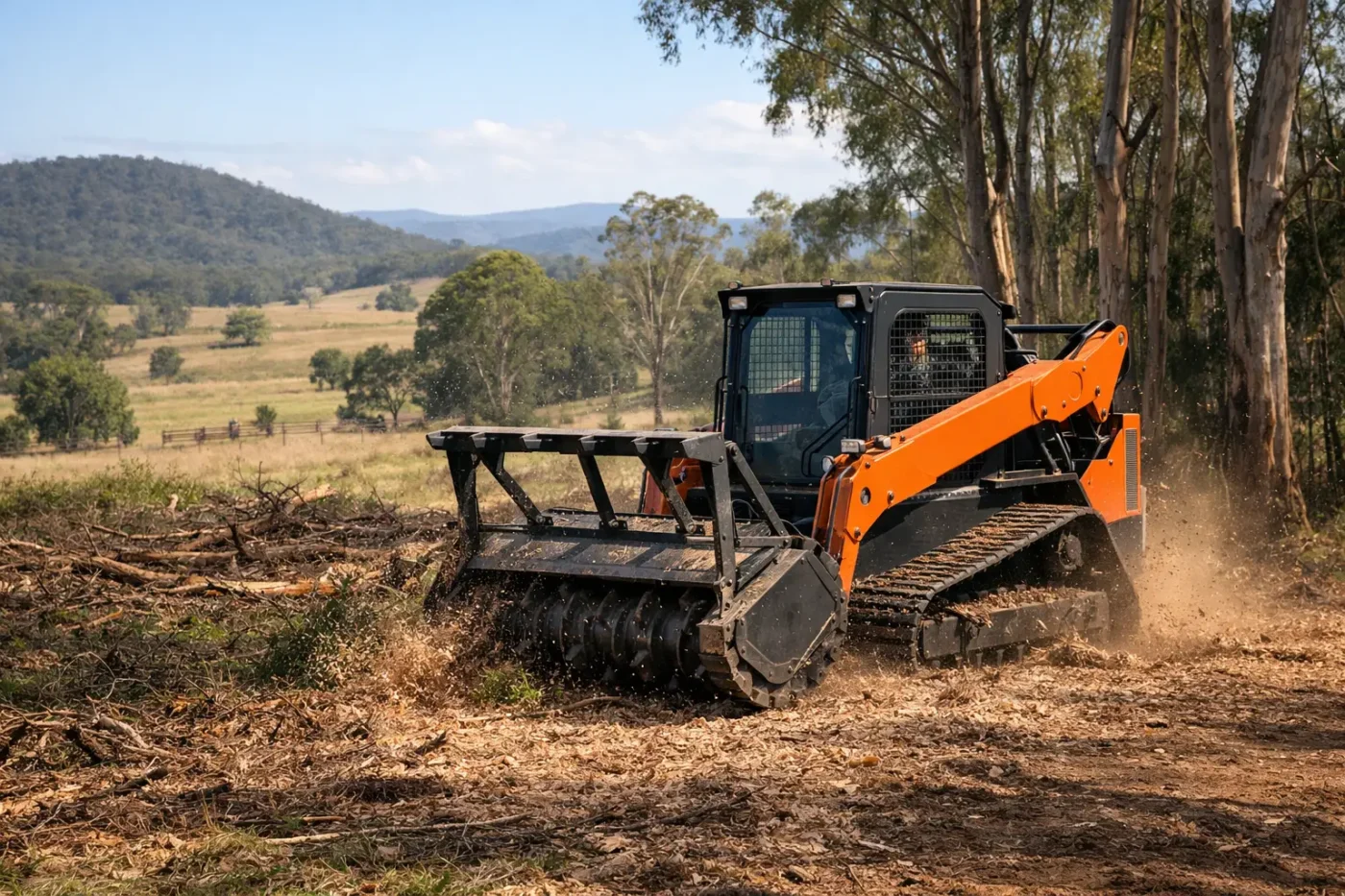
A block can look manageable in winter, then become a fire, access and fencing problem after one strong growing season. The right forestry mulching contractors NSW landholders engage do more than flatten scrub. They assess what needs to stay, what needs to go and how the finished ground must work for stock, vehicles, fences and ongoing maintenance.
Forestry mulching is a practical option for rural and semi-rural properties where regrowth, lantana, woody weeds, blackberry, small trees or dense understorey are taking over. It can create safer working areas without the disruption of broadscale excavation, burning or pushing large volumes of vegetation into piles.
What forestry mulching actually does
A forestry mulcher uses a purpose-built attachment to cut and process vegetation into mulch at ground level. The material is left spread across the site rather than being burnt, trucked away or stockpiled. That mulch layer can help protect exposed soil, reduce erosion and slow down new weed growth, particularly on sloping country.
The result is a cleaner, more accessible block with less fuel sitting upright. It is well suited to opening fence lines, maintaining fire breaks, reclaiming paddock edges, clearing around sheds and dams, and restoring vehicle access through overgrown ground.
It is not the same as full land clearing. Mature trees, protected vegetation, deep root systems and sites requiring a completely level building area may need a different method or a combined approach involving excavator work, root removal and site preparation.
When forestry mulching is the right choice
Forestry mulching works best when the aim is to manage vegetation while retaining the existing ground profile. For many acreage owners, that means turning an inaccessible corner of the property into usable grazing space, a safer buffer around the home, or a route for a farm ute and machinery.
It is also effective where burning is impractical. Smoke, weather conditions, nearby homes, livestock, powerlines and approval requirements can make a burn unsuitable. Mulching keeps the job contained and avoids the need to manage burn piles afterwards.
For properties in the Mid North Coast, New England, Hunter Valley and Northern Rivers regions, vegetation type and terrain can vary sharply from one paddock to the next. A contractor should consider soil moisture, slope, drainage lines, access points and the density of regrowth before putting a machine on the ground. Working too soon after heavy rain can damage soft ground. Leaving work too late can mean tackling thicker material and a larger fire load.
Fire reduction without a false sense of security
Mulching can reduce ladder fuels and remove dense, combustible growth that carries fire from the ground into shrubs and tree canopies. It is a useful part of a property fire-management plan, especially around homes, sheds, access tracks and boundary lines.
However, mulch is still organic material. A freshly mulched area is not a guarantee against fire, and it still needs sensible ongoing maintenance. The right treatment width, vegetation height, site aspect and proximity to assets all matter. In high-risk areas, regular follow-up work and clear access for emergency vehicles are just as valuable as the initial cut.
Better access for fencing and farm work
Overgrown boundaries make fencing slower, less accurate and more expensive. Before a new stock fence, dog-proof fence, post and rail fence or gate installation begins, vegetation often needs to be cleared far enough back for machinery, materials and the crew to move safely.
Mulching a fence corridor can reduce hand-clearing time and expose issues that were hidden in the scrub, such as fallen timber, old wire, washouts and damaged posts. It also gives landholders a clearer view of the boundary and makes future fence checks easier.
What a capable contractor should assess first
Good forestry work starts before the mulcher arrives. A site inspection or clear discussion should establish the purpose of the job, the vegetation involved and the finish required. There is a big difference between opening a rough machinery track and preparing an area around a new house pad or horse arena.
Ask how the contractor will manage access, steep sections, drainage lines, rocks, old fencing wire and rubbish buried in vegetation. Metal, wire and hidden debris can damage equipment and create safety risks. A professional operator will identify these issues early and explain where hand preparation, excavator work or a change in approach is needed.
Landholders should also be clear about what is to be retained. Established shade trees, habitat trees, creek vegetation, orchard areas, native plantings and windbreaks need to be marked or discussed before work begins. The quickest way to create a disappointing result is to treat every green plant as a target.
Forestry mulching contractors NSW approvals and compliance
Vegetation management is not a one-size-fits-all job. Rules can differ depending on the property, local council requirements, mapped vegetation, watercourses, bushfire considerations and the reason for the work. Clearing for a building project, a fence line, an asset protection zone or farm management may each involve different obligations.
A reliable contractor can work to a defined scope and flag when approvals, mapping checks or specialist advice should be obtained before starting. The landholder remains responsible for ensuring the work is authorised, so it pays to deal with the paperwork early rather than after machinery is booked.
For council, Landcare, Local Land Services and insurance-related work, documented scope, safe work practices and clear communication are especially valuable. These jobs often need a contractor who can work around public access, environmental constraints and program requirements without losing sight of the practical result on site.
The trade-offs to consider
Forestry mulching is efficient, but it is not always the cheapest choice for every block. Dense, heavy timber or large stumps may require an excavator, chainsaw work or removal by other means. If a site needs deep reshaping, drainage correction, a dam clean-out or a level pad, mulching alone will not achieve the finished result.
Likewise, mulch can suppress some regrowth but it does not permanently solve invasive weeds. Certain species may reshoot or germinate after disturbance. A follow-up program involving targeted weed control is often the sensible next step, particularly where lantana, blackberry or other invasive plants are established.
The best value usually comes from planning related work together. Clearing a track before repairing drainage, mulching a boundary before installing fencing, or opening an overgrown area before earthworks can prevent machinery from being mobilised twice. It also gives the property a more consistent finish.
Getting the job ready
Before the crew arrives, remove portable items from the work zone and identify hazards that may not be visible in long grass. Tell the contractor about underground services, water pipes, septic systems, old dumps, irrigation lines, stock movements and any neighbour access arrangements.
Keep livestock and pets well away from active machinery. Forestry mulching equipment is powerful, and the work area needs clear separation for everyone’s safety. If access gates are narrow, soft or difficult for machinery, raise that early so a workable entry plan can be arranged.
Agtech Fencing & Rural Services can combine forestry mulching with fencing, earthworks, drainage, weed management and machinery transport where a property needs more than one job completed. That saves rural landholders from coordinating separate crews around the same access track, boundary or building area.
A well-planned mulching job should leave more than a cleared view. It should leave safer access, manageable vegetation and a property that is easier to fence, maintain and use well into the next growing season.