
Timber Rails Versus Pipe Rails for Rural Fences
A post-and-rail fence has to do more than look tidy from the driveway. It may need to hold horses safely, define a boundary, stand up to cattle rubbing along it, or give an acreage property a finish that suits the homestead. When weighing up timber rails versus pipe rails, the better option comes down to how the fence will be used, the site conditions and how much ongoing maintenance you are prepared to take on.
Both can provide a strong, long-lasting result when they are designed and installed properly. The mistake is choosing purely on the upfront price or appearance, then finding the fence does not suit the animals, terrain or level of exposure on the property.
Timber Rails Versus Pipe Rails: The Main Difference
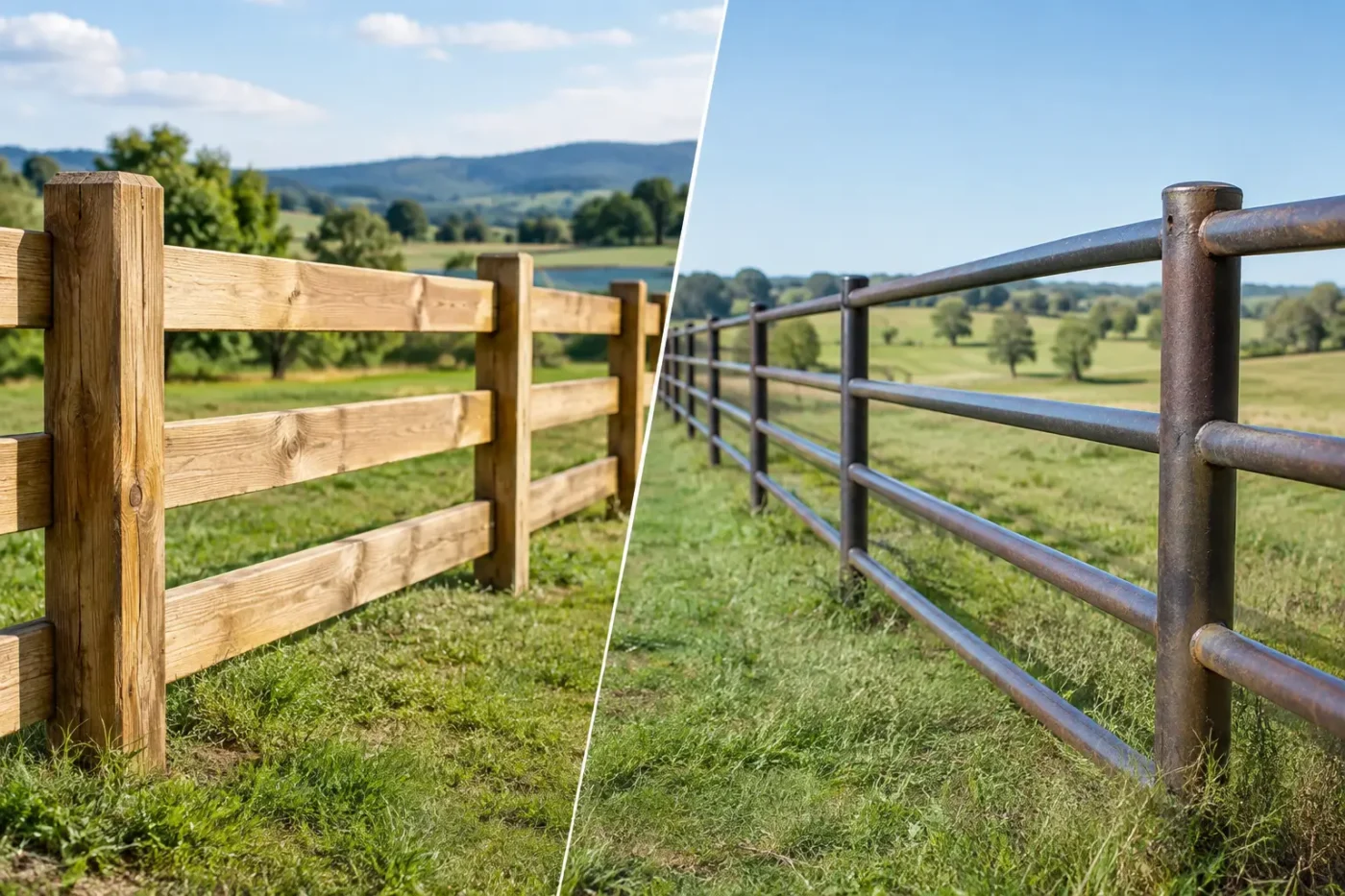
Timber post-and-rail fencing is the traditional choice across rural NSW. Usually built with treated timber posts and two, three or four rails, it has a natural appearance that works particularly well around homes, driveways, paddocks and horse facilities. It can be built as a standalone visual boundary or combined with wire mesh or electric offsets for added containment.
Pipe rail fencing uses steel posts and horizontal steel rails, commonly galvanised pipe. It creates a more industrial finish but offers excellent resistance to impact, livestock pressure and harsh weather. Pipe rails are often chosen for cattle yards, laneways, entrances, working areas and high-use horse paddocks where durability is the priority.
Neither material is automatically better. A well-built timber fence can give decades of service, while poorly selected steel or inadequate footings can create problems regardless of the material used.
Appearance and Property Value
For many acreage owners, timber is hard to beat for appearance. It sits naturally in the landscape, softens the edge of a driveway or arena, and suits rural homes without making the property feel overbuilt. Black-painted timber rails are also popular on equine properties, although painted finishes need preparation and regular attention to stay looking their best.
Pipe rails give a clean, permanent look that suits practical areas. Galvanised steel can look sharp at a front gate, along an access road or around sheds and yards, especially where it matches existing steel gates and cattle infrastructure. Powder-coated finishes are available, though scratches and chips should be addressed before corrosion gets established.
If presentation around the house matters most, timber often has the advantage. If the fence is part of a working area where strength and low-fuss maintenance matter more than a traditional rural look, pipe may be the better fit.
Strength Under Livestock Pressure
This is where the intended use needs to be clear from the start. Horses may lean, scratch and occasionally challenge a fence, but they also require a highly visible barrier with no sharp edges or gaps that could cause injury. Timber rails are visible and forgiving, which is why they remain a common choice for horse paddocks and arena boundaries. A properly built timber fence with suitable rail spacing can be a safe, practical option.
Pipe rail fencing is very strong against sustained pressure. It is well suited to cattle handling areas, loading zones, heavy-use laneways and boundaries where stock regularly congregate. Steel rails do not split, rot or loosen in the same way timber can over time. However, pipe rails must be finished properly. Exposed sharp edges, poor welds and unsuitable rail spacing are not acceptable around horses or people.
For mixed livestock properties, the answer may not be one material across every fence line. Timber can suit the horse paddocks and frontage, while pipe rail may be reserved for cattle yards, gateways and high-pressure sections. Matching the fence to the job is generally better value than forcing one solution everywhere.
Visibility Matters for Horses
A fence can be strong yet still be unsuitable for horses. Horses need to see the boundary clearly, particularly in larger paddocks, near corners and around arenas. Wide timber rails are naturally visible. Round steel pipe can also be visible, but the layout should account for the horse’s height, behaviour and likely pressure points.
Where horses are involved, wire mesh, electric offsets or additional plain wire may be used with post-and-rail fencing to improve containment. These details should be planned as part of the fence design, not added as an afterthought once a horse discovers it can reach over or under the rails.
Maintenance and Service Life
Treated timber is durable, but it is still a natural product. Over time, rails can weather, check, split or suffer damage from termites, moisture and livestock rubbing. The expected service life depends on timber treatment, drainage, soil conditions and whether posts hold water around their base. Timber fences benefit from regular inspections, particularly after storms, flooding or fire events.
Pipe rails generally require less routine maintenance. Galvanised steel resists corrosion well, making it a sensible choice in exposed sites and areas where a fence is likely to take knocks. That said, steel is not maintenance-free. Damaged galvanising, worn coatings and cracked welds need attention before rust spreads. On coastal and high-rainfall properties, material selection and protective finishes deserve extra consideration.
Repair work is also different. Replacing a damaged timber rail is often straightforward, especially where the posts remain sound. A bent pipe rail may require cutting, welding and recoating, depending on the construction. This can make steel repairs more specialised, although the need for repair may be less frequent in a well-built fence.
Ground Conditions Change the Decision
A fence is only as sound as its posts and footings. Rocky ground, steep country, wet soils and old tree roots can all affect installation time, post depth and the best material choice. On a sloping block, rail lines need to follow the terrain without creating openings beneath the fence or awkward pressure points at corners.
Timber offers flexibility where a fence needs to follow undulating ground and blend into an established property. Steel pipe can be an excellent option for straighter runs, firm access areas and high-use yards, but it needs accurate set-out and secure footings. In soft or reactive ground, both systems need proper attention to post depth, drainage and bracing.
Before fencing begins, it is worth checking for drainage lines, buried services, tree roots and vehicle access. Clearing vegetation or improving access first can prevent rushed decisions once materials and machinery are on site. This is particularly relevant on larger rural projects where fencing, earthworks and vegetation management all overlap.
Cost: Look Beyond the First Quote
Timber rails can have a lower initial cost in some applications, particularly where standard treated materials are suitable and the fence layout is uncomplicated. But the total cost should include future repairs, painting or staining if desired, and the likelihood of replacing weathered rails over the years.
Pipe rail fencing often costs more upfront because of steel, fabrication, welding and installation requirements. The trade-off is strength and potentially lower maintenance across the life of the fence. For high-pressure stock areas, paying more at the start can be cheaper than repeatedly repairing a lighter fence that was never designed for the job.
Compare quotes on the full specification, not just metres of fence. Post size and depth, rail thickness, corner assemblies, gate frames, bracing, coatings and site preparation all affect the result. A cheaper quote that leaves out proper strainer assemblies or difficult ground conditions is rarely the bargain it first appears to be.
Choosing the Right Rail Fence for Your Property
Timber rails are often the right choice when natural presentation, horse visibility and a traditional rural finish are central to the project. They suit driveway frontages, equine paddocks, arenas and residential acreage boundaries where the fence is a visible part of the property.
Pipe rails are often the stronger option for cattle yards, laneways, gateways, loading areas and fence lines subject to repeated pressure. They also suit landholders who want a long-life steel solution with less routine upkeep.
There is value in using both. A practical rural property does not need every fence to look or perform the same way. Agtech Fencing & Rural Services can help landholders plan fencing around stock type, access, drainage, terrain and the parts of the property that take the hardest wear.
The best fence is the one that suits the work it has to do five or ten years from now. Start with the animals, the ground and the pressure points, then choose the rails that will keep doing their job when the weather turns and the paddocks are busy.