

Firebreak Construction for Safer Rural Properties
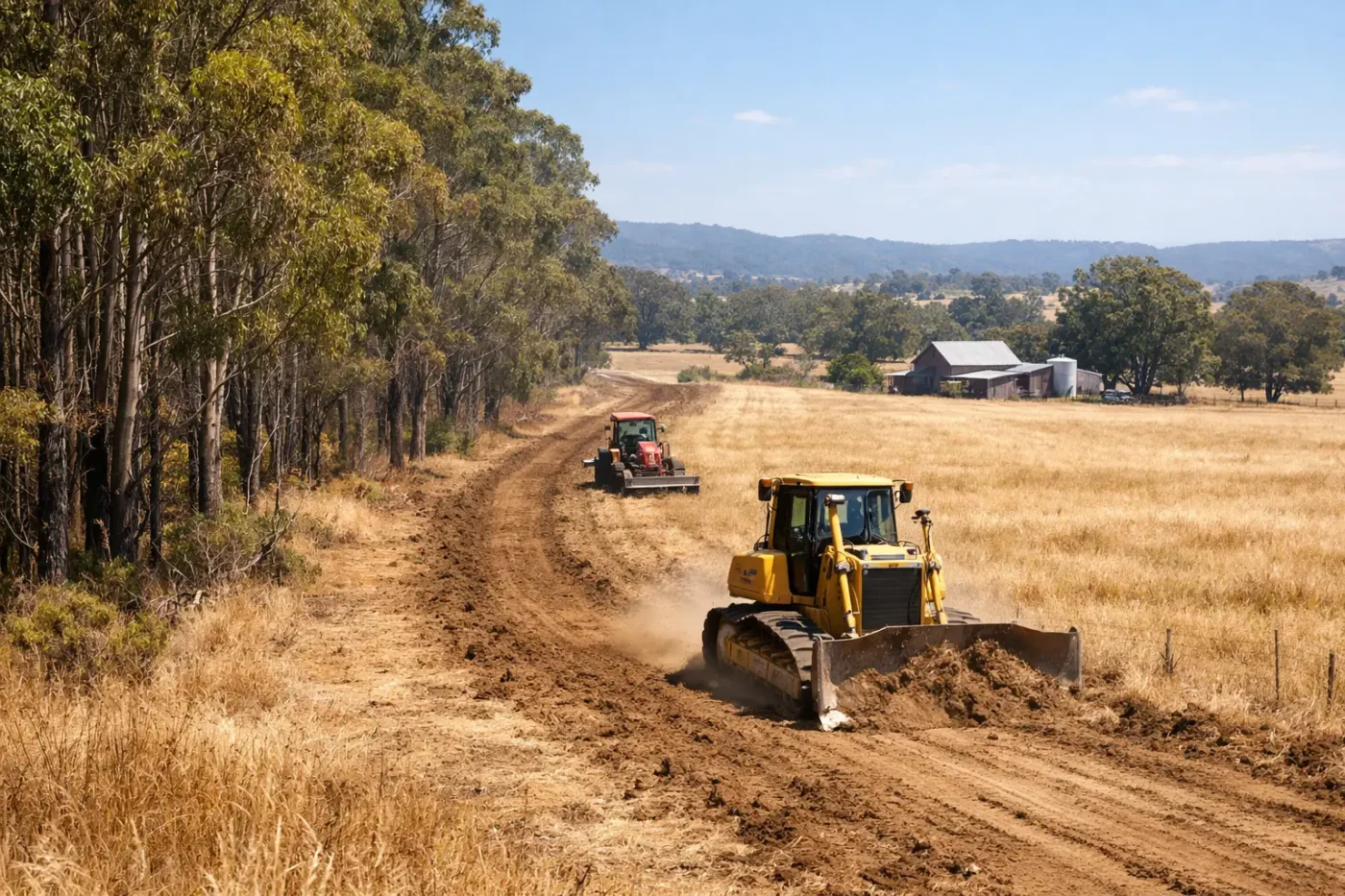
A firebreak is most useful before smoke is on the horizon. When grass has cured off, lantana has pushed into fence lines and leaf litter is sitting against sheds, there is little time to make good decisions. Planned firebreak construction gives you a clearer, more workable zone around the parts of your property that matter most – your home, livestock areas, machinery sheds, access tracks and boundary fencing.
A properly considered firebreak will not stop every bushfire. Wind, ember attack, slope and fuel loads all affect how a fire behaves. What it can do is reduce available fuel, improve access for vehicles and crews, and give you a safer area to carry out property protection work when conditions allow.
What firebreak construction is designed to achieve
Firebreak construction is the process of creating and maintaining a strip of managed land with reduced combustible material. Depending on the site, that may involve mowing and slashing, forestry mulching, removing scrub, grading bare earth, clearing along fence lines or improving access tracks.
The right result is not always a wide strip of exposed soil. On some properties, mulched vegetation can be the sensible option because it removes ladder fuels and makes ongoing maintenance easier without unnecessarily disturbing the ground. On others, especially around key buildings or along strategic boundaries, a clean mineral-earth break may be appropriate.
The job is about more than making the block look tidy. A well-positioned break can slow a surface fire, reduce direct flame contact with fencing and structures, and allow a ute, tanker or fire appliance to move where it needs to go. It also creates a more manageable work area for routine vegetation control throughout the year.
Start with the way your property actually works
The most effective firebreak layout follows the land, its fuel sources and how you use it. Simply cutting a straight line around a boundary may be useful, but it may not be the priority if long grass, dense regrowth or unmanaged drainage lines sit closer to the house or shed.
Identify the areas worth protecting first
Begin around occupied buildings, sheds, pumps, tanks, stock yards, horse facilities and machinery storage. Look closely at where grass, bark, leaf litter and low branches are collecting. Timber fencing, hay storage and old piles of cut vegetation can all add to the fuel load if they are left close to buildings.
Then consider access. A driveway that is too narrow, overhung with branches or washed out after rain is difficult for everyday use and can be a serious limitation during an emergency. Clearing vegetation beside access roads and maintaining turn-around areas can be just as valuable as constructing a break around a paddock.
Boundary lines also deserve attention, particularly where neighbouring land carries heavy grass, scrub or forest fuels. Firebreaks beside fences can make fence maintenance easier and reduce the chance of a fast grass fire damaging posts, wire and gates. They need to be planned with drainage in mind so clearing does not create erosion or send runoff where it does not belong.
Read slope, wind and vegetation before machinery starts
Fire runs faster uphill and can be highly unpredictable in gullies and along ridgelines. A narrow break in the wrong place may offer little benefit, while a strategic break that uses an existing track, low-fuel paddock or maintained boundary can make better use of the terrain.
Different vegetation also needs different treatment. Fine grass fuels can carry fire quickly but are generally straightforward to slash and maintain. Dense woody weeds, blackberry, lantana, saplings and low branches create a more complex fuel profile. These fuels can carry flame upward into trees or structures, so they may need mulching, removal and follow-up control rather than a single pass with a slasher.
Choosing the right construction method
There is no standard width or finish that suits every rural property. The appropriate approach depends on the surrounding vegetation, the slope, likely fire weather, machinery access, soil type and what you are protecting. Local requirements may also apply, particularly near mapped bushfire-prone land, waterways, native vegetation or public roads.
Forestry mulching is a practical choice where heavy regrowth, scrub and woody weeds need to be brought under control. It processes vegetation close to ground level and leaves a mulch layer that can help protect the soil. Mulch is still organic material, however, so it must be managed as part of the overall fuel plan rather than treated as a fireproof surface.
Slashing suits open grassed areas and is often part of regular seasonal maintenance. It is cost-effective for paddocks, road verges and open building surrounds, but it will not solve a problem caused by thick timber regrowth or dense weeds. Timing matters too. Cutting early enough to manage growth before the hottest, driest part of the season is generally more useful than leaving it until fuels are already cured.
Excavator and Positrack work may be needed for more demanding sites. This can include removing roots and heavy vegetation, reshaping a track, repairing washouts, improving drainage or creating a clean break in selected locations. Bare-earth breaks need careful construction on sloping ground. Poor drainage and loose soil can quickly turn a useful firebreak into an erosion problem after heavy rain.
Link firebreaks with fencing, roads and water access
The best property improvements often do more than one job. A maintained fence line can become a practical fuel-managed corridor. A private access road can be widened, drained and cleared to support everyday farm traffic as well as emergency access. A dam clean-out or improved water point may support normal stock management while making water more accessible during a fire event.
This is where coordinating works through one contractor can save time and reduce disruption. At Agtech Fencing & Rural Services, fire-reduction work can be considered alongside fencing repairs, vegetation management, earthworks, drainage and access-road improvements, rather than treating each issue as a separate project.
Be realistic about what existing infrastructure can do. A track is not automatically suitable for fire appliances, and a dam is not automatically a dependable firefighting water source. Clear access, turning room, safe ground conditions and an agreed water supply arrangement all need proper consideration.
Maintenance is what keeps a firebreak useful
A firebreak is not a one-off job. Grass returns, weeds spread, branches fall and mulch breaks down. The maintenance schedule should match the property, with closer attention before the bushfire season and after major rain or storm events.
Walk the break regularly and check whether vegetation is encroaching, drainage is damaged or access is blocked. Pay attention to gates, culverts, creek crossings and steep sections of track. If a fence is being repaired, use the opportunity to clear built-up fuel around posts and improve access along the line.
Avoid piling green waste, timber offcuts or old posts beside the break. These piles can become concentrated fuel sources, particularly near sheds and boundary fences. Where material needs to be retained for habitat, mulch or later disposal, place it well away from buildings and maintain access around it.
When to bring in experienced machinery operators
Steep country, thick regrowth, large acreages and sensitive ground conditions all call for a planned approach. The same applies where a firebreak needs to work around fences, buried services, dams, drainage lines or valuable trees. Experienced operators can assess machine access, select a suitable method and complete the work without creating avoidable damage to roads, soil or infrastructure.
Before work begins, confirm boundaries, identify underground services and discuss any approvals or vegetation controls that may apply to your land. Your local council, Rural Fire Service requirements and property-specific bushfire planning documents may affect what can be cleared and how it should be managed.
A practical firebreak starts with an honest look at your land: where fire could travel, what needs protection and what work will still be manageable six months from now. Build for access, maintain the fuel load and keep the important parts of the property clear enough to work in when it counts.