

When Should Dams Be Desilted on Rural Properties?
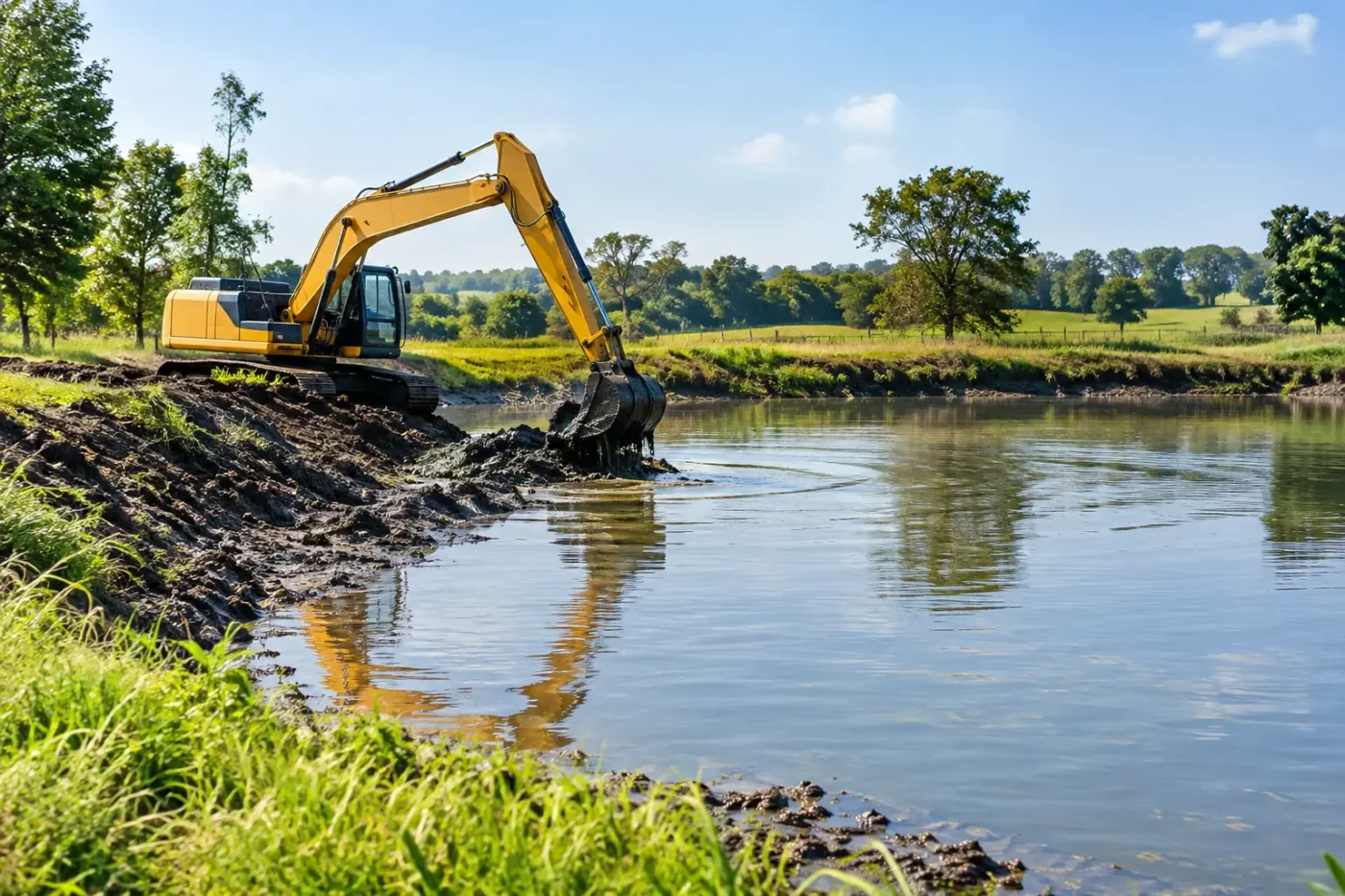
A dam can look full after decent rain and still be losing the capacity that makes it useful. Silt builds slowly, usually over years, until stock access becomes boggy, pumps draw mud, shallow edges fill with weeds and the dam runs short far earlier than it used to. Knowing when should dams be desilted helps rural landholders plan the job before a water shortage, access issue or wet-season setback turns it into an urgent problem.
For most properties, dam desilting is not a job set to a fixed number of years. The right timing depends on how much sediment has accumulated, where it is coming from, what the dam is used for and whether machinery can get in and out without causing more damage. A practical inspection and a clear plan are worth far more than waiting for the dam to become unusable.
When should dams be desilted?
A dam should be desilted when accumulated sediment is noticeably reducing its depth, storage capacity or day-to-day function. In practical terms, that may mean a dam that once held through dry periods now drops quickly, a watering point that has become too shallow, or a basin with soft mud and reed growth spreading well beyond the original margins.
The best time to carry out the work is usually during a sustained dry period, when water levels are low and the dam floor has dried enough to support suitable machinery. On the Mid North Coast, in the Hunter and across New England, that window can vary sharply from property to property. A dry dam after summer is not automatically ready for excavation if the base remains soft. Conversely, a smaller dam may be workable sooner if it has firm ground and safe access.
Avoid leaving the decision until the dam is completely dry and desperately needed. Desilting takes planning: stock water may need to be arranged, spoil needs a place to go, and the excavator needs a safe route that will not damage fences, drainage lines or soft paddocks.
Signs your dam is losing useful capacity
Sediment is normal in any farm dam. Run-off carries fine soil, organic material and debris downhill, particularly after heavy rain. The issue is whether that sediment is taking up enough room to compromise the dam’s purpose.
One of the clearest signs is a change in how long the dam holds water. If rainfall patterns have been broadly similar but the water level falls much sooner than it did in previous seasons, reduced depth may be part of the problem. Leakage, stock damage to the banks and evaporation can also contribute, so it pays to assess the full picture rather than assuming silt is the only cause.
Shallow, expanding margins are another warning sign. A gradual edge is useful in the right location, but when the shallow zone spreads across much of the basin, it encourages weeds, rushes and algae while reducing the deeper water reserve. Stock that have to walk further into mud to drink can churn up the bottom, foul the water and damage the bank.
Watch for pumps picking up sediment, inlet pipes sitting in mud, or an outlet that no longer operates at the intended level. If the dam is used for firefighting water, irrigation, household supply or livestock, these functional problems are often a stronger trigger for action than the dam’s appearance alone.
Check where the silt is coming from first
Cleaning out a dam without addressing the source of sediment can mean paying for the same work again sooner than necessary. Before excavation begins, look uphill and around the catchment. Bare tracks, eroded table drains, unstable crossings, overgrazed slopes and concentrated run-off can all carry soil straight into the water.
A short section of drainage work, reshaping a track, stabilising an inlet or improving groundcover may significantly slow the rate at which the dam refills with silt. On some properties, fencing livestock away from vulnerable banks and providing controlled access to a trough or hardened drinking point also protects the cleaned-out dam.
This does not mean every dam needs a major redesign. It means the clean-out should suit the site. A dam collecting water from a stable grassed catchment will behave very differently from one below a heavily used access road or a recently disturbed paddock.
Choose the right season, not just the first dry day
Desilting is generally safest and most efficient when the water level is low, the ground is firm and there is enough time to complete the work before substantial rain. Those conditions reduce the risk of machinery bogging, allow the operator to see the dam profile clearly and make it easier to place removed material properly.
There is a trade-off. Waiting for the driest possible conditions can make access easier, but it may also leave stock with less available water. If the dam is your main supply, organise an alternative before the machine arrives. Water cartage, temporary tanks or access to another reliable source may be needed depending on the property setup and duration of works.
Do not rush excavation after a dam has only just drained. The exposed surface can look dry while the underlying material remains saturated and unstable. An experienced operator will assess the ground, likely machine movements and whether a staged approach is required. Bringing the right excavator to the job matters, but careful operation matters just as much.
What a proper dam clean-out should achieve
A good clean-out is more than scraping mud from the centre. The aim is to restore usable depth and storage while maintaining stable batters, practical stock access where required and reliable water movement through the inlet and outlet areas.
The desired final shape depends on the dam’s use. A stock dam may need a protected access point and safer slopes. A water-storage dam for pumping benefits from adequate depth around the suction area. A dam with a defined spillway needs that spillway kept clear and set to function as intended. Removing too much material in the wrong place, or cutting banks too steeply, can create erosion and safety issues later.
Removed silt also needs to be managed properly. It is often useful material once it has dried, and may be spread where it will not wash straight back into the dam. It should not be piled where it blocks drainage, burdens a bank or sends sediment downhill in the next storm. Access routes, spoil placement and rehabilitation should be agreed before work starts, not worked out halfway through the job.
Do approvals or environmental checks apply?
Dam work can be straightforward, but landholders should never assume all excavation is exempt from rules. Requirements may depend on the dam’s location, size, watercourse connections, nearby wetlands, threatened vegetation, groundwater considerations and the scope of the proposed changes.
A clean-out that restores an existing farm dam is different from enlarging it, relocating it or constructing a new structure. If there is any uncertainty, check the relevant NSW requirements and speak with your local council or appropriate authority before starting. This is particularly important where the dam sits close to a creek line, drainage reserve or environmentally sensitive area.
It is also sensible to identify underground services, review access over wet ground and keep machinery away from dam walls unless the work plan specifically allows for it. Professional conduct on these jobs is about protecting the property as well as getting the excavation done.
Plan the clean-out as part of wider property maintenance
Dam desilting often makes sense alongside other rural works. An excavator already on site may be able to repair an eroded track, clean table drains, improve a crossing, remove problem roots or prepare a pad, provided each task is scoped properly. Coordinating jobs can reduce repeated mobilisation and leave the property more functional when the crew finishes.
For landholders who need dependable help with dam clean-outs, drainage and practical earthworks, Agtech Fencing & Rural Services can assess site access, machinery requirements and the outcome you need. The priority is a workable result: restored water storage, safer access and a dam that is easier to manage through the next dry spell.
The best time to act is when the warning signs are clear but the job can still be planned properly. Inspect your dam after rain and through dry weather, note changes in depth and stock access, and deal with sediment before it takes away the water security your property relies on.