

How to Plan Rural Drainage for Lasting Access
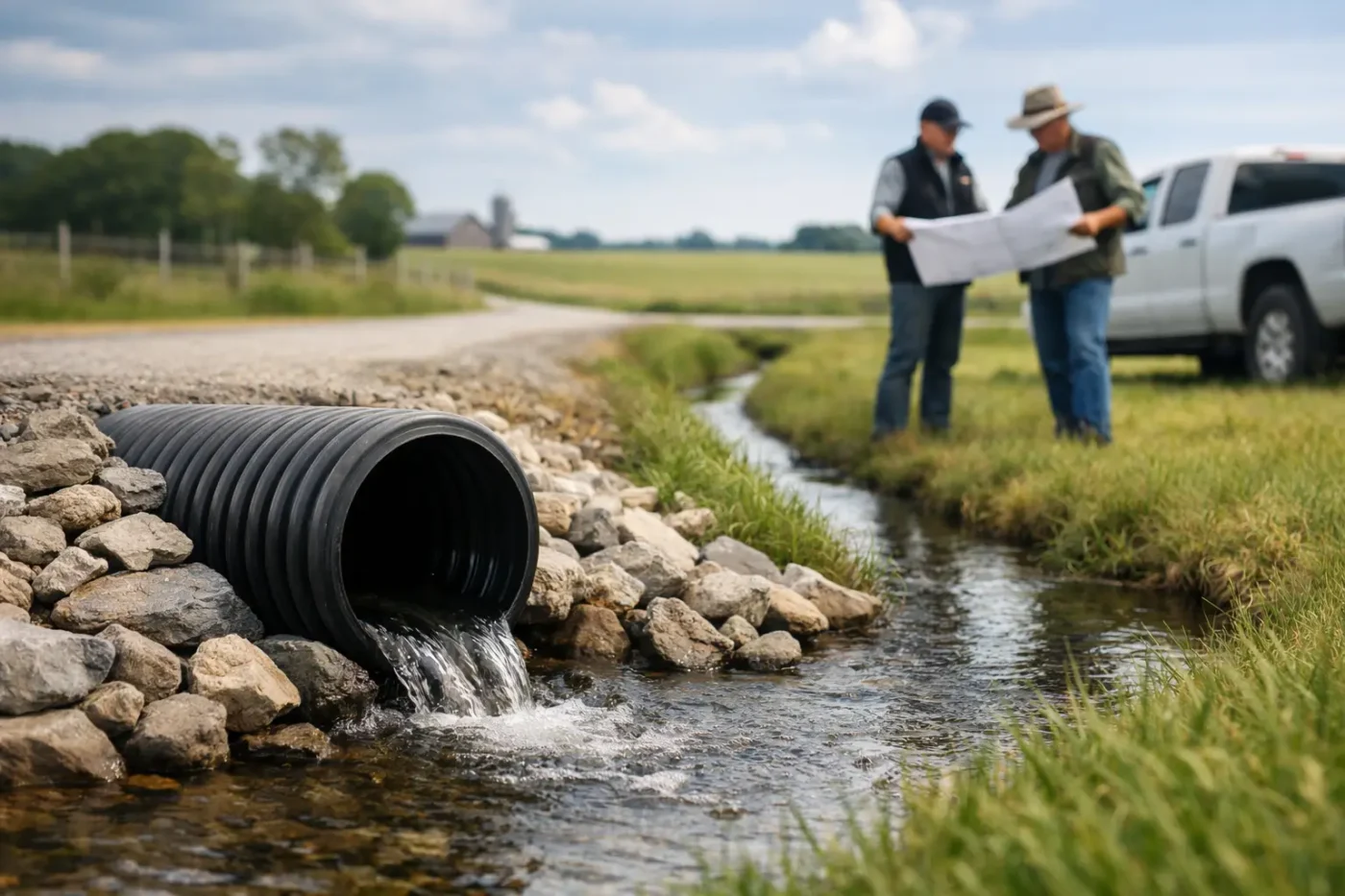
Water rarely causes trouble where it first falls. On a rural property, runoff gathers speed down a track, cuts into a gateway, sits beside a shed pad or finds its way through a low paddock. Knowing how to plan rural drainage means looking beyond the wet patch in front of you and managing the full path water takes across the block.
Good drainage is not about digging the biggest ditch. It is about directing water safely, protecting the infrastructure you have paid for and making sure runoff does not create a new problem further downhill. The right solution depends on slope, soil type, rainfall, existing waterways, access needs and where there is a safe legal outlet for the water.
Start by Reading the Property in Wet Weather
The best time to assess drainage is during rain or soon after a decent fall. Walk or drive the property and take note of where water starts to gather, where it crosses access roads and where it leaves the land. A dry-weather inspection still helps, but it can hide the true flow paths that only show up when the ground is saturated.
Look for washed-out gravel, ruts, scoured table drains, boggy gateways, sediment fans and water marks on fences or shed walls. These signs tell you whether water is flowing too fast, being held in the wrong place or crossing an area without adequate control.
It also pays to look uphill. A culvert that continually blocks may not be the real issue. The cause could be an unformed drain, a badly positioned track, runoff from a neighbouring rise or leaf litter and soil being carried into the inlet. Fixing the outlet without addressing the catchment often leads to the same repair after the next heavy storm.
On larger properties, mark problem areas on a basic site plan or aerial image. Include existing dams, gullies, creeks, drains, roads, buildings, fence lines, gates and low points. This gives everyone involved a clearer picture before machinery arrives.
Set Levels Before You Move Soil
Drainage works rely on fall. Water needs a controlled path from the collection point to an approved outlet, with enough grade to keep moving but not so much that it scours the drain. This is why levels matter more than guesswork.
A contractor can use machine controls, laser levels or site measurements to establish grades for drains, roads and building pads. On a simple job, the fall may be obvious. On flatter country, around sheds or where several drainage lines meet, small level errors can leave water sitting exactly where you were trying to remove it.
When assessing levels, separate clean runoff from dirty runoff. Roof water can often be directed to tanks, stable ground or a suitable drainage line. Water coming off stock yards, heavily trafficked areas or exposed soil may carry sediment, manure or other contaminants and needs different treatment. Keeping those flows separate reduces erosion and makes maintenance easier.
Do not assume a natural low point is automatically a suitable outlet. It may be on soft ground, feed directly into a neighbour’s property or lead to a creek line that needs careful protection. Water must leave the work area without causing erosion, flooding or damage elsewhere.
Plan Rural Drainage Around the Job It Needs to Do
The most practical rural drainage design is usually built around the infrastructure it protects. A driveway, shed, arena and paddock each handle water differently.
Driveways and Private Access Roads
Road drainage needs to keep water off the running surface as much as possible. Water travelling along wheel tracks quickly strips fines from gravel, creates potholes and turns a firm road into a repair job.
A properly shaped road generally sheds water to table drains or cross-drainage points. The road surface needs crown or crossfall, while table drains collect runoff without becoming deep erosion channels. Where water must cross the road, a correctly sized culvert can carry it beneath the formation.
Culvert size is not something to pick by what is available in the yard. It needs to suit the catchment, likely storm flow, debris load and the road height above it. An undersized pipe can block and overtop the road. A pipe installed too high can leave water trapped upstream. Headwalls, rock protection or stabilised outlets may be needed where discharge has enough force to scour soil.
For steep tracks, spacing of cross drains is just as important as culvert size. If water is allowed to run too far down the road, it builds volume and speed. Diverting it earlier can save ongoing grading and gravel costs.
Sheds, Tank Pads and Building Areas
Before a shed goes up, the pad and surrounding ground should be shaped so water drains away from the building. A level concrete slab does not mean the site around it should be level. Finished ground needs enough fall to prevent ponding at doors, posts and walls.
Roof runoff is concentrated water. Plan where downpipes will discharge before construction starts, rather than allowing every outlet to dump beside the slab. Tanks may be the right answer where water storage is useful. Otherwise, connect downpipes to a stable dispersal area, a properly designed drain or an approved collection system.
Keep drainage trenches clear of building footings and allow room for vehicles, future maintenance and gate access. On clay soils common across parts of regional NSW, poor surface drainage can stay wet for long periods and affect how usable the site is after rain.
Paddocks, Gateways and Livestock Areas
Paddock drainage should improve access and stock management without stripping moisture from productive ground. In many cases, the aim is not to drain every wet area. It is to prevent concentrated runoff from cutting channels, damaging fences and turning gateways into mud.
Gateways, troughs, laneways and feeding areas receive repeated hoof and vehicle traffic, so they often need surface preparation as well as drainage. Raising the area with suitable material, shaping runoff away and directing water to a stable outlet can make a major difference. Geotextile and road base may be appropriate where soft subgrades continually pump up into the surface.
Swales or shallow grassed drains can slow and spread runoff across stable ground. They are often a better fit than a deep open drain where slopes are gentle and erosion risk is low. In steeper country, drains may need more defined shaping and erosion control to protect the soil.
Choose an Outlet That Will Hold Up
Every drain needs somewhere to discharge. This is the part of a drainage plan that deserves the most care, because a good drain with a poor outlet simply transfers the damage downhill.
Suitable outlets vary by property. They may include a stable grassed area, established drainage line, dam catchment arrangement or a rock-protected discharge point. The outlet must have capacity for the expected flow and should be checked for signs of scour after major rainfall.
Avoid directing concentrated flow towards boundary fences, neighbouring land, septic areas, building pads or unstable creek banks. If work is near a waterway, flood-prone land, a public road or a regulated drainage line, check council and relevant NSW requirements before starting. Some works may need approvals or specific erosion and sediment controls.
Build Drainage in the Right Sequence
Drainage should be part of the overall property works plan, not an afterthought once a road, fence or shed is complete. Start with clearing only what is necessary to see and access the work area, then establish levels and construct the outlet before connecting upstream drains.
For a new driveway, this usually means forming table drains and cross-drainage as the road is built, then placing and compacting suitable road material. For a shed or pad, shape the surrounding ground and install roof-water provisions before final landscaping locks the area in.
Keep topsoil separate where it will be needed to dress disturbed ground. Bare batters and drain edges should be stabilised promptly with vegetation, rock or other suitable treatment. This matters particularly before the wetter months, when unfinished earthworks can wash out quickly.
Machinery choice also affects the finish. A Positrack is useful for shaping and trimming larger areas, while an excavator can install culverts, clean existing drains, cut controlled channels and work precisely around services or structures. The aim is a tidy, durable result that can still be maintained with normal farm equipment.
Inspect and Maintain After Rain
Drainage is infrastructure, and it needs checking. After heavy rain, inspect culvert inlets and outlets, table drains, diversion banks, shed downpipes and road edges. Remove built-up debris before it becomes a blockage, and repair small scour marks before they develop into washouts.
Keep vegetation managed, but do not strip stable grass cover from drains that rely on it to slow water. If a problem repeats, resist the temptation to simply deepen the drain. Recheck the slope, catchment and outlet, as the real fix may be further uphill or require water to cross the road at a different point.
A well-planned drainage job protects far more than soil. It keeps access roads usable, gates workable, sheds dry and maintenance costs under control. If the water path is unclear or the work involves roads, culverts, pads or significant earthmoving, get experienced eyes on the site before the next rain tests it for you.