

Mulching Versus Burning Vegetation on Rural Land
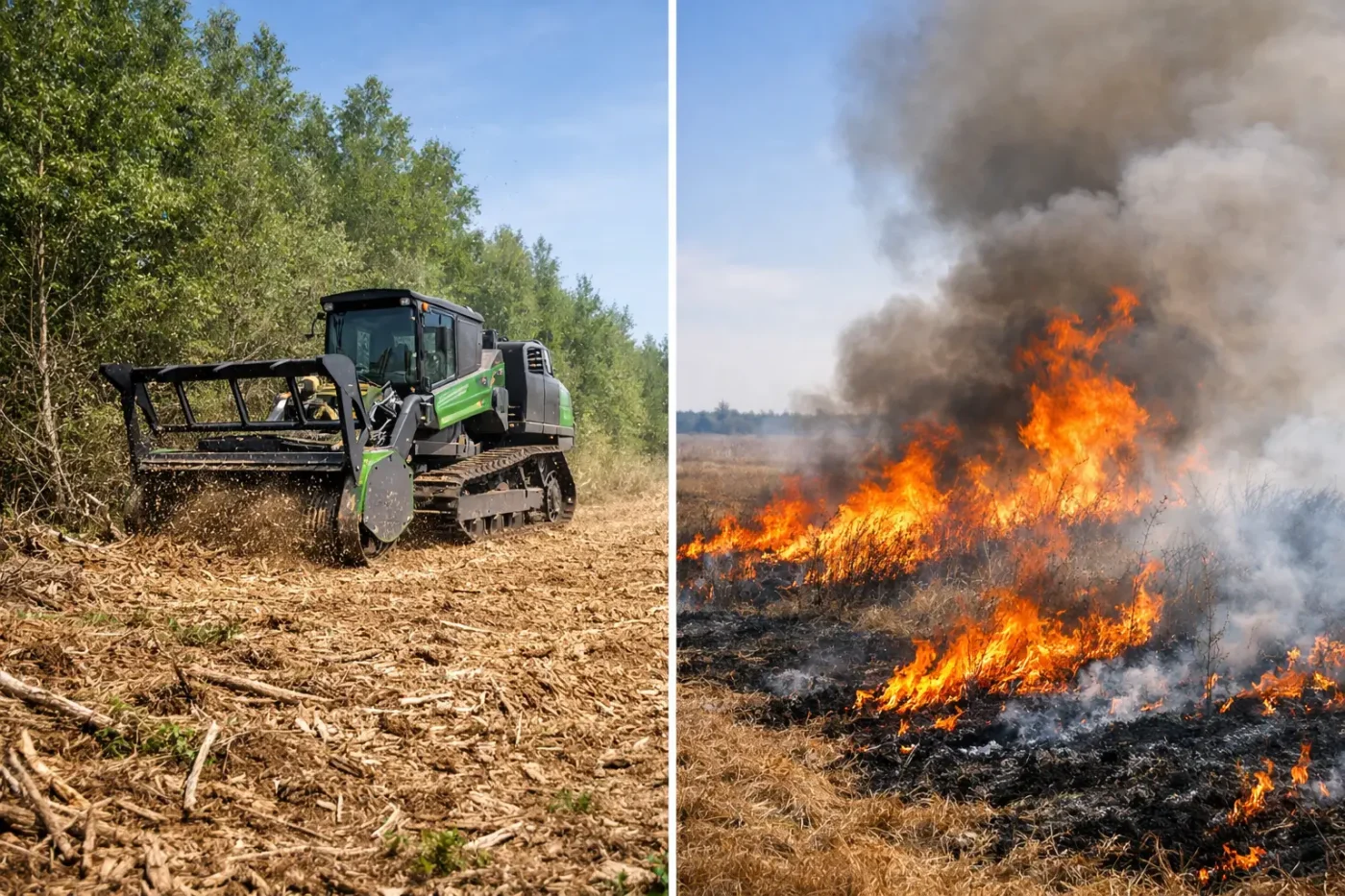
A thick run of lantana along a fence line, fallen timber around a dam, or regrowth closing in on an access track can quickly become more than an untidy patch of country. For rural landholders, the choice between mulching versus burning vegetation affects fire preparation, soil condition, access, weed control and the future workload on the property.
Burning has long been part of land management in regional NSW. In the right location, season and conditions, it can reduce a large volume of dry fuel quickly. Forestry mulching, on the other hand, mechanically processes scrub, saplings and light timber into material left on the ground. Neither option is automatically right. The practical answer depends on what is growing, where it is growing and what you need that area to do next.
Mulching versus burning vegetation: the real difference
The biggest difference is what remains after the job. Burning removes much of the available vegetation as ash and smoke. Mulching breaks it down and leaves it as a layer across the soil surface. That distinction matters well beyond the day the work is carried out.
A burn can be useful where there is a suitable, lawful burn window, adequate containment and enough room to manage smoke and ember movement. It may suit a carefully planned hazard-reduction program across a larger area of dry grass, leaf litter or prepared vegetation piles. However, fire can be unpredictable. Wind changes, dry conditions, nearby neighbours, powerlines, stock, fences and buildings all increase the consequences of a burn that does not go to plan.
Mulching is a controlled, machine-based process. A forestry mulcher can work through dense regrowth and woody vegetation without an open flame, processing material where it stands. It is often well suited to access tracks, fence lines, proposed building areas, dam surrounds, paddock edges and firebreak preparation where retaining ground cover and limiting soil disturbance are priorities.
When forestry mulching is the better option
For many acreage and farm properties, mulching is the practical choice when vegetation needs to be reduced without stripping the site bare. It gives landholders a clear working area while leaving a protective mulch blanket over the soil.
That mulch can help slow erosion on slopes and exposed ground, reduce moisture loss, and limit the amount of dust and loose soil created during clearing. It also avoids the smoke, ember risk and extensive preparation involved with burning. This can make a major difference near homes, sheds, horse paddocks, roads and neighbouring properties.
Mulching is particularly useful for vegetation management around infrastructure. A crew can create or reopen a usable fence line, improve sightlines along driveways, clear around tanks and sheds, or prepare land for a new gate, stock fence, arena or access road. Once the vegetation is processed, excavator work can follow where required for root removal, drainage, pads or clean-up work.
It is also a good fit where a property has ongoing regrowth rather than one isolated fuel load. Regular mulching can keep shrubs and light timber from developing into a dense, difficult-to-manage stand. Smaller material is generally quicker and more cost-effective to handle than neglected vegetation that has grown for years.
Mulch still needs to be managed
Mulching is not a magic fix for bushfire risk. Fresh mulch retains moisture initially, but it dries over time and remains organic material on the ground. The depth of mulch, the species being processed, slope, surrounding fuel and distance from buildings all need consideration.
The aim is not to simply spread material everywhere. A properly planned job creates manageable fuel loads and practical access, without piling processed vegetation against structures, fence corners or drainage lines. Around buildings and critical infrastructure, the finished result needs to support your broader fire-management plan, not work against it.
Mulching may also be less suitable for very large, heavy timber. Bigger logs and stumps often need separate handling, whether that means pushing, stacking, excavation or removal. A site inspection helps determine the right machinery and whether mulching alone will achieve the outcome you want.
When burning may be appropriate
Burning can still have a place in rural vegetation management. It may be considered where there is a large amount of dry, fine fuel, where site conditions allow safe containment, and where the burn forms part of an approved and properly managed program.
For example, prepared burn piles can sometimes deal with material that has already been cleared and stacked. In suitable circumstances, fire may reduce accumulated dry debris more completely than mulching it. Some land management programs also use planned burning for specific ecological or fuel-management purposes.
The key word is planned. Burning vegetation should never be treated as the quick option because a pile is inconvenient. Before lighting anything, landholders need to consider current fire restrictions, local conditions, permits or approvals, smoke impacts and their duty to prevent fire escaping. Requirements can vary depending on the season, local government area, Rural Fire Service rules and the nature of the work.
Smoke is more than a nuisance. It can affect neighbours, roads, livestock, people with respiratory conditions and nearby towns. Ash can travel, embers can cross boundaries, and heat can damage fence posts, trees, irrigation lines and other assets. If a burn escapes, the financial and legal consequences can be severe.
Burning can expose the ground
A hot burn may remove protective leaf litter and ground cover, leaving soil vulnerable to heavy rain and runoff. This is especially relevant on the steeper country common across parts of the Mid North Coast, New England and Hunter regions. Bare ground can wash into dams, drains and creeks, creating another repair job after the fire is out.
Fire also does not necessarily solve a weed problem. Some weeds regenerate strongly after disturbance, while dormant seeds can take advantage of open ground and reduced competition. Whether you mulch or burn, follow-up weed control and monitoring are often what determine the long-term result.
Start with the result you need
The right method becomes clearer when you work backwards from the finished job. If you need a clean route for a new driveway, safer access around a shed, a fence line ready for replacement, or a maintained buffer around a house, mulching is often the more controlled approach. It keeps work moving without waiting for suitable burn conditions and can be completed in sections around the property.
If you have a prepared pile of dry material in a safe, suitable location and can meet all local requirements, a managed burn may be worth considering. It should be planned as a specific operation, not an improvised end to a clearing project.
A few site factors will drive the decision:
- The type, height and density of vegetation, including whether it is grass, scrub, woody regrowth or heavy timber.
- Proximity to houses, sheds, fences, roads, stock, neighbours, powerlines and environmentally sensitive areas.
- Ground conditions such as slope, erosion risk, wet areas, rock and access for machinery or fire equipment.
- Your next step, whether that is fencing, grazing, weed treatment, building works, pasture improvement or long-term fire maintenance.
For many properties, the best approach is a combination of methods. Mulching can establish access and reduce vegetation around assets, while selected material may later be managed in approved piles where appropriate. The job should be staged to protect the land, keep the site workable and avoid paying twice for the same area.
Plan vegetation work before fire season
Waiting until vegetation is dry, access is restricted and fire season is approaching usually limits your options. Machinery availability tightens, burn windows may close, and rushed decisions can lead to poor outcomes. Tackling regrowth and fuel loads earlier gives you time to assess the site, organise approvals where needed and complete follow-up work such as fencing repairs, drainage or weed treatment.
A capable contractor should be willing to walk the site, discuss the intended use of the land and explain what the machine can realistically achieve. Clear communication matters, particularly where vegetation work sits alongside new fencing, earthworks or property clean-ups.
Agtech Fencing & Rural Services approaches vegetation management with the same practical focus applied to rural infrastructure: complete the work safely, leave the site usable and make sure the result suits the way the property operates. The best choice is the one that reduces your workload and risk not just this month, but through the next growing season as well.