

Rural Driveway Construction Contractors NSW
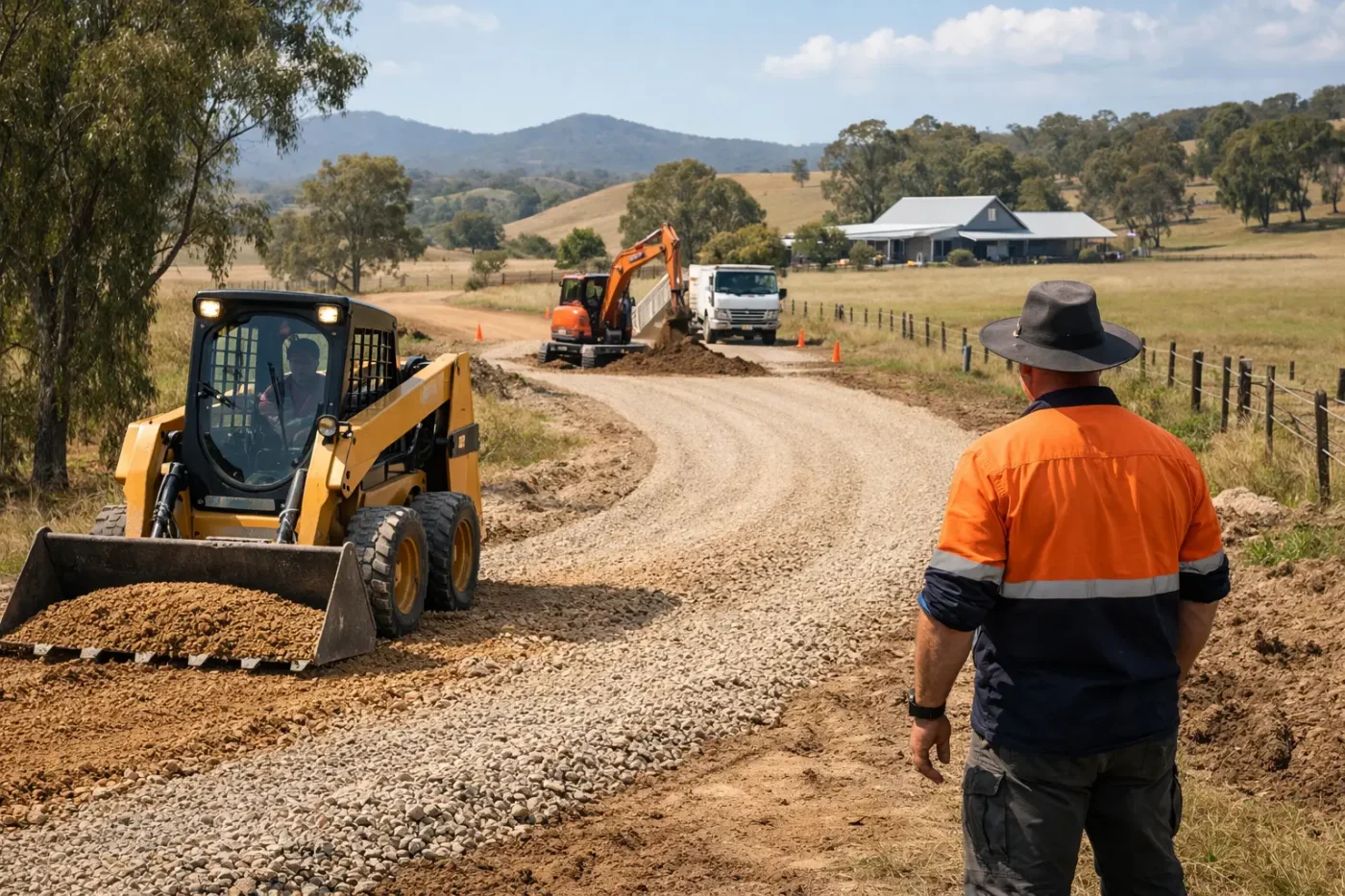
A rural driveway that turns to mud after rain, throws loose stone into the grass or develops deep wheel ruts is more than an annoyance. It can limit access for deliveries, stock work, emergency vehicles and everyday travel around the property. Reliable rural driveway construction contractors look beyond spreading gravel. They assess the ground, water flow, vehicle loads and how the road will be used before the first machine starts.
For rural and semi-rural properties, a driveway needs to work through wet weather, dry heat, regular ute traffic, horse floats, farm machinery and the occasional heavy truck. Getting the foundation and drainage right at the start is what makes the difference between a road that holds up and one that needs constant patching.
What rural driveway construction contractors should assess
Every property has different ground conditions. A hard, well-drained ridge may only require shaping, a sound base and a suitable gravel surface. A low-lying access track with clay underneath can need excavation, imported road base, drainage and careful compaction before it is ready for regular traffic.
A contractor should inspect the full route, not just the visible trouble spots. This includes checking the natural fall of the land, existing table drains, culverts, creek crossings, tree roots, soft sections and where water enters or leaves the driveway. Water is the main cause of driveway failure. If runoff is allowed to sit in wheel tracks or wash across the road, even good gravel will eventually move.
The intended use matters just as much. A short driveway to a house has different requirements to an all-weather farm access road used by loaded stock trucks, feed deliveries or machinery floats. Be clear about expected traffic, turning areas, gate locations and whether the road needs to connect to a shed pad, arena, dam, paddock or building site.
Start with a practical route
The shortest route is not always the best one. A driveway that follows a natural contour or avoids a wet hollow can save substantial maintenance over time. On sloping blocks, the route may need to reduce the grade, direct runoff into stable drainage lines and allow enough width for safe vehicle movement.
There are times when clearing vegetation or removing roots is part of the job. Stumps and buried organic material beneath a driveway can decay and leave soft spots later. Addressing those areas before the base is laid is a more reliable approach than repairing depressions after the surface fails.
Drainage is the foundation of a durable driveway
A well-built rural driveway is designed to shed water. The road surface is usually formed with a slight crown or crossfall so rain runs to the sides rather than pooling in the centre. Table drains then carry water away without undermining the road edge.
Where water needs to cross the driveway, a correctly sized culvert is often required. Culverts must sit at the right level, have stable inlet and outlet protection where needed, and be backfilled properly. A pipe that is too small, poorly placed or blocked by debris can cause washouts in one heavy storm.
Drainage work should suit the site rather than follow a one-size-fits-all layout. Some properties need shallow spoon drains to manage sheet flow. Others need deeper side drains, rock protection, turnouts or additional culverts. If a driveway crosses a natural drainage line, environmental requirements and local approvals may also apply. An experienced contractor can identify when further advice or permits are needed before works begin.
Building the driveway from the ground up
The visible gravel layer is only one part of the finished road. The strength comes from the prepared subgrade and base beneath it.
First, the route is cleared and stripped of unsuitable topsoil, loose organic material and soft ground where necessary. The subgrade is shaped to the planned levels and compacted. On weak or reactive soils, geotextile fabric or additional stabilising material may be worthwhile. It adds cost upfront, but it can stop clay pumping into the base and reduce ongoing maintenance.
Next comes the road base. The depth and type of material should reflect site conditions and traffic loads. A light residential accessway may not need the same build-up as a driveway used by heavy haulage or agricultural equipment. A capable contractor will explain where extra material is necessary and where it is not, rather than overspecifying every job.
The final wearing surface is commonly a suitable gravel or crushed aggregate. Locally available materials vary across NSW, so the best choice depends on the source, particle size, fines content, drainage behaviour and the finish required. A material that looks neat when first spread may be unsuitable if it becomes loose and corrugated in dry conditions or slippery when wet.
Compaction is not a shortcut step. Material should be placed in manageable layers and compacted thoroughly, with moisture conditions considered. Simply pushing a pile of gravel across the ground may create a temporary track, but it rarely delivers the strength needed for an all-weather rural driveway.
Common mistakes that lead to repeat repairs
The most common mistake is adding more gravel over a driveway with poor drainage. It can make the road look better for a short time, but water still reaches the weak layer underneath. The gravel then disappears into mud, moves to the sides or develops potholes again.
Another issue is building a road too narrow for its use. A driveway must allow vehicles to pass safely, negotiate bends and access gates without clipping the edges. Wider sections may be needed near sheds, loading areas, house sites and turning circles for delivery trucks or floats.
Steep grades also need careful treatment. Loose surface material can scour downhill during heavy rain, while a road that is too steep may be unsafe for towing. In some cases, changing the alignment, installing drainage breaks or using a different surface treatment is a better answer than continuing to patch a problem section.
Finally, neglected roadside vegetation can close in on the driveway and block drains. Keeping shoulders clear, maintaining table drains and dealing with regrowth helps protect the investment. Forestry mulching and vegetation management can be useful where overgrown access tracks need to be opened up before construction or maintenance work begins.
Choosing a contractor for rural driveway work
When comparing rural driveway construction contractors, look for someone with the machinery and experience to handle the whole job. That may include excavation, shaping, drainage, culvert installation, road base placement, compaction and clean-up. Coordinating separate operators for each stage can create delays and confusion over who is responsible if the finished road does not perform.
Ask how the contractor will manage water, what materials they recommend and why, and whether the quote includes preparation, drainage and compaction. A clear scope is valuable. It helps you compare quotes properly and avoids assumptions about imported material, disposal, culverts or access limitations.
It is also sensible to discuss access before work starts. Narrow gates, wet paddocks, overhead branches, livestock movements and existing services can all affect how machinery reaches the site. A contractor who communicates clearly and turns up prepared will make the project easier to manage.
Agtech Fencing & Rural Services provides practical earthworks for rural property owners, including private access roads, drainage, trenching and pad preparation. With the right machine for the job and a focus on workable outcomes, the aim is a driveway that supports the way the property actually operates.
Plan for maintenance, not constant rebuilding
Even a well-constructed gravel driveway needs occasional attention. After major rain, inspect culverts, drains and road edges for blocked flow or erosion. Regrade minor corrugations before they become deep ruts, and top up surface material only when the underlying shape and drainage are still sound.
A properly planned driveway gives you dependable access when conditions are poor and reduces the time spent chasing repairs. Start with the ground, manage the water and build for the vehicles that will use it. That is the practical path to a road that keeps working long after the machinery leaves.