

Farm Dam Restoration Guide for NSW Landholders
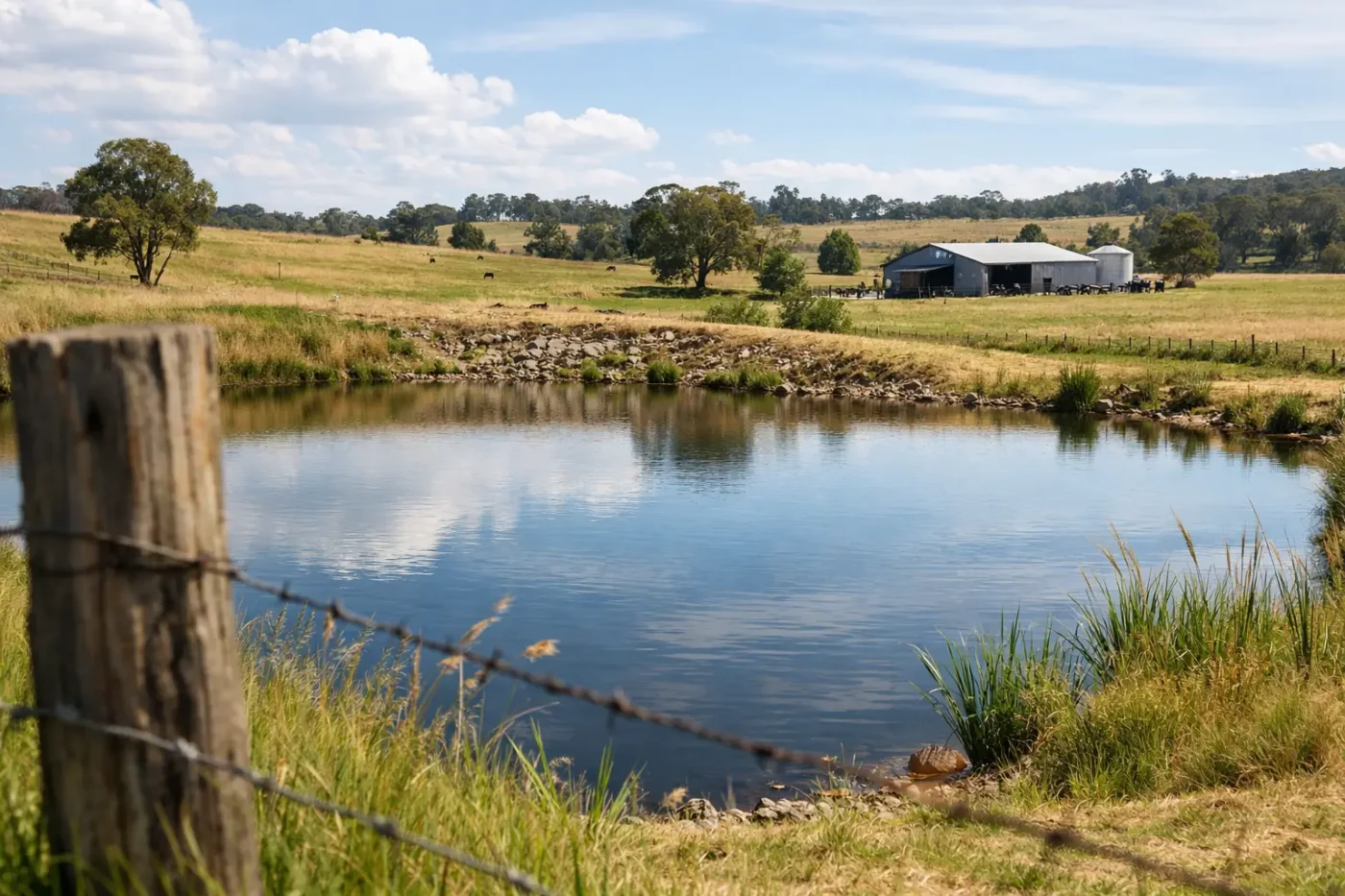
A dam that is silting up, leaking around the edge or choked by weeds can quickly become a liability rather than a working part of the property. This farm dam restoration guide sets out how to assess the problem, plan the work and achieve a practical result that suits livestock, water security and the lay of your land.
A good restoration is not simply a matter of digging deeper. The best outcome comes from dealing with the source of the problem, whether that is poor catchment drainage, stock damage to the banks, uncontrolled erosion or unsuitable soils. Get that right and the work should stand up to the next big downpour as well as the next dry spell.
Start With a Proper Dam Assessment
Walk the dam after rain if possible. That is when water paths, soft edges and overflow issues are easiest to see. Look for silt fans where runoff enters the water, bare soil on the batters, tunnelling or wet patches below the wall, and shallow areas filled with reeds or aquatic weeds.
Pay attention to the water level. A dam that drops steadily in hot weather may simply be losing water to evaporation, particularly on exposed properties. A dam that will not hold water after decent rainfall may have a leak through the floor, wall, pipework or a porous layer of soil. The repair approach is different in each case, so guessing can lead to money spent in the wrong place.
Also consider how the dam is being used. A stock dam needs safe, dependable access or an off-dam watering arrangement. An equine property may need secure fencing and controlled watering points to protect both horses and the dam banks. A dam supplying garden, firefighting or household systems needs suitable intake placement, pumping capacity and water-quality management.
Before machinery arrives, check whether approvals, environmental controls or water regulations apply to your proposed work. Requirements can vary with the dam’s size, location, watercourse connection, nearby wetlands and the scope of excavation. Local advice is particularly worthwhile where a dam sits on a defined drainage line or near sensitive vegetation.
Farm Dam Restoration Guide: Plan the Job in Order
Restoration work is more efficient when it follows the right sequence. Access for excavators and trucks should be established before the site becomes muddy, and spoil locations need to be decided before material starts coming out of the dam. Wet spoil is heavy, difficult to spread and can damage good pasture if handled poorly.
First, manage the water. Depending on conditions, this may mean waiting for a dry period, pumping down water, or diverting clean runoff around the work area temporarily. Never send dirty water straight into a creek, gully or neighbouring land. Sediment control is part of a professional job, not an optional extra.
Next, remove accumulated silt, rotting vegetation and debris from the floor and inlet areas. The aim is not always to excavate every last centimetre. Over-digging can expose unsuitable material, increase costs and create a dam shape that does not suit the catchment. A contractor should assess the existing floor and identify where controlled excavation will make the biggest difference.
Then repair the structure. This may involve reshaping batters, rebuilding sections of the wall, compacting suitable clay, repairing pipes or installing a properly designed spillway. If the dam has an embankment, the wall and its overflow path deserve careful attention. Water needs somewhere safe to go in a major event. If the spillway is too high, too narrow or eroding at the outlet, the wall can overtop or fail.
Fix the Cause, Not Just the Silt
Silt is usually the symptom of a catchment problem. A dam below a rutted track, bare paddock or poorly formed drainage line will fill again unless the incoming water is slowed and directed properly.
Reforming access roads, installing drainage humps or table drains, stabilising bare areas and shaping diversion drains can reduce the sediment load before it reaches the water. On sloping country, small changes in fall and drainage can make a major difference to how water moves during a storm.
Vegetation also needs practical management. Groundcover above the dam helps hold soil in place, while excessive weeds around the water’s edge can restrict access and reduce capacity. The answer is rarely to clear every plant. Retain useful stabilising cover where possible, remove problem growth strategically, and avoid leaving exposed soil before forecast rain.
Where livestock have direct access, fencing and a controlled watering point can protect newly restored banks. Cattle and horses can quickly pug soft batters, create erosion paths and foul the water. In some situations, a hardened access point is suitable. In others, pumping water to a trough is the better long-term option. It depends on stock numbers, paddock rotation, available power and how often the dam is used.
Get the Dam Shape and Batters Right
A workable farm dam needs stable batters rather than steep, fragile edges. The ideal slope depends on soil type, water depth, site constraints and intended use, but gentler batters are generally easier to maintain and safer for stock, people and machinery.
The dam floor should direct water towards the deepest practical point, allowing sediment to settle where it can be accessed in future. Inlet areas benefit from enough room for water to slow down before it spreads across the dam. A small sediment trap or shallow collection area upstream can be worthwhile on properties with regular runoff, as it is far easier to clean a trap than repeatedly excavate the main dam.
Compaction matters where clay is being used to seal a floor or rebuild a wall. Suitable material must be placed and compacted in controlled layers, with moisture conditions taken into account. Simply pushing dry dirt into a leaking dam is unlikely to produce a reliable seal. If the site has highly porous soil, cracks, animal burrows or geological issues, seek site-specific advice before committing to a repair method.
Manage Spoil and Site Access Properly
Dam clean-outs produce more material than many landholders expect. Some silt can be spread over suitable paddock areas, provided it is free of rubbish and placed where it will not wash straight back downhill. Other material may be better used to build up low spots, shape pads or repair worn sections of track.
Plan truck and machinery movements around gates, soft ground, overhead branches and existing services. A tight access point can add avoidable time and cost to a job. If material needs to be hauled away or brought in, arrange the route before work starts, especially after wet weather when rural roads and paddock entries can become difficult.
Agtech Fencing & Rural Services can combine dam clean-outs, excavation, drainage, vegetation management and rural fencing in one coordinated scope, which helps avoid the delays that come with lining up separate contractors for each part of the work.
Re-establish the Site After Earthworks
The restoration is not finished when the excavator leaves. Freshly shaped banks and disturbed catchments need protection while they settle. Re-establish groundcover promptly using an appropriate seed mix or stabilisation method for the site, and keep vehicles and stock off vulnerable areas until the surface has held together.
Inspect the dam after the first few heavy rain events. Check for scour at the inlet and spillway, sediment movement, soft spots on the wall and water tracking around pipes. Early repairs are usually straightforward. Leaving a small washout through a wet season can turn it into a much larger earthworks job.
Keep an eye on maintenance over time as well. Clearing debris from the spillway, controlling weeds before they take hold, repairing fence damage and managing runoff from tracks will protect the investment far better than waiting for the dam to fail again.
A restored farm dam should make the property easier to run, not create another ongoing headache. Plan the work around the water source, soil conditions, access and catchment, then give the finished site the protection it needs to hold up for years.