

Firebreak Clearing Services NSW for Safer Land
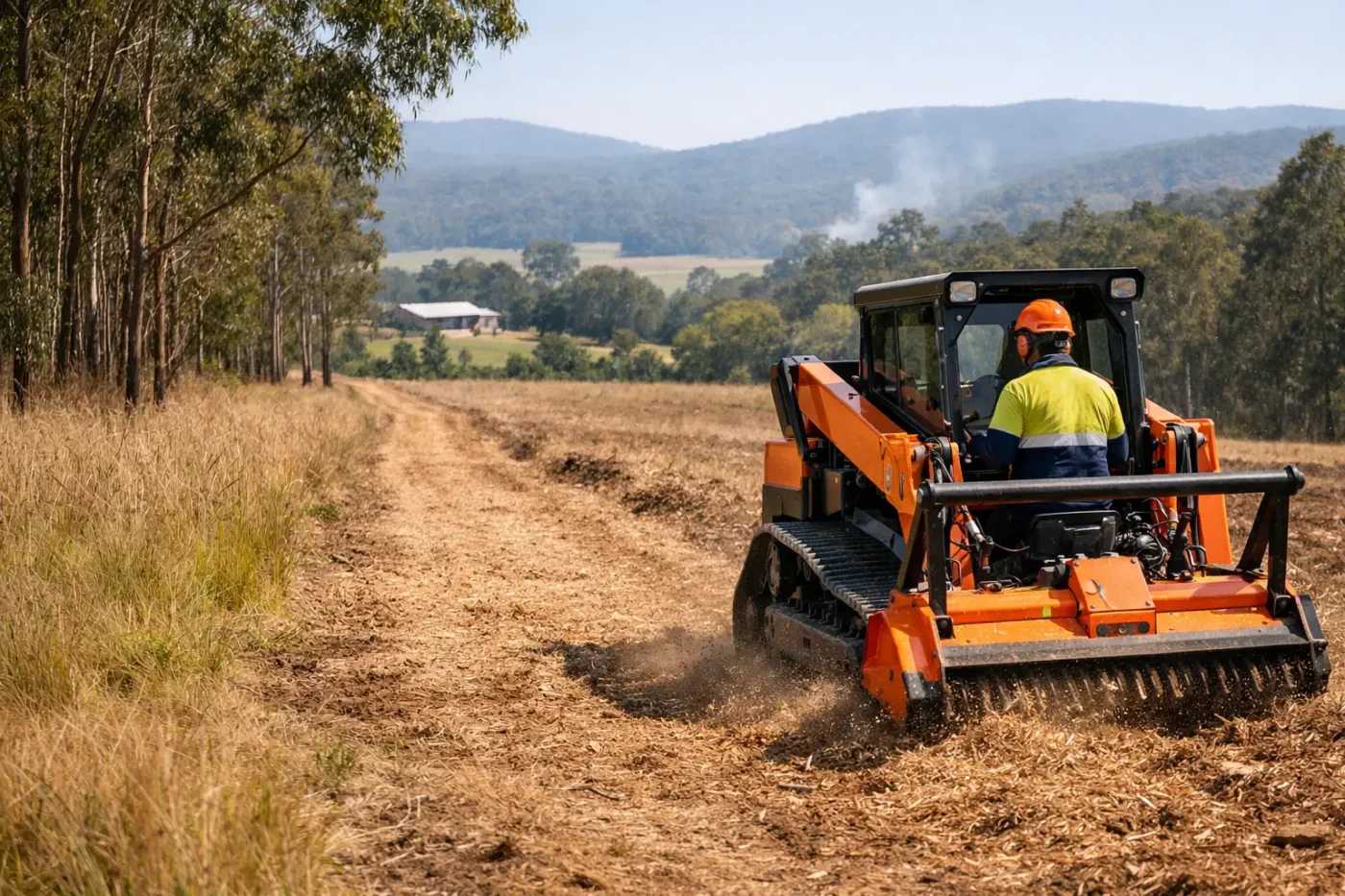
A firebreak that looks tidy from the gate is not necessarily doing its job. If grass has cured, fallen timber is sitting beneath trees, or scrub has grown right back to a shed, fence line or access track, fire can still move quickly across a property. Professional firebreak clearing services NSW landholders can rely on focus on reducing available fuel, improving access and creating practical areas that can be maintained over time.
For rural and semi-rural properties, fire preparation is rarely a one-day job. It is part of managing grass, weeds, timber, tracks, fences and the space around buildings throughout the year. The right clearing approach depends on the country, the vegetation, the slope, livestock needs and how the property is used.
What a firebreak needs to achieve
A firebreak is a managed strip or zone designed to slow the spread of fire and give people, machinery and fire crews better access. It is not a guarantee that a bushfire will stop at the boundary. In severe fire weather, embers can travel well beyond a cleared area. But well-planned fuel reduction can make a property easier to defend, safer to move around and less likely to carry a low-intensity grass or surface fire into more vulnerable areas.
On many NSW properties, the work starts with the practical weak points: overgrown fence lines, long grass along driveways, dense regrowth around sheds, unmanaged paddock edges and tracks that have narrowed under brush and fallen limbs. Clearing these areas can also make routine jobs easier, from checking stock and repairing fences to getting a ute, tanker or emergency vehicle through after heavy weather.
The goal is not to strip every part of the block bare. Good land management balances fuel reduction with erosion control, shade, habitat, drainage and the ongoing use of the land. A steep, timbered gully needs a different treatment to a flat house paddock or a long boundary fence line.
Firebreak clearing services NSW properties may need
The best method depends on what is growing, where it is growing and what needs protecting. Machinery and treatment should suit the job rather than forcing every property into the same clearing plan.
Forestry mulching for scrub and regrowth
Forestry mulching is well suited to lantana, blackberry, light timber regrowth, dense understorey and scrub that has closed in access or created continuous fuel. The machine processes vegetation into mulch, leaving material close to the ground rather than creating large burn piles or requiring repeated cartage from site.
Mulch can help protect exposed soil and reduce erosion, particularly on slopes, but it still needs to be considered as part of the fuel picture. A thick layer of mulch directly around buildings, along access routes or beside combustible structures may not be appropriate. The right outcome is managed vegetation, not simply moving fuel from standing scrub to the ground.
Slashing and grass management
Long grass is one of the most common fire risks on acreage and grazing properties. Slashing can reduce grass height across usable paddocks, around homes, sheds, stock yards and internal tracks. Timing matters. Slashing early enough to manage growth before grass fully cures is generally more useful than waiting until the property is already dry and difficult to work.
Slashing alone will not solve a woody weed or regrowth problem. Where brush, suckers and invasive species are present, a combined approach may be needed. Treating the vegetation properly can reduce the cycle of clearing the same growth every season.
Fence line and boundary clearing
Overgrown boundaries create more than a fire issue. Trees pushing into wires, vines through netting and heavy grass at the base of a fence make repairs slower and can compromise stock control. Clearing selected fence lines creates room to inspect existing fencing, plan replacements and maintain a workable separation between vegetation and the boundary.
Care is needed around established fences. Hidden wire, old posts, rocks and rubbish can damage equipment and slow the job. An experienced operator will assess access, identify hazards and discuss whether the fence should be retained, removed or rebuilt as part of the wider works.
Access tracks and machinery routes
A firebreak is more useful when it connects to practical access. Driveways, farm tracks, turning areas and gates need enough clearance for the vehicles likely to use them. This may include a ute during normal conditions, but it can also mean a tanker, machinery float or emergency vehicle when time matters.
Track works may involve clearing vegetation, removing roots, improving drainage, reshaping rough sections or repairing washouts. A track that is clear but boggy, badly rutted or blocked by a poorly placed gate is not reliable access. Looking at vegetation and earthworks together often produces a better result than treating them as separate jobs.
Start with a site-based clearing plan
Before machinery starts, walk the property with the full job in mind. A clear brief saves time, avoids unnecessary disturbance and helps prioritise the areas that will make the biggest difference.
A practical assessment should consider:
- buildings, tanks, sheds, yards, power infrastructure and other assets that need a managed area around them;
- property access, including gates, bridge limits, turning areas, steep ground and all-weather routes;
- vegetation type, fuel load, weed species, fallen timber and regrowth likely to return; and
- slopes, drainage lines, creeks, rocky ground and soil conditions that affect machinery access and erosion risk.
It is also worth considering the next stage of the job. A cleared fence line may need new stock or dog-proof fencing. A widened track may need drainage. An area opened up for a shed or tank may require a level pad, trenching or clean-up work. Coordinating these tasks can reduce double handling, repeated mobilisation costs and disruption to the property.
Clear within the rules and the landscape
Fire safety does not remove the need to check local requirements. Clearing rules can vary according to the property location, vegetation, mapped land constraints, approvals, council requirements and any bushfire planning that applies to the site. Landholders should confirm what is permitted before work begins, particularly near waterways, sensitive vegetation, mapped environmental areas or development sites.
A contractor should also work with the land, not against it. On steep country, retaining ground cover where appropriate and avoiding unnecessary soil disturbance can be as important as cutting back vegetation. In drainage lines, the focus may be on selective treatment and access rather than broad clearing. Around homes and sheds, the work may need a closer, more detailed finish than it would along a remote boundary.
There is no single width or clearing method that suits every property. Bushfire planning advice, local conditions and the assets being protected should guide the scope. If a property has a formal bushfire management plan or building conditions, those requirements should be reviewed before the work is quoted.
Maintenance is where fire preparation holds up
A new firebreak can look excellent, then disappear under grass and regrowth within a season. This is particularly common across higher-rainfall parts of the Mid North Coast, Northern Rivers and New England, where vegetation can move quickly after rain.
Set a maintenance routine that matches the country. Grass-dominant areas may need regular slashing through the growing season. Woody weeds and regrowth may require follow-up treatment before they establish again. Tracks need drainage checked after heavy rain, while fallen limbs and storm damage should be removed before they become obstacles or fuel.
Keeping a clear record of what was treated, where machinery can travel and which areas need follow-up makes future work more efficient. It also helps when arranging fencing repairs, weed control, earthworks or insurance-related property maintenance.
Choose a contractor equipped for the whole job
The lowest quote is not always the most economical outcome if the contractor can only tackle one part of the work. Fire preparation often crosses into vegetation management, access improvements, excavation, drainage and fencing. A crew with suitable equipment and experience can identify these connections before they become costly hold-ups.
Ask how the contractor will manage access, hidden hazards, spoil or mulch, wet ground and protection of existing infrastructure. Confirm the scope, expected finish, machinery being used and whether follow-up works are likely. Clear communication matters as much as machine capability, especially on larger properties where conditions can change from one paddock to the next.
Agtech Fencing & Rural Services approaches fire-reduction works as practical property management: clear the priority areas, maintain usable access and leave the land ready for the next job. A site inspection before fire season gives landholders time to make sensible decisions, rather than trying to organise urgent clearing when conditions are already dry and the workload is at its peak.