

Bushfire Mulching Benefits for Safer Rural Land
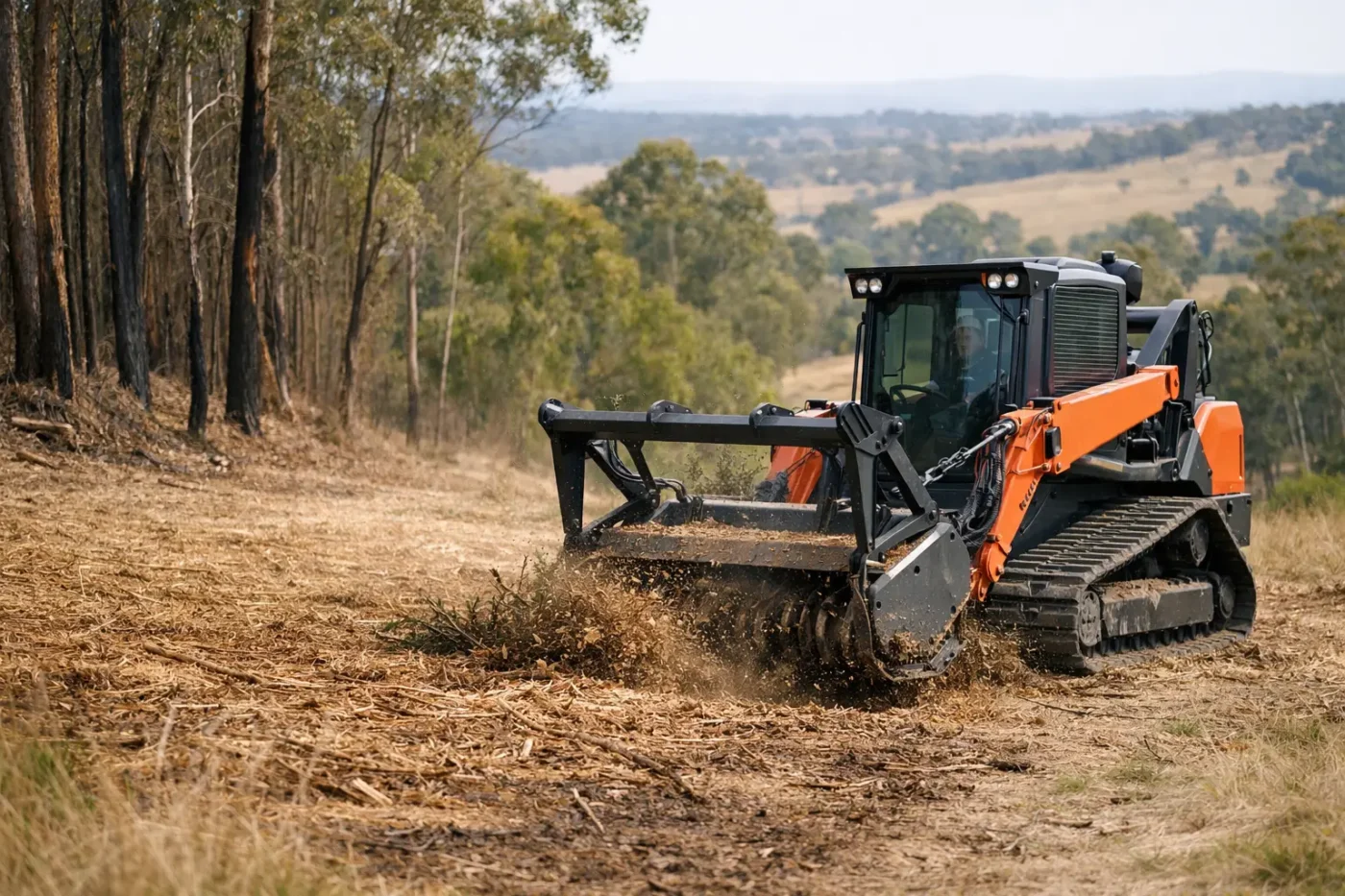
A dry summer does not leave much room for guesswork around the house, sheds, stock yards and boundary fences. Long grass, woody regrowth and low branches can turn a manageable area into a difficult fire edge quickly. The real bushfire mulching benefits come from reducing and managing vegetation in a practical way, while keeping the ground protected and the property easier to maintain after the machine has left.
Forestry mulching uses purpose-built machinery to process small trees, scrub, lantana, saplings, weeds and other vegetation into mulch across the ground. Unlike pushing vegetation into piles or burning it, the material is generally left in place as a broken-down ground layer. For rural and acreage properties across NSW, it can be an efficient part of broader fire-prevention, access and land-management works.
What bushfire mulching actually achieves
Bushfire mulching is not simply clearing everything bare. Done properly, it targets the vegetation that carries fire close to assets or allows flames to climb from ground level into shrubs and tree canopies. This is often called ladder fuel: the grass, weeds, lower limbs and regrowth that connect a surface fire with taller vegetation.
A forestry mulcher can work through dense regrowth while retaining selected mature trees and managing the understorey around them. This gives landholders more control than broadscale clearing, particularly where a property needs shade, shelterbelts, habitat trees or visual screening as well as better fire preparation.
The finished area still needs ongoing maintenance. Mulching reduces the size and continuity of vegetation, but it does not make a property fireproof. Grass will grow, seeds will germinate and leaf litter will continue to fall. Think of it as establishing a safer, more manageable starting point rather than completing the job forever.
Bushfire mulching benefits for rural properties
Reducing fine fuel and ladder fuel
The main benefit is the removal of upright, connected vegetation. Tall grass, woody weeds, blackberry, lantana, fallen branches and low scrub can all add to fire intensity and allow fire to move across a block faster. Processing this material breaks up that continuity and removes much of the vertical fuel structure.
This matters around homes, sheds, tanks, animal enclosures, machinery storage and fence lines. It can also help create workable zones around access tracks and internal roads, where crews or property owners may need to move during a fire event.
The mulch left behind still contains organic material and can burn under the right conditions. Its depth, size, moisture content and location all matter. A heavy layer of mulch immediately beside a building is not the same as lightly distributed material in a managed outer area. For this reason, vegetation management should be planned around the property layout, slope, existing fuel loads and the assets being protected.
Better access for maintenance and emergency response
Overgrown tracks are more than an inconvenience when conditions turn hot and dry. Branches can scrape vehicles, regrowth can hide washouts or obstacles, and narrow corridors make it difficult to reach fences, pumps, dams and remote paddocks. Mulching can reopen or widen access routes without the disturbance that often comes with full excavation or repeated burning.
Clearer access also makes routine work safer and faster. It is easier to inspect boundary fencing, check livestock, maintain water points, spray isolated weeds and get machinery to where it is needed. On larger holdings, maintaining usable internal tracks can save valuable time well beyond bushfire season.
Where access work is needed, it is worth considering drainage at the same time. A track that is clear but poorly drained may become boggy or eroded after heavy rain. In some cases, mulching, grading, drainage and minor earthworks are best planned as one job rather than handled in stages.
Protecting the soil better than pushing and burning
Forestry mulching leaves the root systems largely undisturbed and avoids extensive soil scraping. That can help limit erosion on slopes and reduce the chance of loose soil washing into dams, creeks or drainage lines after rain. The mulch layer can also moderate soil temperature, retain some moisture and gradually return organic matter to the ground.
This is especially useful where land has been neglected and thick regrowth has taken hold, but the owner wants to bring it back into use without creating a bare, exposed paddock. It can provide a sensible middle ground between doing nothing and undertaking more intensive clearing.
There are limits. In very wet ground, sensitive creek lines, steep country or areas with significant erosion, machinery selection and timing are critical. A site inspection helps identify where a mulcher is appropriate, where hand work may be needed, and where vegetation should be retained altogether.
Making fence lines and property boundaries manageable
Vegetation against a fence is a common rural headache. It creates a fire path, makes inspections difficult, places pressure on wire and posts, and gives weeds a place to spread. Mulching along fence lines can improve visibility and leave enough room for repairs, replacement posts or future upgrades.
It is also useful ahead of new fencing works. Clearing a practical line first allows the fencing crew to set out accurately, work safely and build a straighter, more durable result. For dog-proof fencing, stock fencing and equine fencing, a manageable corridor is not just tidier – it supports the long-term performance of the fence.
Controlling regrowth before it becomes a larger job
Small saplings and young woody weeds are generally faster and more economical to mulch than established stands. Regular vegetation management can stop a manageable maintenance task becoming a major clearing project involving difficult access, larger machinery or follow-up root removal.
Mulching alone may not eliminate invasive species. Some plants reshoot, while others establish again from seed. If the aim is long-term weed control, follow-up monitoring and targeted treatment may be required. The right approach depends on the species, season, property use and whether stock or waterways are nearby.
Planning fire-reduction mulching properly
Before any work starts, identify the assets that need protection and the routes that must stay accessible. Mark water tanks, underground services, septic systems, drainage structures, old fence wire, rock shelves and irrigation lines. These details affect both the safety of the job and the finish that can be achieved.
It is also important to decide what stays. Large healthy trees, stabilising vegetation on steep banks, habitat features and screening trees may all have a place in the plan. Selective mulching is usually more useful than indiscriminate clearing because it directs the budget towards the vegetation causing the greatest management problem.
For properties in bushfire-prone areas, fire planning requirements can vary depending on the site, development approvals and local conditions. Work around an asset protection zone should be checked against the relevant planning and fire-safety requirements. A contractor can help with practical vegetation work, but landholders should seek the appropriate advice where compliance, development approvals or environmental constraints apply.
Timing matters as well. Carrying out work before summer gives time to inspect the result, remove any remaining hazards and arrange follow-up slashing or weed control if needed. Wet weather, active ground-nesting wildlife, soft soils and seasonal access conditions may affect when a machine can operate safely.
When mulching is not the complete answer
Forestry mulching is highly effective for many blocks, but it is not the best answer for every situation. Mature trees near buildings may need professional arborist assessment. Large stumps, heavy timber, contaminated sites and substantial earth shaping may require excavator work, removal or a different method altogether.
If the goal is to establish a new building pad, dam, arena or driveway, mulching is usually an early preparation step rather than the final solution. Likewise, if vegetation is packed tightly against a dwelling, a detailed clean-up may involve pruning, removal of combustible stored materials and ongoing maintenance that a mulcher cannot replace.
A good contractor will be clear about these trade-offs. The best result is not the most ground cleared in a day. It is a property that is safer to manage, easier to access and suited to the way you actually live and work on it.
For landholders wanting to get ahead of regrowth before the next hot, dry stretch, a site-based plan is the sensible first move. Agtech Fencing & Rural Services can assess the access, vegetation and practical follow-up work needed to leave your property in better working order.