

Choosing Drainage Trenching Contractors in NSW
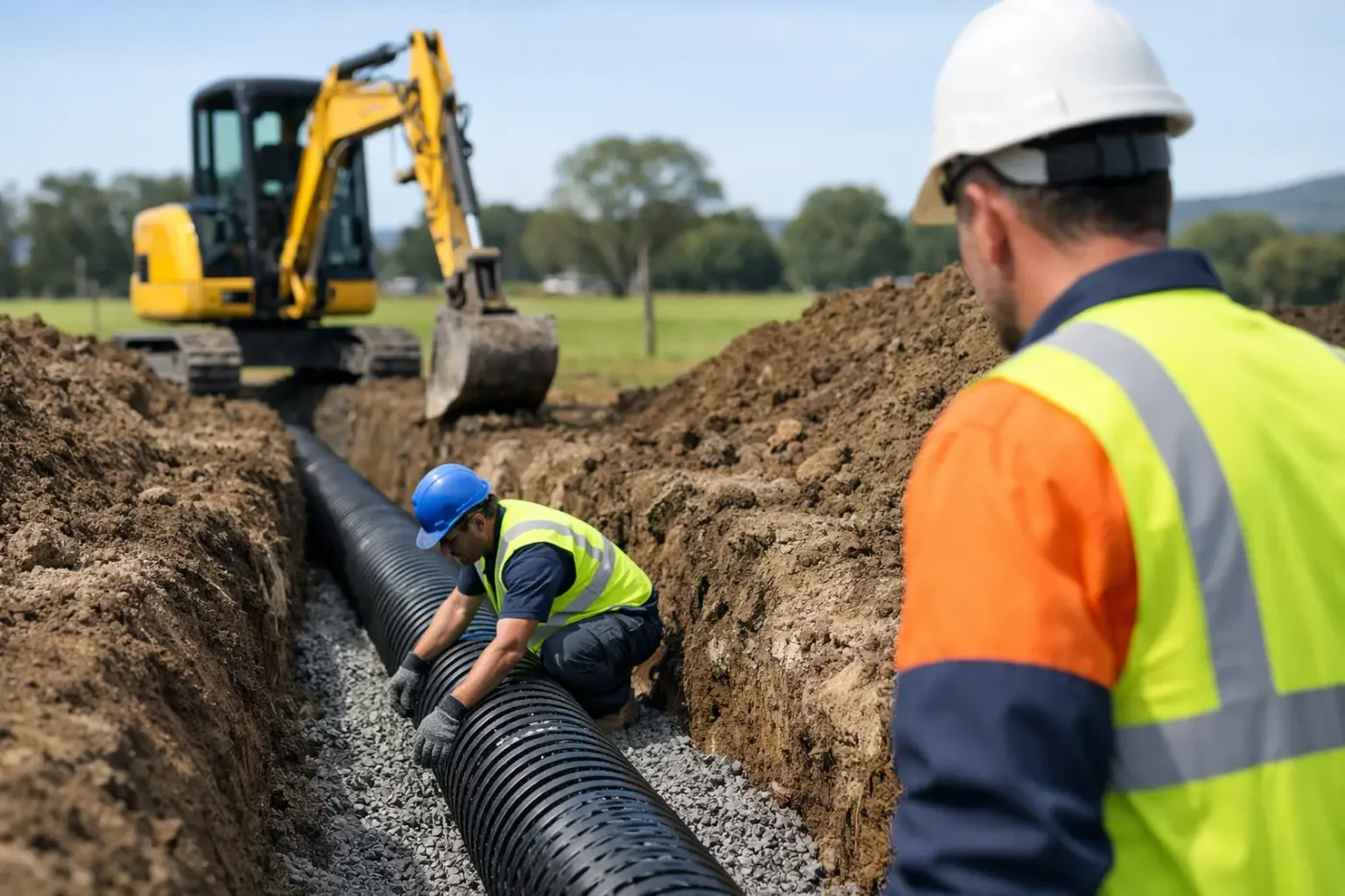
Water rarely causes trouble all at once. It starts with a soft patch beside the shed, wheel ruts holding water after rain, a boggy gateway, or runoff cutting across a track. The right drainage trenching contractors NSW landholders choose will look beyond the puddle and deal with where the water is coming from, where it needs to go and what it may damage on the way.
For rural and semi-rural properties, drainage is practical infrastructure. It protects access roads, sheds, yards, arenas, fence lines, paddocks and building areas. A trench that is too shallow, falls the wrong way or discharges in the wrong spot can simply move the problem downhill. Good planning and capable excavation make the difference between a quick fix and a result that keeps working through the next wet season.
What drainage trenching needs to achieve
Drainage trenching is not just digging a narrow channel. The job may involve installing agricultural pipe, directing surface water away from structures, preparing a trench for stormwater services, creating spoon drains or repairing washouts along a private road. The right approach depends on the soil, slope, rainfall, existing water paths and how the area is used.
On a horse property, for example, drainage around stables, yards and arenas can help keep footing safer and reduce muddy, high-traffic areas. On a cattle property, it may be about preserving a laneway or preventing a gateway from becoming unusable after rain. Around a shed or new home site, the priority is often keeping runoff away from slabs, pads and access points.
A useful drainage system needs a clear destination. Water may be directed to a suitable natural drainage line, dam catchment area, swale, table drain or approved outlet. It should not be pushed onto a neighbour’s property, undercut a bank or concentrated where it will cause erosion. This is why trenching should be assessed as part of the wider landscape, not as an isolated excavation task.
How drainage trenching contractors in NSW assess a site
Before machinery starts, an experienced contractor will walk the site and read the ground. Water does not always follow the line that looks obvious from the ute track. Minor changes in level, hard clay layers, old drains, compacted areas and road batters can all change its path.
The assessment should consider the source of the water, the required fall, soil type and the outlet. Heavy clay can hold water close to the surface, while sandy soils may drain freely but be more prone to scour when water is concentrated. In the Mid North Coast, New England, Hunter Valley and Northern Rivers regions, conditions can vary sharply between properties and even across one paddock. A drainage design that works on a gentle block with stable soil may not suit a steep, wet or heavily trafficked site.
Existing services matter too. Electrical cables, water lines, septic systems, communications lines and irrigation need to be identified before trenching. If a trench is being installed for pipe or a service line, correct depth, bedding and backfilling are just as important as the excavation itself. A rushed backfill can leave soft ground, future settlement or damaged pipework.
Match the trench to the job
There is no single trench depth or drainage product that suits every rural property. Shallow surface drainage may be enough to intercept runoff before it reaches a driveway. A deeper trench with slotted agricultural pipe and drainage aggregate may be needed where water is sitting around a building pad or retaining area.
For driveways, the work often combines cross-drainage, culvert installation, table drains and reshaping of the road surface. A culvert without enough capacity can block in a heavy downpour. A table drain without the right grade can fill with sediment. Likewise, a road that is flat across its surface tends to hold water rather than shed it. The drainage and road formation need to work together.
Around sheds, tanks and building pads, surface levels should direct water away from the structure. Trenching can carry collected water further from the work area, but it is not a substitute for correct site preparation. The finished pad, driveway and surrounding ground all need to be considered before the project is underway.
This is where a contractor with broader earthworks capability can save time and avoid double handling. Agtech Fencing & Rural Services can coordinate drainage trenching with access roads, shed pads, tank pads, dam clean-outs and vegetation work, helping landholders progress a larger property project with one practical crew and the right machinery on site.
Machinery matters, but operator judgement matters more
A Positrack and excavator each have their place in drainage work. A compact machine can be useful around sheds, yards and tighter access areas, while an excavator provides reach, digging depth and control for larger trenches, culverts and more difficult ground. The important part is selecting machinery that suits the site without causing unnecessary disturbance.
In wet ground, poor machine access can create more damage than the trench itself. In rocky country, excavation may take longer and require a different method. Near established fences, trees or services, careful digging is essential. A good operator works steadily, maintains the required fall and leaves the site tidy enough for the next stage of work.
Ask how spoil will be managed as well. Material from a trench may be suitable for backfill, but only after pipework and bedding are correctly installed. Excess spoil should not be left where it blocks runoff, damages a track or creates a future erosion point.
Questions worth asking before you book
The cheapest quote is not always the most economical outcome. Drainage failures are expensive because they often affect other work – washed-out gravel, damaged fencing, bogged vehicles, unstable pads or lost access after rain.
When comparing drainage trenching contractors, ask what they believe is causing the issue and where the water will discharge. Confirm whether pipe, aggregate, geotextile, culverts or other materials are included in the scope. It is also worth discussing access for machinery, likely ground conditions, reinstatement, and whether the contractor is insured and licensed for the work required.
Clear communication helps prevent surprises. Provide photos of the problem after rain if possible, explain how the area is used and point out any known services or underground infrastructure. If the job is part of a new fence, driveway, shed or arena project, raise that early. The best time to plan drainage is before finished surfaces and structures make access harder.
Avoid short-term drainage fixes
Some common fixes look effective for a few weeks but fail when conditions turn wet. A shallow trench can fill with silt. Pipe laid without enough fall cannot carry water away. An outlet positioned on a steep bare bank can create a washout. Filling a boggy area with more soil or gravel may hide the problem temporarily while trapping water underneath.
Maintenance still has a role, even with a well-built system. Table drains, culvert inlets and outlets need checking after major rain, particularly where leaves, grass, sediment or livestock activity can cause blockages. Keep outlets clear and watch for scouring, standing water or soft edges along driveways. Small repairs made early are usually far simpler than rebuilding a washed-out section later.
Plan for a property that stays usable
Reliable drainage gives you more than a dry patch of ground. It keeps vehicles moving, protects valuable improvements and makes day-to-day property management easier when the weather turns. The right trenching work is shaped around your land, your water flow and the jobs you need the property to handle.
If water is affecting your driveway, shed area, paddocks or building site, take the time to assess the whole path of the runoff before digging begins. A practical plan, sound workmanship and the right equipment can turn a recurring wet-weather headache into infrastructure that earns its keep.