

Dog Fencing Ideas for Secure Rural Properties
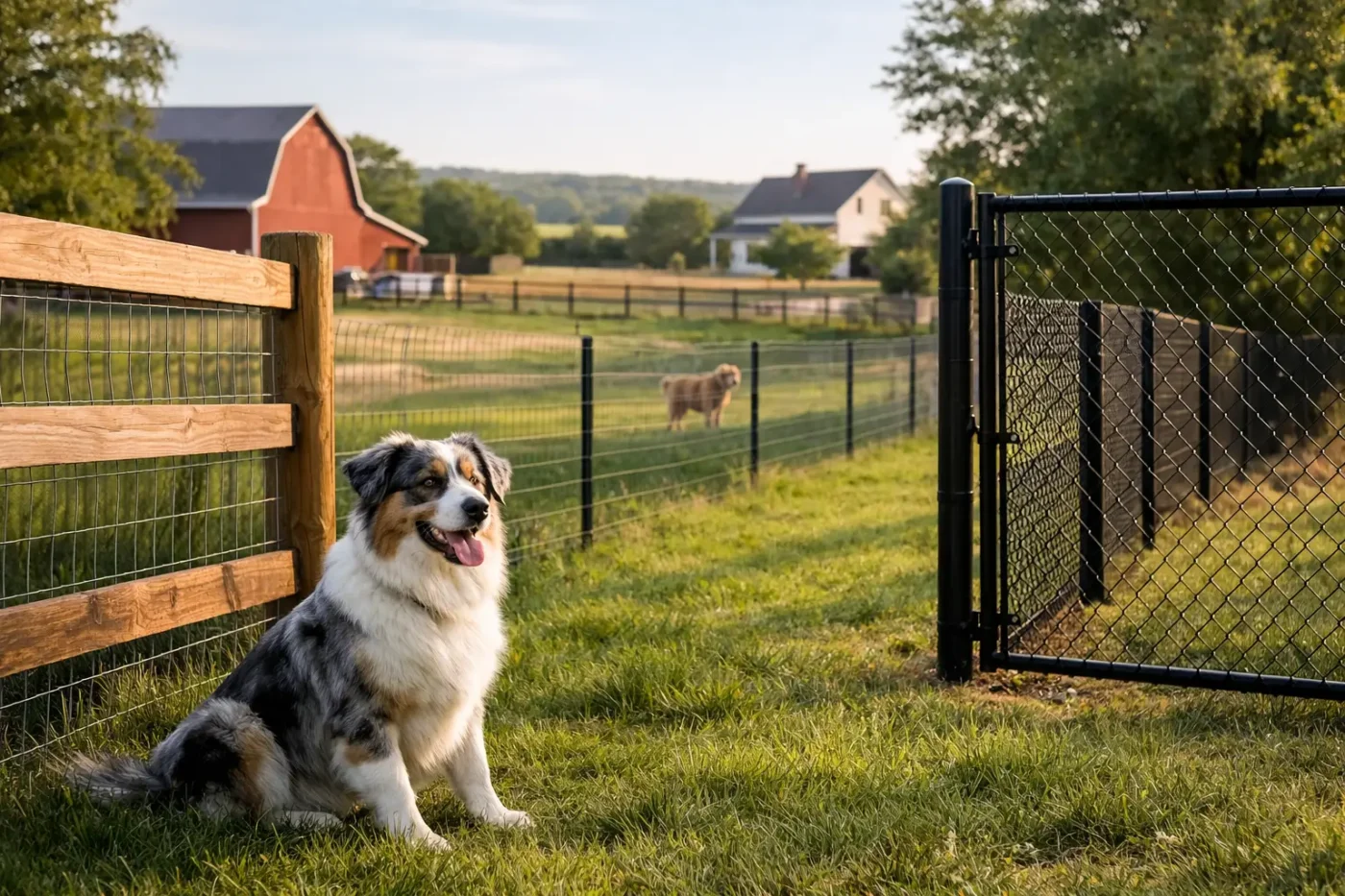
A dog that finds one weak point in a fence will return to it, dig under it or push harder next time. That is why the best dog fencing ideas start with how your dog behaves, the shape of the land and the job the fence needs to do – not simply the cheapest roll of mesh available.
For rural and semi-rural properties, dog fencing often has to handle more than keeping a pet in the yard. It may need to separate dogs from stock, protect poultry, keep working dogs safely close to the house, or stop wildlife and neighbouring animals getting in. A well-planned fence gives you a secure area without creating another maintenance job around the property.
Start With the Dog and the Ground
No two containment fences need to be identical. A small, calm dog on level ground has very different requirements to a strong, energetic kelpie, a determined digger or a large livestock guardian dog. Before selecting materials, consider the dog’s height, strength, jumping ability and tendency to dig, climb or squeeze through gaps.
The site matters just as much. Sloping country, creek lines, soft ground, rocky ridges and heavy clay all affect post depth, mesh tension and drainage. A fence that looks straight and secure on installation day can become loose at the bottom if runoff scours soil away beneath it. On rural blocks, allowing for the land rather than forcing a standard suburban design usually produces the better result.
It also pays to define the area properly. Is this a small house yard for daily use, a run attached to a kennel, a larger exercise paddock, or a boundary fence around several hectares? Larger areas may need vehicle access and more substantial gates. Smaller yards benefit from a layout that keeps dogs visible from the house and provides shade, water and a dry place to rest.
Dog Fencing Ideas That Work in Rural Settings
The right combination of posts, mesh and gate hardware delivers reliable containment. These practical options suit different dogs and property conditions.
Mesh fencing with strong, well-set posts
Quality galvanised mesh fencing is a common choice for dog yards and larger enclosed areas because it is visible, durable and practical to repair. Wire thickness and aperture size should suit the dog. A larger dog may be contained by an open mesh pattern, while small breeds and pups need closer mesh that prevents them slipping through.
The mesh is only as good as the framework holding it. Properly strained wire, solid end assemblies and well-driven or concreted posts keep the fence tight over time. Steel posts and pickets can be an efficient option across long runs, while timber, concrete or steel end posts provide the strength required at corners, gateways and changes in direction.
For dogs that jump, fence height matters. A fence around 1.5 metres may suit many dogs, but active or large breeds can need more height, an inward-facing top section, or a purpose-designed secure run. There is no benefit in installing a low fence then spending every afternoon checking whether the dog has cleared it.
Dig-proof protection at the base
Digging is one of the most common reasons a dog fence fails. If a dog can start at a loose edge, it may create a gap surprisingly quickly, particularly after rain softens the soil.
One practical approach is to extend mesh below ground level. Another is to create an outward-facing mesh apron laid along the ground and covered with soil or gravel. When the dog digs at the fence line, it meets the mesh rather than open ground. A concrete edge may be suitable around a smaller kennel run, but it is not always necessary or cost-effective across a large rural enclosure.
Take care around tree roots and uneven terrain. Trying to bury mesh deeply through rocky ground can increase costs without solving every gap. In these areas, careful shaping of the fence line, localised rock placement and tight bottom-wire work may be a more sensible solution.
Post and rail fencing with dog mesh
Post and rail fencing gives an acreage entrance, house paddock or equine property a tidy, traditional finish. On its own, however, it will not safely contain most dogs. Adding dog mesh to the inside of the rails creates a more secure barrier while retaining the appearance of the post and rail frontage.
This option is particularly useful near homes, driveways and horse facilities where presentation matters. It does require good workmanship. Mesh should be fixed neatly, tensioned correctly and installed in a way that does not create sharp cut ends or loose sections for a dog to catch on.
Post and rail with mesh can cost more than a basic wire fence, especially where quality timber and substantial posts are required. The trade-off is a durable, attractive fence that works with the rest of the property infrastructure.
Electric offsets for persistent fence challengers
For some properties, an electric offset wire can discourage dogs from leaning, climbing or digging at a mesh fence. It can also help keep livestock away from the fence line where dogs are contained on the other side.
Electric fencing is not a replacement for sound physical fencing. It is an added deterrent that relies on correct energiser selection, earthing, insulation and regular checking. It also needs careful planning where children, visitors or public-facing areas are involved. Used properly, it can reduce pressure on the main fence and help protect a larger dog enclosure.
Double-gated entry areas
A secure fence is of little use if a dog bolts through the gate every time a ute arrives. For busy households, farms and properties with regular contractors, a double-gated entry or small holding area is worth considering.
The first gate closes behind the vehicle or person before the second gate opens into the dog area. This arrangement is particularly useful for excitable dogs, households with children, and properties where gates are frequently used for feed deliveries, trades or machinery access. Gates need reliable latches, adequate clearance and posts that can handle repeated use without sagging.
Plan Gates, Corners and Drainage Properly
Most fence problems start at pressure points, not in the middle of a straight run. Gateways, corners, creek crossings and steep changes in grade need extra attention from the outset.
Choose gate width based on the job. A pedestrian gate may be enough for a small yard, but a larger enclosure needs access for a mower, side-by-side, ute or small machinery. Avoid placing a gate at the bottom of a slope or where water regularly sits. Muddy gateways are harder to use, damage quickly and can leave gaps beneath the gate.
Drainage should be part of the fencing plan, particularly on the North Coast and other areas that receive heavy rain. Water flowing down a fenceline can wash out soil below mesh, undermine posts and create a ready-made escape route. Spoon drains, diversion banks, gravel at gateways or minor earthworks may protect the fence and keep the enclosure usable through wet weather.
Where vegetation is heavy, clearing the fence line first makes a substantial difference. Vines, fallen branches and regrowth put pressure on wire, make inspection difficult and can create climb points for determined dogs. A clean, accessible line also makes future repairs faster and safer.
Keep Dogs Separate From Stock Where Needed
Dogs and livestock do not always mix, even when the dog is well trained. A dog enclosure near cattle, sheep, poultry or horses needs a layout that prevents direct contact through the fence. Dogs can worry stock from the other side of mesh, while livestock may lean on or damage a lightly built dog fence.
A buffer lane between the dog yard and stock paddock is often a sensible option. It gives space for maintenance, reduces fence pressure and keeps dogs away from hooves, horns and electric stock fencing. If the dog area sits close to poultry, use mesh small enough to prevent birds passing through and make sure the lower edge is secure against digging predators as well.
Working dogs may need a different arrangement again. Easy access to the house, a secure kennel area and direct but controlled movement to the yards can be more useful than a large fenced lawn. The design should support how the property operates every day.
Build for Inspection and Long-Term Repairs
A dog fence should be easy to check. Walk the line regularly, particularly after storms, falling branches, flooding or livestock movement nearby. Look for loose ties, strained mesh, washed-out soil, damaged posts and gaps at gates.
Material selection should reflect the expected workload and local conditions. Galvanised wire and fittings are a sensible choice where moisture is common. Treated timber needs to be suitable for in-ground use, while steel components should be selected and installed to manage corrosion and movement. Saving money on end assemblies, gates or strainers often creates repair costs later.
Professional installation is especially worthwhile where the fence crosses uneven ground, includes multiple gates, needs excavation or drainage work, or forms part of a broader property upgrade. Agtech Fencing & Rural Services can help landholders match practical fencing, clearing and earthworks to the conditions on site, rather than treating each job as a separate problem.
The best dog fence is the one that fits the dog, works with the land and stays secure when rain, traffic and daily farm life put it to the test. Plan the pressure points early, build the foundations properly, and you will spend more time enjoying your property than chasing a dog down the road.