

Dam Clean Out Excavator Work for Rural Dams
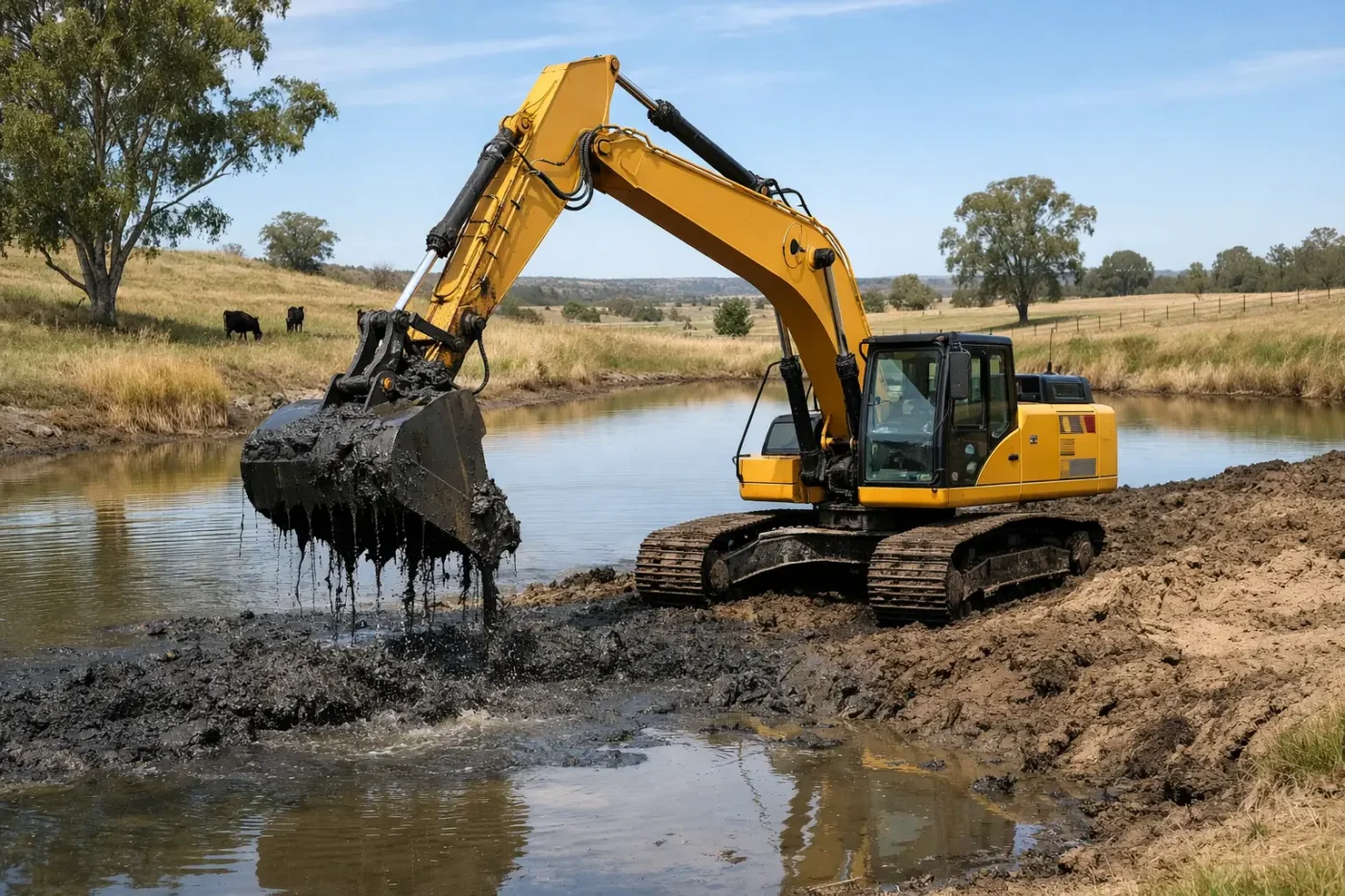
A dam that once held reliable water can gradually turn into a shallow, muddy basin. Silt builds up, stock trample the edges, weed growth takes hold and runoff carries more soil into the water after every decent rain. A dam clean out excavator gives rural landholders a practical way to recover capacity and make the asset easier and safer to manage.
For many properties, a dam clean-out is not just about making it look better. It can improve water storage, reduce boggy access points, protect pumps and trough systems, and help keep stock away from unstable banks. The right approach depends on the dam’s condition, its catchment, access for machinery and how the water is used.
When does a dam need cleaning out?
Sediment is usually the main issue. Over time, soil washes in from bare paddocks, tracks, drains and disturbed ground upstream. What was once a deep dam may still look full after rain, but it holds far less water than it did when it was built. In dry periods, that lost capacity becomes obvious.
Signs a dam may be due for attention include shallow water around most of the perimeter, reeds and weeds spreading well into the basin, soft muddy edges, exposed sediment shelves and reduced water available for livestock. If a pump is regularly drawing mud or debris, it may also be time to assess the depth around the intake.
A clean-out is also worth considering before investing in new fencing, stock yards, a pump or a water reticulation system. There is little point improving the infrastructure around a dam if the storage itself is no longer doing its job.
What a dam clean out excavator can achieve
An excavator is suited to controlled digging, shaping and loading work around rural dams. It can remove built-up silt, reshape battered banks, form a deeper section where appropriate and clean out blocked inflow areas. The objective is not simply to dig the deepest hole possible. It is to restore useful water storage without creating steep, unsafe or erosion-prone edges.
Removing sediment without damaging the banks
Silt removal needs a measured approach. Excavating too close to the edge or cutting banks too steep can leave them vulnerable to slumping, particularly after heavy rain. A capable operator works from stable ground where possible, removes material in stages and maintains practical batter slopes suited to the soil type and the dam’s use.
The removed material needs a plan as well. Depending on its condition, spoil may be spread in a suitable area, used to build up low ground or shaped away from drainage lines. It should not be left where the next storm can wash it straight back into the dam.
Improving access for stock and maintenance
Many older dams have no defined stock access point. Cattle and horses enter wherever the bank is lowest, turning multiple areas into soft, damaged bog holes. During a clean-out, it may be possible to establish a more manageable access area, repair surrounding ground and prepare for fencing that keeps livestock out of sensitive sections.
In some situations, fencing the dam and pumping water to troughs is the better long-term answer. It helps protect water quality, reduces bank damage and makes livestock management easier. For properties that still need direct stock access, the design needs to account for the animal type, soil conditions and how often the dam is used.
Plan the job before the excavator arrives
The best time to carry out a dam clean-out is usually when water levels are low and the ground is firm enough for safe machine access. Wet conditions can turn a straightforward excavation job into a recovery exercise, especially where the dam floor is deep clay or heavily saturated silt.
Before work starts, identify where the excavator will enter, where spoil will go and whether there are underground services, pumps, pipes or irrigation lines nearby. Check the dam wall, spillway and inflow paths as well. If the problem is excessive sediment, the source of that sediment should be addressed or the dam may fill back in sooner than expected.
Common causes include poorly drained tracks, exposed soil after clearing, unprotected creek crossings, livestock pressure and runoff concentrated by sheds or driveways. Sometimes a small diversion drain, reshaped table drain or stabilised access track makes as much difference as the excavation itself.
Landholders should also check any approval, environmental or water-management requirements that may apply to their location and the proposed scope of works. Requirements can vary depending on the dam, waterway connections, local controls and the amount of material being moved. Getting clear on this early avoids costly changes once machinery is on site.
Choosing the right excavator for the work
Machine size matters, but bigger is not automatically better. A machine needs enough reach and digging capacity to work effectively, while still being suitable for the access tracks, terrain and available working area. On tighter acreage blocks, a machine that can get through gates and around existing infrastructure can be more useful than a larger unit that cannot safely reach the job.
For many rural dam projects, an 8-tonne excavator offers a practical balance of reach, power and manoeuvrability. It can handle sediment removal, bank reshaping, trenching and associated drainage work without the footprint of a much larger machine. However, deeper dams, long reaches or large-scale reconstruction may call for different equipment or a staged approach.
A good site inspection should consider the dam’s depth, bank stability, access, surrounding trees, slope and whether the machine can work from dry ground. This is where experience saves time. The right machine plan reduces unnecessary disturbance and helps keep the work moving.
Do not overlook the dam wall and spillway
A dam clean-out can reveal problems that were hidden by weeds, water or accumulated sediment. The wall may show erosion, animal damage, tree roots or low sections that need attention. The spillway may be blocked, poorly shaped or cutting into the surrounding ground.
These areas deserve careful treatment. The wall and spillway are central to how the dam behaves during significant rainfall. Digging or driving on them without a clear plan can cause more harm than good. Any repairs should focus on stable earthworks, controlled water movement and appropriate compaction where required.
Trees growing on a dam wall are another issue to assess carefully. Their roots can create pathways for water through the wall, but removing a mature tree without considering the root system may also destabilise the area. The right solution depends on the tree, the wall condition and the level of risk.
Getting better value from the excavation work
Dam clean-outs often sit alongside other property improvements. If machinery is already on site, it may be efficient to repair a farm track, clear blocked drains, prepare a tank pad, remove stumps or carry out fencing preparation in the same mobilisation. This can reduce the disruption of booking separate contractors and give the property a more coordinated result.
That does not mean every job should be expanded. The priority is always the work that protects water storage, access and safety. A clear scope and realistic quote help landholders decide what needs doing now and what can be planned for later.
Agtech Fencing & Rural Services approaches rural earthworks with that practical mindset: assess the ground, use suitable machinery and complete work that stands up to regular farm use. Clear communication about site access, spoil placement and the intended result is just as important as the excavation itself.
A cleaner dam needs ongoing care
Once capacity has been restored, protecting it is far easier than repeating the same clean-out a few years later. Maintain drains and tracks so runoff does not cut channels towards the water. Keep groundcover where possible, manage livestock pressure around the banks and inspect the spillway after major rain.
A dam should work for the property, not become another maintenance headache. With a sensible clean-out plan and attention to the causes of sediment, it can return to being dependable water storage for stock, domestic use or general farm operations.