

Best Rural Fence Materials for NSW Properties
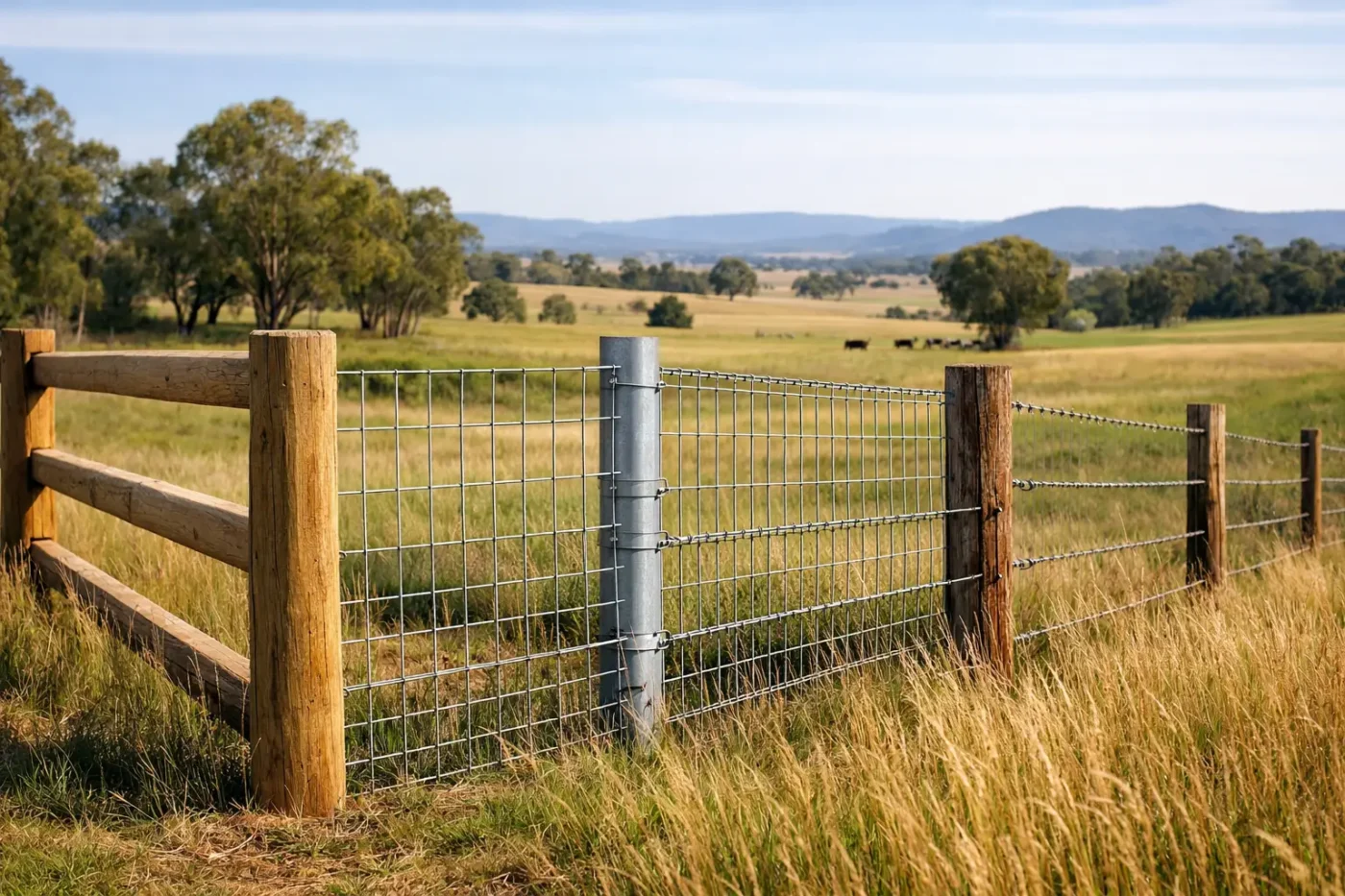
A fence can look straight and tidy on the day it is built, then become an expensive headache after the first wet season, stock pressure or grassfire. Choosing the best rural fence materials is not about selecting the toughest product on the shelf. It is about matching posts, wire, stays and gates to the job your property needs the fence to do.
For a cattle boundary, a horse paddock, a dog-proof perimeter and a front entrance, the right answer will be different. Ground conditions, access for machinery, drainage, vegetation and the amount of ongoing maintenance you are prepared to manage all matter. A well-planned fence is secure, serviceable and built to keep working when the conditions turn against it.
Start with the fence’s job
Before comparing materials, be clear about what the fence must contain or exclude. Livestock fencing needs enough strength and visibility for the animals involved. Dog-proof fencing relies on close wire spacing and careful attention at ground level. Equine fencing needs to reduce injury risk, while boundary fencing may need to withstand fallen branches, wildlife and occasional pressure from neighbouring stock.
The fence line itself also changes the specification. Flat, well-drained ground is straightforward compared with steep country, creek crossings, swampy patches or rocky ridges. On properties across the Mid North Coast and New England, a single boundary can run through soft coastal soils, hard clay and timbered slopes. Materials and footing depths should suit the worst sections of the run, not only the easy ground near the gate.
A good design also allows for practical maintenance. If a wire breaks or a post is damaged, can it be repaired without dismantling half the fence? Straight strainers, correctly braced corners and sensible gate placement make a major difference over the life of the job.
Best rural fence materials: posts and stays
Posts carry the load of the whole fence. Saving money on end assemblies or corners often leads to loose wires, leaning gates and repeat repair work. The best choice depends on soil, exposure and the fence type.
Treated timber posts
Treated timber remains a popular option for rural fencing because it is familiar, practical and suits most stock, boundary and post-and-rail applications. Quality treated hardwood or plantation pine posts can provide a strong, traditional finish, particularly where appearance matters around homes, laneways and horse paddocks.
Timber performs well when posts are properly sized, driven or concreted where required, and installed with drainage in mind. Its limitations are natural variation and eventual decay, particularly in constantly damp ground or termite-prone areas. Check that the treatment level is suitable for in-ground use, rather than assuming every treated post is equal.
Split timber posts are often a cost-effective solution for standard farm fencing. They suit a rural look and can work well with plain wire or hinge-joint mesh, but should not be used where a high-load strainer assembly is needed unless the post size and condition are up to the task.
Concrete posts
Concrete posts are a strong option in wet ground, termite-prone country and high-pressure fence lines. They do not rot, and their consistent shape can make them useful for long runs of stock fencing or dog-proof fencing. Concrete is also a sensible choice where fire exposure is a concern, as it will not burn.
The trade-off is weight. Concrete posts require careful handling and suitable access, and they can crack if mishandled or subjected to sharp impact. They are usually best paired with properly engineered strainers and quality wire rather than treated as a shortcut for poor fence design.
Steel posts and pickets
Steel posts and pickets are fast to install, consistent and well suited to long rural runs. Star pickets are commonly used as intermediate posts for stock fencing, especially where machine access allows efficient installation. Galvanised steel posts can offer a clean, durable finish for specific applications.
Steel is not always the best choice on its own. Pickets need appropriate spacing and sufficient wire tension to avoid a loose fence, while exposed steel can be a concern for horses if the fence is not designed with safe, visible rails or tape. In corrosive coastal areas, galvanising quality matters. Scratches, poor-quality coatings and constantly wet soils can shorten service life.
Timber or steel strainers
Strainer posts, corner assemblies and stays take the greatest load. These are not the place to compromise. Large treated timber strainers remain a proven choice for many rural jobs, while heavy steel assemblies can suit high-tension and long-life fencing systems.
The key is the assembly, not simply the post material. A correctly installed strainer needs sound footing, a suitable stay or brace, and wire tension set for the fencing product. If the end assembly moves, every wire along the run will lose tension.
Choosing the right wire and mesh
Wire selection controls containment, visibility and the fence’s ability to stand up to pressure. Plain wire, barbed wire, hinge-joint mesh, welded mesh and electric systems all have a place, but none is a universal answer.
High-tensile plain wire is widely used for cattle and general farm fencing. It is economical across long distances and, when installed with strong strainers, can provide a tidy and durable result. Barbed wire may be used on selected boundary or cattle applications, but it is generally unsuitable for horse fencing due to injury risk.
Hinge-joint mesh is a practical material for sheep, goats, smaller stock and dog-proof fencing. It gives closer spacing than plain wire and provides a physical barrier where electric wire alone may not be reliable. For dogs, mesh should be set close to ground level, with attention paid to gullies, washouts and places where animals can dig underneath. An outward apron or additional ground wire may be needed on determined dog runs.
Welded mesh can suit smaller, more controlled areas, but it is less forgiving on uneven rural ground. For long undulating fence lines, hinge-joint products usually follow the contour more effectively.
Electric fencing is often one of the most cost-effective tools available, particularly for controlled grazing and internal paddock division. It works best as part of a properly designed system with a reliable energiser, effective earth system, clear fence line and regular vegetation control. A single electric wire through long grass is not a dependable boundary fence. It is a management tool that needs ongoing attention.
Materials for horses, dogs and high-visibility areas
Horses need a fence they can see before they reach it. Post-and-rail fencing offers excellent visibility and a traditional appearance, making it a strong choice for entrances, arenas and horse paddocks. It does require maintenance, and rails can be damaged by horses that lean or crib.
Electric tape or rope can improve visibility on equine fencing when installed correctly, often alongside safe mesh or rail systems. Avoid using barbed wire for horses, and be cautious with plain high-tensile wire where horses may run into a fence. The cheapest material can become costly if it creates an injury risk.
For dog-proof fencing, the material is only part of the solution. Gates need tight clearances, mesh must be properly tied off, and low points must be protected. A dog-proof fence is only as secure as its weakest gate, drainage crossing or section hidden by blackberry and lantana growth.
Do not overlook gates, fixings and ground preparation
A durable rural fence relies on more than posts and wire. Good galvanised clips, tie wire, staples, tensioners and hinges keep the system operating as intended. Gate posts need enough depth and strength to carry the gate without sagging, while gate width should suit the machinery that will actually use the track.
Drainage and vegetation management also affect fence life. Water flowing along a fence line can scour beneath mesh, soften post holes and undermine gateways. Trees, vines and regrowth put weight on wires and create faults in electric systems. Clearing the line, addressing drainage and removing problem roots before construction can prevent avoidable repairs.
For larger property works, Agtech Fencing & Rural Services can coordinate fencing with vegetation management, drainage and earthworks so the fence is not being built around issues that should have been fixed first.
Make the material choice fit the whole property
There is no single winner among rural fencing materials. Treated timber may be right for a visible horse paddock, concrete for wet or termite-prone ground, steel pickets for an efficient stock-fence run, and hinge-joint mesh for a secure dog boundary. Many of the best fences use a combination: strong strainer assemblies, durable intermediate posts, suitable wire and properly hung gates.
Before ordering materials, walk the fence line after rain if possible. Mark gullies, rock, soft ground, old stumps, gate locations and any section likely to collect debris. That small amount of planning gives you a fence specification that suits the country, protects your stock and delivers workmanship that lasts.