

Split Post Fencing Installation That Lasts
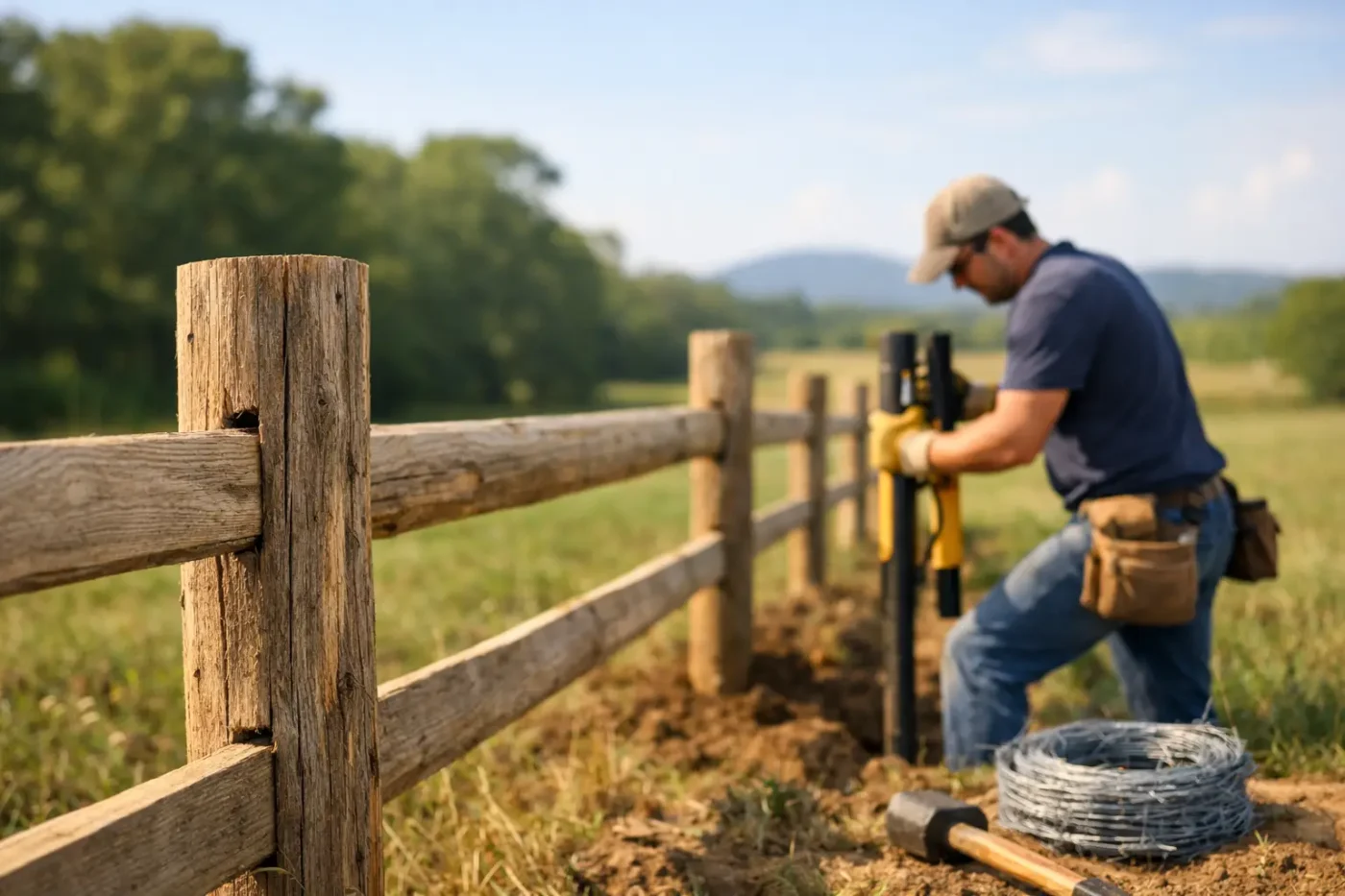
A split post fence can look right at home on a rural block, but its performance comes down to what happens below ground and at each change of direction. Done properly, split post fencing installation creates a strong, practical boundary for livestock, horses, property lines and entrance areas. Done poorly, even quality timber can lean, loosen or fail before its time.
Split posts suit many NSW properties because they are tough, visually natural and well suited to uneven ground. They are not, however, a one-size-fits-all answer. Stock pressure, soil type, terrain, drainage and the fence’s purpose all need to be considered before the first post is driven or set.
Start With the Job the Fence Needs to Do
The first question is not what the fence should look like. It is what it needs to contain, exclude or protect. A boundary fence with plain wire has different demands from a horse paddock, a cattle yard approach or a dog-proof perimeter.
For general stock fencing, split posts may be used with barbed wire, plain wire or hinge joint mesh, depending on the livestock and local requirements. Horse fencing usually calls for a more considered layout, highly visible rails or safe wire options, and clean finishes around gates. If the fence is intended to keep dogs in or pests out, mesh selection, bottom-wire detail and ground contact become more critical.
Post spacing also follows the job. Wider centres can work on straight, level ground with suitable wire tension, while undulating ground or high-pressure areas often need closer line posts. Trying to save a few posts at the start can result in a fence that moves under load and requires regular repairs.
Site Preparation Before Split Post Fencing Installation
A fence line is only as good as the ground it is built on. Long grass, saplings, fallen timber, old wire and uneven spoil make accurate set-out difficult and slow the job down. They can also leave future access problems when the fence needs checking or repairing.
Mark the intended line before work begins, particularly near boundaries, easements, creek crossings and existing services. On rural properties, it is worth walking the full run rather than judging it from one end. A small rise, washout or rock shelf can change post lengths, spacing and the location of strainers.
Vegetation management may be needed before fencing starts. Clearing a sensible working corridor allows machinery and crew access without unnecessarily disturbing the surrounding land. Where there is heavy regrowth, lantana, blackberry or woody weeds, dealing with it before the fence goes in helps prevent the new structure becoming buried and difficult to maintain.
Drainage deserves the same attention. Water running along a fence line can scour soil from post bases, undermine mesh and turn gateways into boggy trouble spots. On sloping land, small diversion drains, better placement of the line or a properly formed crossing can prevent ongoing damage. A fence should follow the land where practical, not create a channel that concentrates water.
Check Ground Conditions and Post Depth
Split posts need sufficient embedment to resist wire strain, stock pressure and seasonal ground movement. There is no universal depth because sandy soil, clay, shale, rock and filled ground all behave differently. As a working principle, the heavier the fence load and the weaker the soil, the more attention needs to go into post depth and bracing.
Corner, end and gate posts carry the highest loads. These are not ordinary line posts with a bit more wire attached. They need to be selected, installed and braced to hold tension over years of weather changes and livestock contact. In soft or wet ground, a larger post, deeper installation or a different bracing arrangement may be required.
Rocky country brings another trade-off. Driving posts can be efficient where conditions allow, but refusal on buried rock can leave inconsistent depths. In those areas, excavating selected holes, using suitable machinery and adjusting the fence design can produce a more dependable result than forcing every post into unsuitable ground.
Build Strong Corners, Strainers and Gateways
Most fence failures begin at the points under tension. A well-built strainer assembly transfers the load through the post and brace system instead of allowing the end post to pull forward. That matters whether the fence is a short paddock divide or a long boundary run.
The correct brace style depends on the fence layout, terrain and wire system. Straight runs need sound end assemblies, while corners and significant rises may need additional strainers to control tension. Where a fence changes direction sharply, treating it as a simple line-post corner is a false economy.
Gateways need planning early, not after the fence is complete. Consider the width needed for a tractor, ute, stock trailer, feed delivery or machinery float. Put gates on firm ground where possible, with enough room to swing clear and avoid creating a waterlogged entrance. Gate posts must be strong enough to carry the gate weight without sagging, especially with wide farm gates or frequent use.
For properties with horses, choose gate locations and latches that are safe and straightforward to operate. Avoid sharp protrusions, loose wire ends and awkward swings into laneways where animals are being moved.
Choose Timber and Wire for Local Conditions
Split posts are valued for their natural form and durability, but timber quality varies. Select posts that are appropriately sized for their role, reasonably straight through the section that will be installed, and free from major defects that compromise strength. Larger, heavier posts belong at corners, ends and gates. Line posts can be lighter, provided they suit the fence design and ground conditions.
The right wire or mesh is equally important. High-tensile wire can provide a clean, firm fence when correctly strained and fixed, but it places significant load on end assemblies. Hinge joint and other stock mesh products offer greater containment where smaller animals are involved, though they need proper tension and secure fastening. Barbed wire may be appropriate for some cattle applications but is generally not the preferred choice around horses.
Fasteners should hold wire securely without damaging it during installation. Staples driven too tight can pinch wire and reduce its ability to move with temperature changes. Loose fixings, on the other hand, allow wires to rub, sag and wear. Good workmanship sits in the detail: consistent wire heights, tidy joins, correct tension and ends finished safely.
Allow for Movement, Not Just a Straight Line
Timber, wire and soil all move. Timber seasons and can check, wire expands and contracts, and wet clay can shift around a post base. The aim is not to make a fence rigid at every point. It is to build a structure that manages those changes while keeping its line, tension and function.
On rolling country, spacing and wire placement should follow the contours closely enough to prevent stock getting under or through the fence. Droppers, additional posts or careful contour adjustments may be needed in gullies and over crests. This is particularly important for dog-proof fencing, where a small gap at ground level defeats the purpose of the entire run.
Plan for Access and Future Maintenance
A practical fence is one you can inspect and repair without turning a simple job into a major operation. Leave sensible access along long boundaries where the property layout allows it. Keep vegetation from growing into mesh and lower wires, and check tension after major rain, storm damage, fallen branches or livestock pressure.
Regular checks are especially worthwhile around gateways, creek lines, corners and tree-dense sections. These are the places most likely to suffer impacts, erosion or branches falling across the fence. Addressing a loose strainer wire or damaged post early is far cheaper than rebuilding a collapsed section.
For larger property improvements, fencing often sits alongside drainage work, access-road upgrades, clearing or new paddock layouts. Coordinating those works in the right order avoids driving machinery across a finished fence line or installing posts where excavation is still required. Agtech Fencing & Rural Services can help landholders plan fencing as part of a practical, site-ready property project.
A split post fence should suit the ground, the animals and the way you work your property. Take the time to walk the line, identify pressure points and get the foundations right. The finished fence will be stronger, easier to maintain and ready to do its job when conditions get tough.