

Concrete Fence Posts Installation Done Right
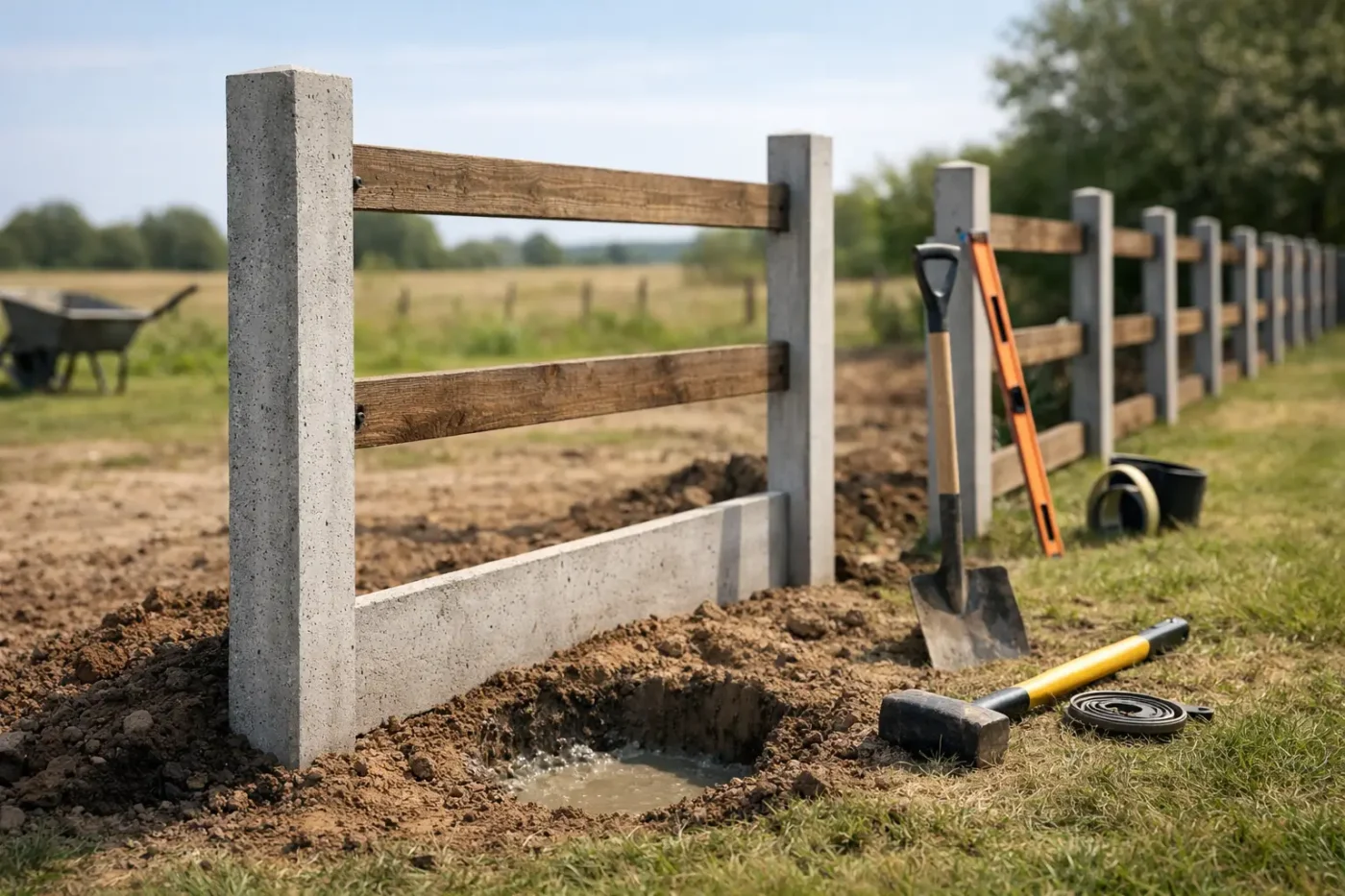
A fence can look straight on the day it is built and still become a headache after the first wet season. Leaning strainers, sagging wire and loose gates usually start below ground. Concrete fence posts installation needs more than dropping posts into a hole and filling around them. Correct set-out, suitable footing depth, drainage and proper bracing determine whether the fence stays secure through stock pressure, weather and regular use.
For rural and acreage properties, concrete posts are a practical choice where durability, fire resistance and low ongoing maintenance matter. They suit stock fencing, boundary fencing, dog-proofing and selected equine applications, but the post, footing and wire system must be matched to the job.
Start with the fence’s job
Before materials arrive, decide exactly what the fence needs to contain, exclude or protect. A quiet boundary fence has very different demands from a cattle paddock, dog-proof perimeter or high-use laneway. Stock type, fence height, wire configuration, gate locations, terrain and the likelihood of fallen branches all affect the design.
Concrete posts are strong and long-lasting, but they are not a cure for poor fence design. A light line-post system may be suitable across level ground with modest stock pressure. At corners, ends, changes of direction and gateways, the fence carries far greater load. Those locations need correctly sized strainer posts, braces and stays to resist wire tension. If the end assemblies move, the whole fence will progressively lose tension.
It also pays to consider future access. Gates should be positioned where vehicles, horse floats, feed deliveries or machinery can enter without cutting up a corner or forcing a tight turn. On larger properties, planning fencing alongside driveway, drainage, clearing or earthworks can avoid redoing work later.
Set-out for concrete fence posts installation
A reliable fence starts with a clear line. Mark the boundary or desired alignment, identify corners and gates, then run a tight string line between end points. On undulating country, do not assume one straight visual line will give a practical fence. Hollows, ridges, creek approaches and rocky shelves may require careful adjustments to maintain clearance, wire tension and stock control.
Locate underground services before digging, particularly around houses, sheds, stock yards and existing infrastructure. Check for overhead powerlines as well when handling long posts or operating machinery. Boundary location should be confirmed before construction rather than guessed from an old fence line, as old fences are not always on the legal boundary.
Post spacing depends on the fencing system and ground conditions. Consistent spacing keeps the job neat and helps wires work as intended, but it should not override common sense. Closer spacing may be needed through soft ground, around pressure points, on crests and where animals are likely to lean or rub. A good contractor will adjust the layout without compromising the fence line.
Get the footings right
The hole is where long-term performance is won or lost. Depth and diameter depend on post size, soil type, fence height, wire tension, exposure and whether the post is a line post or a loaded strainer. There is no single depth that suits every rural fence.
Firm clay can provide good bearing, although it may hold water if drainage is poor. Sandy ground often needs a wider or deeper footing to resist movement. Rocky sites can require different equipment and a revised approach, while reactive soils may move with changing moisture levels. In flood-prone ground, consider scour, debris impact and how saturated soil will affect the post over time.
As a general rule, loaded end, corner and gate posts need substantially more support than ordinary line posts. Their footings must resist the combined pull of tensioned wire and gate movement. Setting every post to the same depth may be quick, but it is rarely the best use of time or materials.
Concrete around a post can provide a solid footing where the site and fence design call for it. The mix needs to be placed properly, consolidated around the post and finished so water does not sit against the base. Simply pouring a thin collar at ground level will not hold a heavily loaded post in weak ground. Conversely, over-concreting every light line post can add unnecessary cost and make future alterations harder.
Keep posts plumb and on line
Once a post is in position, check it from more than one direction before the footing is finalised. A post that is only checked against the string line can still lean forward or back. Use a level, maintain the required height and brace the post until the concrete has gained enough strength to hold it securely.
Take extra care with corners, ends and gate posts. These are the posts people notice when a fence looks out of square, and they are also the posts that carry the most force. Bracing should be installed in the right direction to oppose the wire pull. Gate posts need to be set for the actual gate weight and swing, not just the opening width.
Do not rush to tension wires on freshly set posts. Cure time varies with the concrete mix, weather and footing size, but loading posts too early can pull them out of alignment before the concrete has properly hardened. A little patience at this stage prevents costly correction later.
Drainage is part of a durable fence
Water changes ground conditions, especially on the Mid North Coast, in the Hunter and across areas that alternate between dry spells and heavy rain. If runoff is directed along a fence line, it can erode footings, expose concrete and leave posts unsupported. If water sits in a low point, it can soften the ground around posts and make stock crossings boggy.
Plan the fence with drainage in mind. Minor grading, table drains, spoon drains, culverts or a carefully positioned crossing may be needed before the fencing work begins. On sloping sites, the fence should follow the land in a way that manages gaps beneath the bottom wire without creating channels for water to race under it.
Vegetation also matters. Tree roots can make excavation difficult and later movement can affect a fence line. Overhanging limbs bring ongoing branch-fall risk, while thick regrowth can hide damaged wires and make routine checks harder. Clearing only what is necessary, then allowing safe access for maintenance, usually gives the best outcome.
Match the post system to the fence type
Concrete posts can be used with a range of wire and mesh systems, but the connection details matter. High-tensile wire needs suitable clips, insulators where electric offsets are used, and properly built strainers. Mesh fencing needs secure fixing so it cannot be pushed down or peeled away by dogs, pigs or livestock. For horse properties, visible and well-tensioned fencing is often preferred, with designs chosen to reduce injury risk.
Where corrosion is a concern, select compatible fittings and wire. Coastal influence, wet gullies, fertiliser storage areas and livestock yards can all shorten the life of unsuitable materials. The cheapest post or wire on the quote is not always the lowest-cost option over ten or twenty years.
A practical design also allows for repairs. Rural fences deal with fallen timber, wildlife, flood debris, curious cattle and the occasional vehicle mishap. Using proven materials and sensible post spacing means isolated damage can be repaired without rebuilding a whole run.
When professional installation is worth it
Short, light-duty runs on accessible ground can be manageable for experienced landholders with the right gear. Longer boundaries, rocky country, steep slopes, high-tension systems, major gateways and dog-proof fencing are different work. They demand accurate set-out, suitable machinery, safe handling of heavy posts and a clear understanding of where loads transfer through the fence.
A professional crew can assess the site before starting, identify drainage or access issues, build strong end assemblies and keep the work moving efficiently. For property owners coordinating clearing, excavation, access tracks or gate installation at the same time, using one capable rural contractor can also reduce delays between trades.
The best fence is not necessarily the heaviest one. It is the fence that suits the land, the animals and the way the property operates, with every concrete post placed to do its share of the work. Get the foundations and strainers right from the outset, and the finished line will keep doing its job long after the concrete has cured.