

Hardwood Property Gates Built for Rural NSW
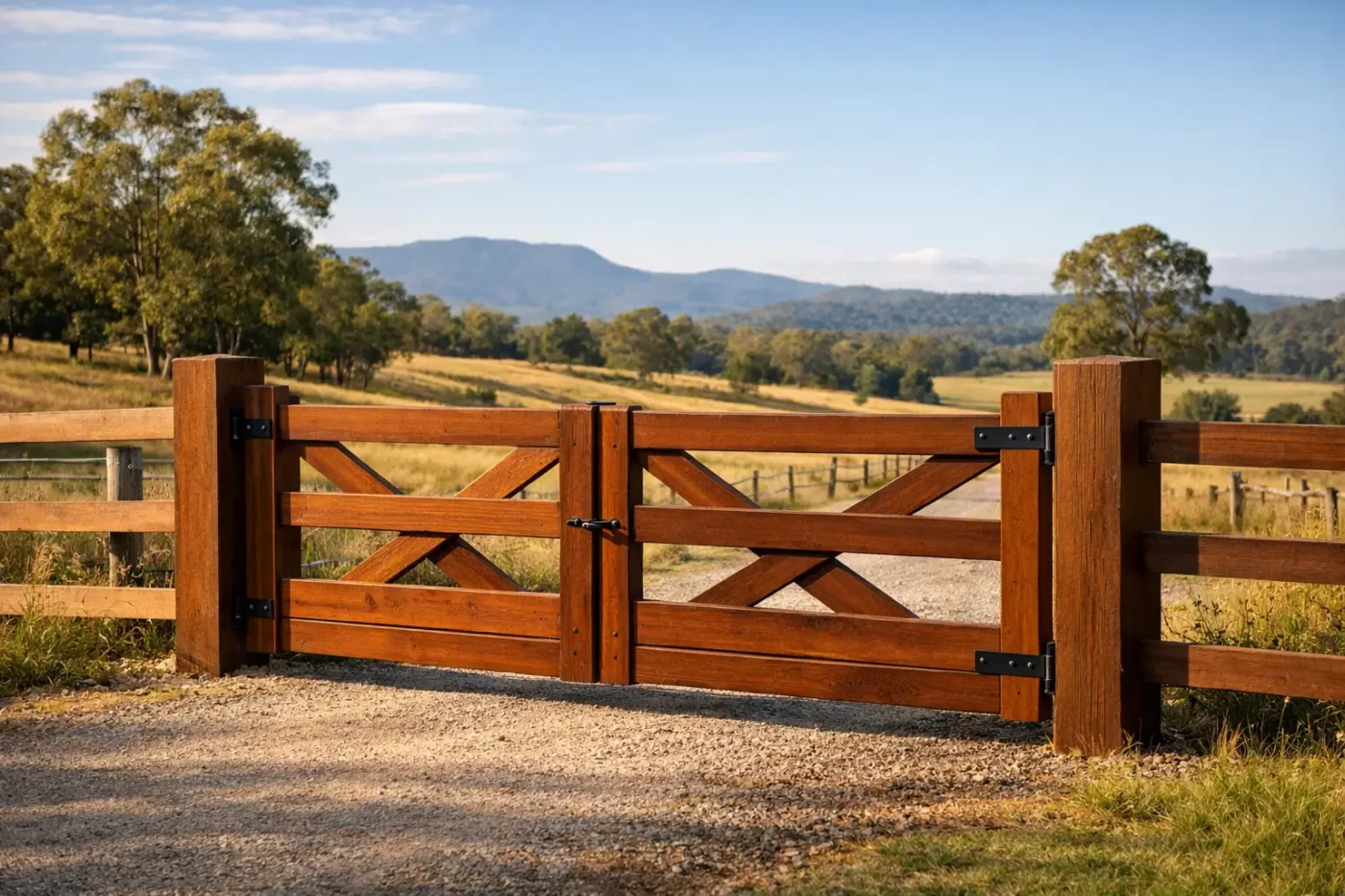
A gate that drags through the dirt, sags on its hinges or leaves a gap for stock is more than an annoyance. It slows down every trip through the property and can quickly become a security or animal-management issue. Well-built hardwood property gates give rural entrances a strong, practical finish, but the right result depends on far more than choosing attractive timber.
For acreage blocks, farms, horse properties and rural homes, a timber gate needs to handle regular use, changing weather, uneven ground and the occasional bump from machinery or a ute. Planning the opening, posts, hardware and fence connection properly from the start is what keeps the gate working as it should.
What Hardwood Property Gates Need to Do
A property gate has a job to do. At a house entrance, it may need to improve street appeal and provide a clear boundary. On a paddock, laneway or stock route, it needs to open easily, close securely and stand up to constant use. Gates around equine areas often need smooth, safe construction with no protruding fittings or gaps that could cause injury.
Hardwood is a popular choice because it has natural strength, weight and a traditional rural appearance. It suits post and rail fencing particularly well and can be built to complement existing timber fences, steel fencing or a mixed boundary system. Good hardwood gates can look right at home on both established farms and newer lifestyle properties.
That said, timber is not maintenance-free. Sun, rain, soil moisture and movement at the hinge side all affect its lifespan. A gate that is beautifully made but hung from undersized posts will still sag. Likewise, a well-set gate can be damaged if it is left resting on wet ground or constantly slammed shut.
Start With the Access You Actually Need
The biggest mistake with rural gates is sizing them only for day-to-day vehicle access. A standard vehicle may fit comfortably, but that does not mean a stock trailer, tractor, slasher, float, delivery truck or excavator can get through without damaging the gate or fence line.
Before selecting a gate, consider the widest equipment that will realistically use that entrance. Think about turning space as well as the opening itself. An access point off a narrow road, around a dam or beside an existing shed may need a wider gate or a different layout to make entry practical.
For many properties, a pair of hardwood gates is a sensible option. Double gates allow a wide opening without creating one oversized, very heavy leaf. On the other hand, two leaves mean two sets of hinges, a centre catch and more alignment points to maintain. Where access is used frequently, the best arrangement depends on the traffic pattern and the ground conditions.
A pedestrian access gate alongside a larger vehicle gate can also reduce unnecessary wear. Instead of swinging a heavy main gate every time someone walks through, the smaller gate handles regular foot traffic while the larger opening stays secure for machinery and stock movements.
Choose Timber for Strength and Appearance
Not all hardwoods perform the same way. Timber selection should suit the gate design, available material, exposure to weather and the look of the surrounding fence. Dense Australian hardwoods are commonly used for rural fencing because they are durable and capable of carrying the weight and stresses associated with larger gates.
The exact species matters, but sound construction matters just as much. Straight, quality timber with appropriate dimensions will generally perform better than poorly selected timber that looks good on the day it is installed. Timber should be allowed for natural movement, particularly in exposed locations where one side of the gate receives more sun and weather than the other.
A simple hardwood gate with solid rails, well-braced framing and tidy fixings will usually outlast an overcomplicated design. Decorative features can work well at a front entrance, but they should not compromise the gate’s structural strength or make future repairs difficult.
For properties close to the coast or in high-rainfall parts of NSW, moisture exposure deserves extra attention. Galvanised fittings are a dependable choice for many rural applications, while other hardware finishes may be selected to match the property style. The important point is using fittings rated for the job, not light-duty hardware that will loosen or corrode under a heavy gate.
The Hinge Posts Carry the Whole Job
A hardwood gate is only as reliable as the posts supporting it. The hinge post takes the gate’s weight every time it is opened, closed or caught by wind. If it is too small, not set deep enough or installed in unstable ground, the gate will eventually drop out of alignment.
Post size and footing depth should be matched to the gate width, weight, soil conditions and exposure. A wide entrance with heavy hardwood leaves may require substantial end assemblies, bracing or additional support rather than two ordinary fence posts. Soft ground, fill, drainage lines and sloping sites can all change the approach.
The latch post needs the same care. It must stay firm enough for the gate to close cleanly and latch without having to lift, shove or force it. When a gate and latch are aligned properly, the property is easier to use and the hardware lasts longer.
Good drainage around the opening also makes a difference. Water pooling at the gate line creates mud, softens the ground around posts and encourages the bottom rail to stay wet. If an entrance is already boggy or rutted, it may be worth addressing the surface and drainage before installing the gate. On larger property upgrades, fencing, driveway works and drainage can be planned together rather than treated as separate problems.
Bracing Stops Sag Before It Starts
Timber gates need diagonal bracing to transfer the weight of the free hanging corner back toward the hinge side. The brace direction is not just a visual detail. It is what helps the frame resist sagging over time.
A proper gate should be square when built, with tight joints and bracing suited to the size of the leaf. Long or tall gates can need more than a basic frame, particularly where they will be opened frequently or exposed to wind. Timber can be strong, but a heavy gate puts constant leverage on its hinges and frame.
Ground clearance is another practical detail. The gate needs enough room to swing freely through wet conditions and minor ground movement, without leaving a gap large enough for stock, dogs or wildlife to pass underneath where that matters. This is especially relevant for stock and dog-proof fencing, where the gate must work as part of the full containment system.
Match the Latch and Hardware to the Property
The latch arrangement should reflect how the gate will be used. A simple farm latch may suit a paddock gate that is opened from a vehicle. A lockable latch may be better for a front boundary or equipment access point. Where gates are used by several people, the mechanism needs to be easy to operate correctly, otherwise it is likely to be left unsecured.
Consider whether the gate needs to be opened one-handed, from horseback, or after getting out of a vehicle on uneven ground. These everyday details are often more important than the style of latch itself. For horse properties, secure fittings and a clear, snag-free gate face are particularly important.
Gate stops, drop bolts and centre catches can prevent damage in windy locations and help keep double gates aligned. They should be installed so they are easy to use without creating a trip hazard or an obstruction for vehicles.
Maintenance That Protects the Investment
Hardwood gates benefit from regular checks, particularly after prolonged wet weather, storms or heavy machinery movements through the entrance. Most problems are easier and cheaper to correct early.
Keep an eye on four areas:
- hinge bolts, screws and brackets that have loosened with use;
- post movement, leaning or cracking around the hinge side;
- timber rails that are rubbing on the ground or holding moisture; and
- latch alignment, especially if the gate needs lifting to close.
Clearing built-up soil and vegetation from beneath the gate helps timber dry out and gives it room to swing. If the ground profile changes after driveway gravel is added or drainage is altered, the clearance should be checked again. A gate that worked perfectly at installation can start binding once the entrance surface is built up.
Applying a suitable timber finish can help maintain the desired appearance, especially at prominent entrances. However, finish products do not replace sound timber selection, strong posts or quality hardware. The structural work is what determines whether the gate remains straight and useful over the long term.
Getting the Gate Right From the Fence Line Out
A new gate should never be treated as an afterthought at the end of a fencing job. It is a working part of the boundary, access route and property security plan. The best result comes from looking at the whole entrance: the fence type, stock pressure, vehicle access, slope, drainage, gate weight and the condition of the surrounding ground.
Agtech Fencing & Rural Services can help landholders plan and install hardwood gates as part of practical rural fencing and property access works. Before committing to a design, walk the entrance, identify what needs to pass through it and allow for the way the property will be used in five or ten years. That bit of planning is what turns a good-looking gate into one that earns its place every day.