

Horse Arena Base Preparation That Holds Up
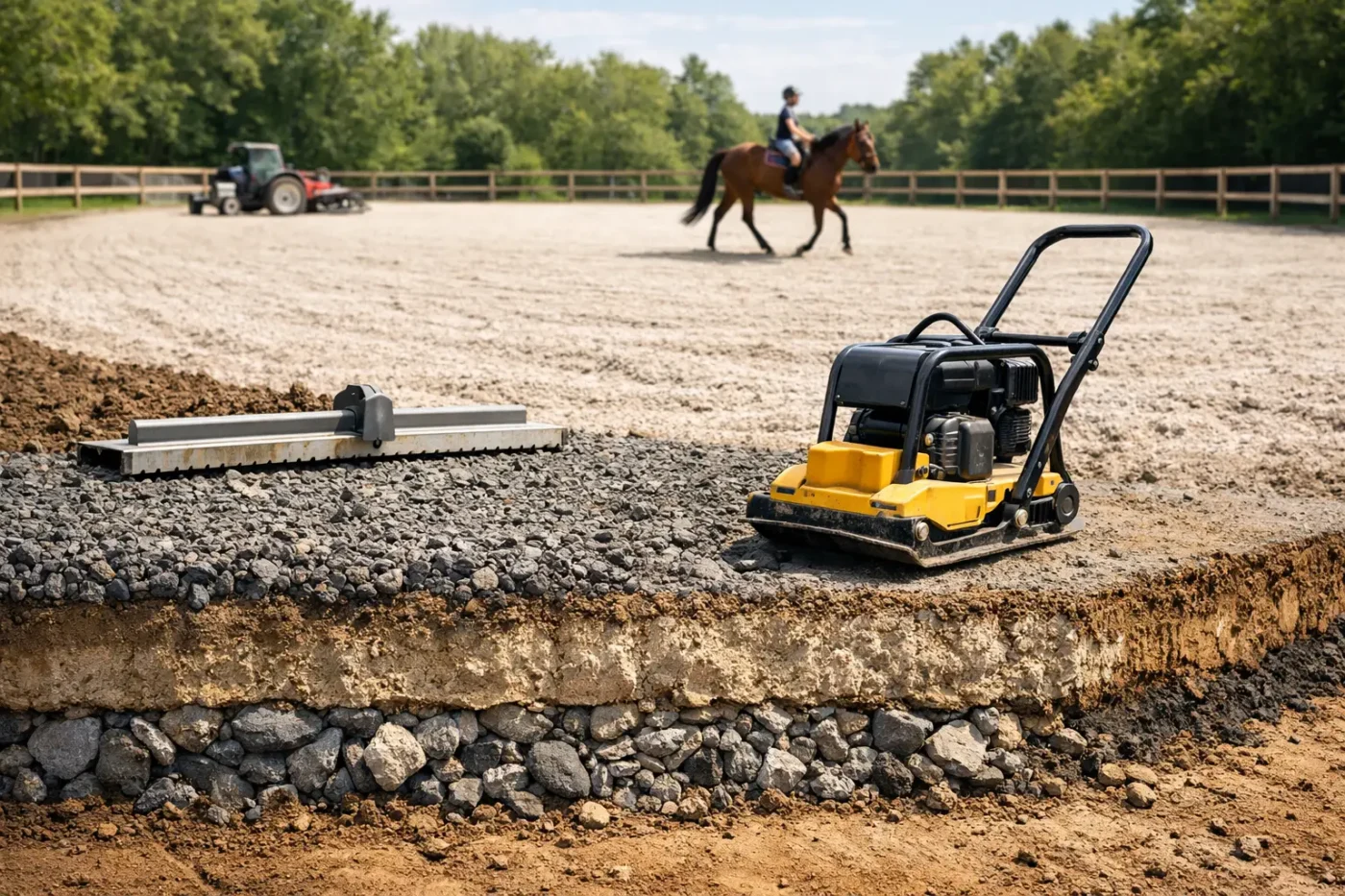
A horse arena can look level on the day it is built and still become a costly problem after the first wet season. Puddles, soft patches, loose edges and an uneven riding surface usually trace back to what sits underneath. Proper horse arena base preparation gives the finished surface somewhere stable, well-drained and level to work from.
For rural properties across NSW, the ground conditions can change sharply from one paddock to the next. Heavy clay, decomposed granite, fill, old roots, run-off from a nearby hill and high rainfall all affect the job. That is why a good arena is not built by simply spreading sand over a cleared area. The site needs to be assessed, shaped and compacted for the way it will actually be used.
Start with the site, not the surface
Before excavation begins, establish the arena’s purpose. A private riding arena used a few times a week has different requirements from a training, spelling or competition facility carrying regular traffic, harrows and floats. The discipline also matters. Dressage, showjumping, campdrafting and general riding each place different demands on the finished footing.
The site itself is just as important. Check where water enters the area during heavy rain, where it can leave, and whether the ground is naturally firm or prone to movement. An arena positioned at the bottom of a slope may need more substantial drainage than one on gently falling, free-draining ground. Building too close to a dam, creek line or existing drainage path can create problems well beyond the arena fence.
Vegetation, roots and buried rubbish need to be removed rather than covered. Organic material breaks down over time, leaving soft spots beneath the base. On older properties, previous fill can also be inconsistent. Test cuts during excavation help identify whether the material below is suitable to retain, improve or remove.
Horse arena base preparation begins with levels
The formation is the trimmed and compacted ground beneath the base materials. It needs to be cut to the right level before gravel or road base arrives. If the formation is uneven, the contractor will use extra material trying to correct it, and the finished result may still settle differently across the arena.
A laser level is useful for setting consistent falls and avoiding guesswork. Most arenas need a subtle grade to direct water towards the drainage system, but not so much that riders notice a slope or the footing migrates to one end. The correct fall depends on the arena layout, surface material and drainage design. There is no one slope that suits every block.
Cut-and-fill work should be handled carefully. Filling low areas with loose soil and placing a base over the top is a common shortcut, but it is likely to settle unless the fill is placed in controlled layers and compacted properly. In some cases, cutting into firmer natural ground and exporting unsuitable spoil is the better long-term option.
Drainage must have somewhere to go
Water is the main enemy of an arena base. Even quality base material will struggle if water is trapped beneath it or flows in from surrounding ground. The aim is to keep surface water moving away and prevent groundwater or run-off from softening the formation.
Drainage may include perimeter swales, spoon drains, diversion banks or agricultural drains installed around or beneath the arena. The right approach depends on the soil and the water source. A perimeter drain can intercept run-off coming down a hill, while subsoil drainage may be needed where water sits in the ground after rain.
Every drain needs a lawful, practical outlet. Sending water towards a neighbour, a building pad, a driveway or a low point that already floods only moves the issue. This part of the planning is worth getting right before the base is laid, because repairing drainage under a completed arena means lifting surface material and rebuilding sections of the job.
Build a stable separation layer
On clay, soft ground or variable fill, a geotextile fabric can separate the natural soil from the imported base. This stops fine soil particles pumping up into the gravel under traffic and wet conditions. It also helps prevent the base from being pushed down into soft subgrade.
Fabric is not a cure for poor excavation or standing water. It works best when the formation is trimmed, firm and drained first. Where the ground is especially weak, a geogrid or heavier engineered solution may be required to spread loads and reduce movement. This is one area where spending a little more early can save repeated repairs later.
The fabric should be laid flat with adequate overlaps and protected from damage as material is placed. Driving machinery directly across exposed fabric can tear it or drag it out of position. Base material should be placed progressively, allowing the machine to work over the new layer rather than the exposed separation layer.
Choose and compact the right base material
The base is generally a well-graded crushed material that locks together under compaction. It provides the load-bearing platform for the riding surface and helps maintain consistent levels. The exact product and depth should suit the subgrade, drainage design, arena size and expected traffic.
A hard gravel base with too many large stones can be difficult to trim accurately. Material with excessive fines may hold water and become unstable. Locally available quarry products can be a good option when they meet the required grading and compact well. It pays to inspect the material rather than choosing purely on price per tonne.
Base should be installed in manageable layers, not tipped in one deep lift and rolled on top. Each layer needs moisture conditioning and compaction before the next is placed. Material that is too dry may not bind, while material that is saturated will not compact properly either.
A Positrack, excavator and compaction equipment each have a role in a well-managed build. Machinery can shape and spread material efficiently, but final levels and compaction still need close attention. Wheel marks, loose edges and rushed joins are often where future soft spots start.
Keep the riding surface separate from the base
The riding surface is not the base. Sand, fibre blends and other footing products are selected for horse comfort, traction, dust control and the type of riding being done. The base beneath them is selected for strength, level and drainage.
Mixing the two layers creates an inconsistent arena. If base gravel works its way into the top surface, it can become uncomfortable or unsafe for horses. If footing disappears into an unprotected base, the arena becomes expensive to maintain. A properly prepared platform helps keep the surface where it belongs and makes later topping-up more predictable.
Once the surface is installed, it still requires regular grooming and moisture management. Harrowing too deeply can disturb the separation between the footing and base. Likewise, dragging heavy equipment across saturated footing can create ruts that reach down into the structure below.
Allow for access, edges and ongoing maintenance
Arena preparation should include the practical details around the slab of riding space. Machinery and material trucks need safe access during construction. Finished access should also allow for future delivery of footing, maintenance equipment and emergency vehicle access where needed.
Edges need to be contained so the riding surface does not wash or drift into drains and fence lines. The arena fence should be located with enough room for drainage, maintenance and safe horse movement. Gates need to be wide enough for the equipment that will enter the arena, not just the horse and rider.
Before committing to materials, walk the site after rain if possible. The wet-weather picture often reveals more than a dry paddock inspection. A contractor experienced in excavation, drainage and rural arena work can then match the design to the ground, rather than forcing a standard build onto a site that needs something different.
A well-built arena does not need to be over-engineered, but it does need to suit its location. Getting the formation, drainage and base right gives your horses a more consistent surface and gives you a facility that is far easier to maintain season after season.