

Cattle Fencing Options for NSW Properties
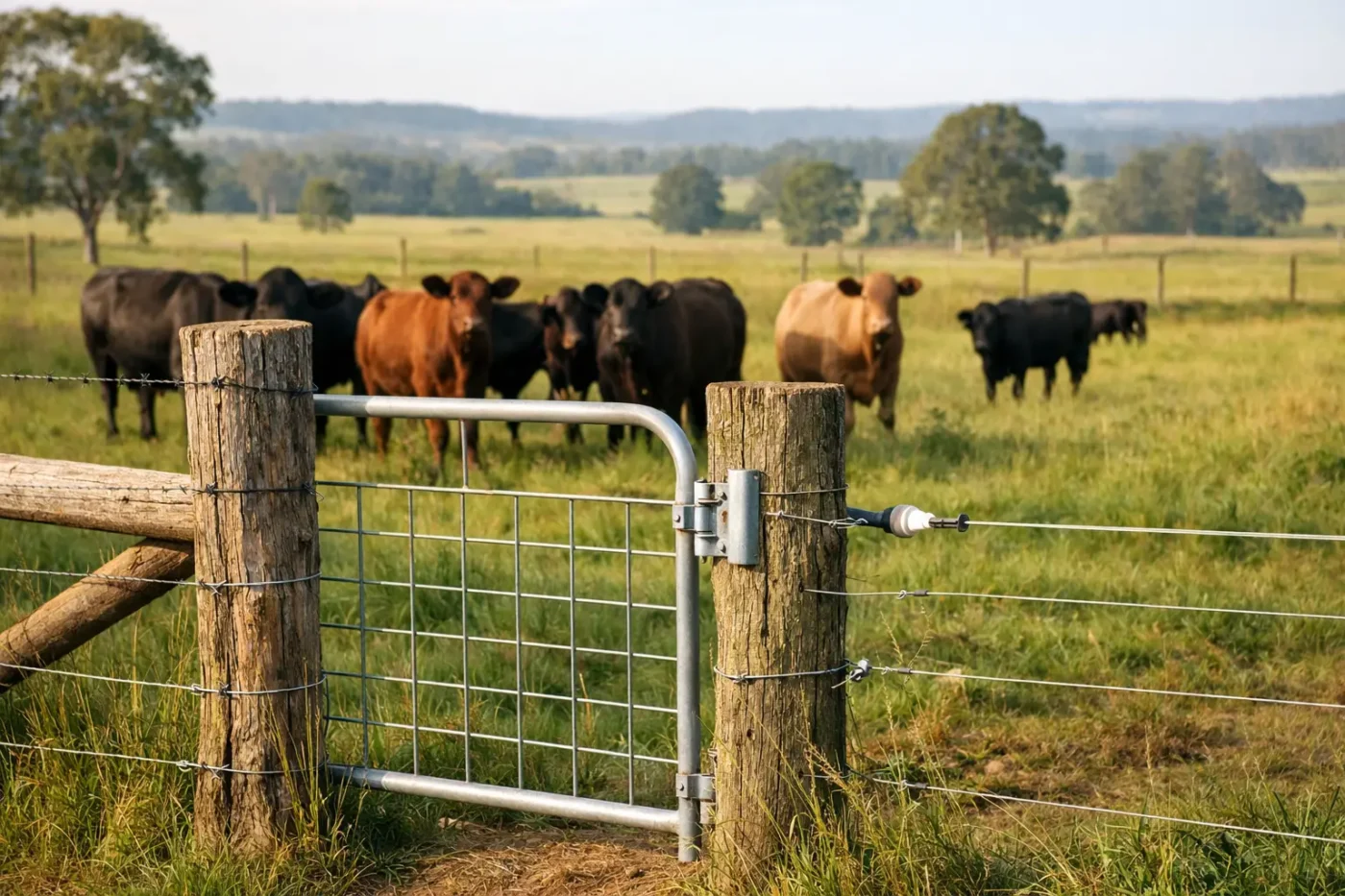
A fence that looks good from the ute track can still fail where it matters: at the creek crossing, beside the feed-out area or on the rise where cattle lean on it every day. The best cattle fencing options are not chosen by price per metre alone. They need to suit the class of cattle, grazing pressure, terrain, gateways and the amount of ongoing maintenance a property owner can realistically manage.
For cattle properties across regional NSW, a well-planned fence protects livestock, keeps paddock rotations working and avoids costly repairs after wet weather or a stock breakout. Getting the fundamentals right before the first post goes in will deliver a safer, longer-lasting result.
Start with how the fence will be used
A boundary fence holding quiet breeder cattle has different demands from an internal fence used to shift weaners, contain bulls or divide a high-pressure laneway. Before selecting materials, consider what stock will be against the fence, how often they will use the area and what is on the other side.
Cows and calves need a fence that limits calf access without creating unnecessary injury risk. Bulls and larger cattle place much greater force on rails, wires, posts and gates, particularly during joining or when they can see stock in an adjoining paddock. If cattle are being moved regularly through a lane, the fence must handle repeated pressure at corners, pinch points and entrances.
It also pays to look beyond the fence line. Steep country, soft ground, rocky ridges, flood-prone flats and thick regrowth all affect the design. A straight run over firm, accessible ground is a different job from a boundary that crosses gullies, follows a creek or runs through timbered country. Clearing vegetation, grading access and managing drainage can be part of building a fence that stays straight and serviceable.
Cattle fencing options that suit different jobs
There is no single best fence for every paddock. Most effective cattle fencing options combine sound strainer assemblies, suitable intermediate posts, correctly tensioned wire and sensible gate placement.
Hinged joint and stock fencing
Hinged joint wire is a common choice for cattle fencing because it creates a physical barrier across the full height of the fence. It is particularly useful where calves are present, where neighbouring stock may be smaller, or where a property also needs to contain sheep, goats or dogs in selected areas.
The mesh should be selected for the stock being contained, not simply what is available. Smaller apertures near the bottom can help with younger animals, while taller netting and an additional plain or electric wire may be appropriate where cattle pressure is higher. Correct tension is essential. Loose mesh loses shape quickly, while over-tensioning can place unnecessary stress on posts and strainers.
Hinged joint fencing costs more in material than a simple wire fence, but it can reduce the chance of calves slipping through and may be worthwhile where mixed livestock are part of the operation.
Plain wire and barbed wire fencing
Conventional wire fencing remains a practical option for many cattle boundaries and internal paddock divisions. A well-built multi-wire fence, using quality strainers and properly spaced posts, can be economical, effective and straightforward to repair.
Plain wire is often used at the top of a fence line or alongside electric fencing. Barbed wire can discourage cattle from pushing through, but it needs careful placement and should not be treated as a substitute for a properly designed fence. On horse properties, barbed wire is generally avoided due to injury risk. Where cattle and horses share a property, fence design needs to account for both.
This style of fencing is often best suited to quieter cattle, longer boundary runs and areas where a physical mesh barrier is not needed. It still depends on a strong foundation. Sagging wires, weak corners and poor gate joins are where stock find their way out.
Electric cattle fencing
Electric fencing can be an efficient choice for rotational grazing, temporary paddock breaks and internal divisions. Once cattle are trained to respect it, a correctly installed electric fence can manage stock with less material than a conventional fence.
Its limitations are practical rather than complicated. The energiser must be sized for the fence length and conditions, earth stakes must be installed correctly, and vegetation cannot be allowed to short the system out. In wet coastal country or fast-growing seasons, regular line clearing is part of the job. A fence with no consistent charge will quickly be tested by cattle.
Permanent electric fencing can work well with timber or steel posts and high-tensile wire. Temporary systems are useful where grazing plans change, although they are not the right answer for a high-pressure boundary, a bull paddock or a location exposed to regular public access.
Post and rail, steel and mixed-material fences
Post and rail fencing provides a highly visible, solid boundary and is often chosen around entrances, house paddocks, yards and equine areas. For cattle, it can be suitable in controlled locations, but it is usually not the most economical option for long runs. It may also need wire mesh or electric offsets where animals are likely to lean or rub against the rails.
Steel posts and pickets are durable and can be a practical choice over long distances, particularly where termite exposure or ongoing timber replacement is a concern. Treated timber posts remain popular because they are strong, adaptable and well suited to strainer assemblies when properly installed.
Concrete posts can be useful in selected applications where long-term durability is the priority. Many rural fences use a mix of materials: substantial timber, steel or concrete strainers at load-bearing points, with steel pickets or timber posts along the line. The right combination comes down to ground conditions, stock pressure, access and budget.
Strainers, stays and corners carry the load
The wires may be the visible part of a cattle fence, but the strainer assemblies do the hard work. Every change in direction, rise, dip, gate opening and long straight run creates load that has to be controlled. A poorly built end assembly may look fine on completion day, then pull over once the wires settle or cattle begin testing the fence.
Strainers need enough depth, bracing and anchorage for the soil type and the expected tension. Sandy ground, wet ground and disturbed fill may require a different approach from firm clay or rocky country. Corners should be planned to give machinery and livestock enough room, rather than forcing tight turns that become difficult to maintain.
Gates deserve the same attention. A sagging farm gate creates frustration every time it is used and can leave a gap for cattle to exploit. Set gate posts properly, allow for vehicle access, and place gateways where water will not continually run through them. If trucks, tractors or machinery will use the entrance, build for that traffic from the start.
Plan for water, vegetation and access
Fence longevity is often decided by site preparation. Fallen timber against a fence, blackberry growth, lantana, long grass or branches over electric wires can cause ongoing problems. In fire-prone areas, unmanaged vegetation along a boundary also adds fuel where access may be needed later.
Where a fence crosses drainage lines or low-lying ground, it needs a design that allows water movement without leaving an easy path for cattle. Floodgates, reinforced low sections or carefully positioned crossings may be needed, depending on the site. Simply running standard fencing through a watercourse can lead to washouts and repeated repairs.
Access is another detail worth solving early. A new fence is easier to install and maintain when there is a clear track for materials, post drivers and future repair work. On larger projects, combining fencing with vegetation management, driveway works, drainage or excavation can reduce the disruption of bringing separate crews onto the property.
Build for maintenance, not just installation
Even quality fencing needs inspection. Walk or drive the line after major rain, storms, flooding, fire events or periods of heavy stock pressure. Check wire tension, leaning posts, loose stays, damaged gates, vegetation build-up and signs of cattle pushing at particular spots.
Small repairs done early are usually quick and affordable. Left alone, a loose strainer or broken wire can turn into a full section rebuild, stock on the road or a difficult muster. Keeping spare wire, clips, insulators and basic gate hardware on hand makes routine repairs easier.
For new fencing or replacement work, Agtech Fencing & Rural Services can assess the ground, stock requirements and property layout before recommending a practical build. The aim is not to sell more fence than a property needs. It is to deliver a secure line that suits the job, holds up in local conditions and remains workable for years to come.
A cattle fence earns its value on the day stock pressure, wet weather and rough ground all arrive at once. Choose the design for that day, not just for how it looks when the last wire is strained.