

Erosion Control That Holds Up on Rural Land
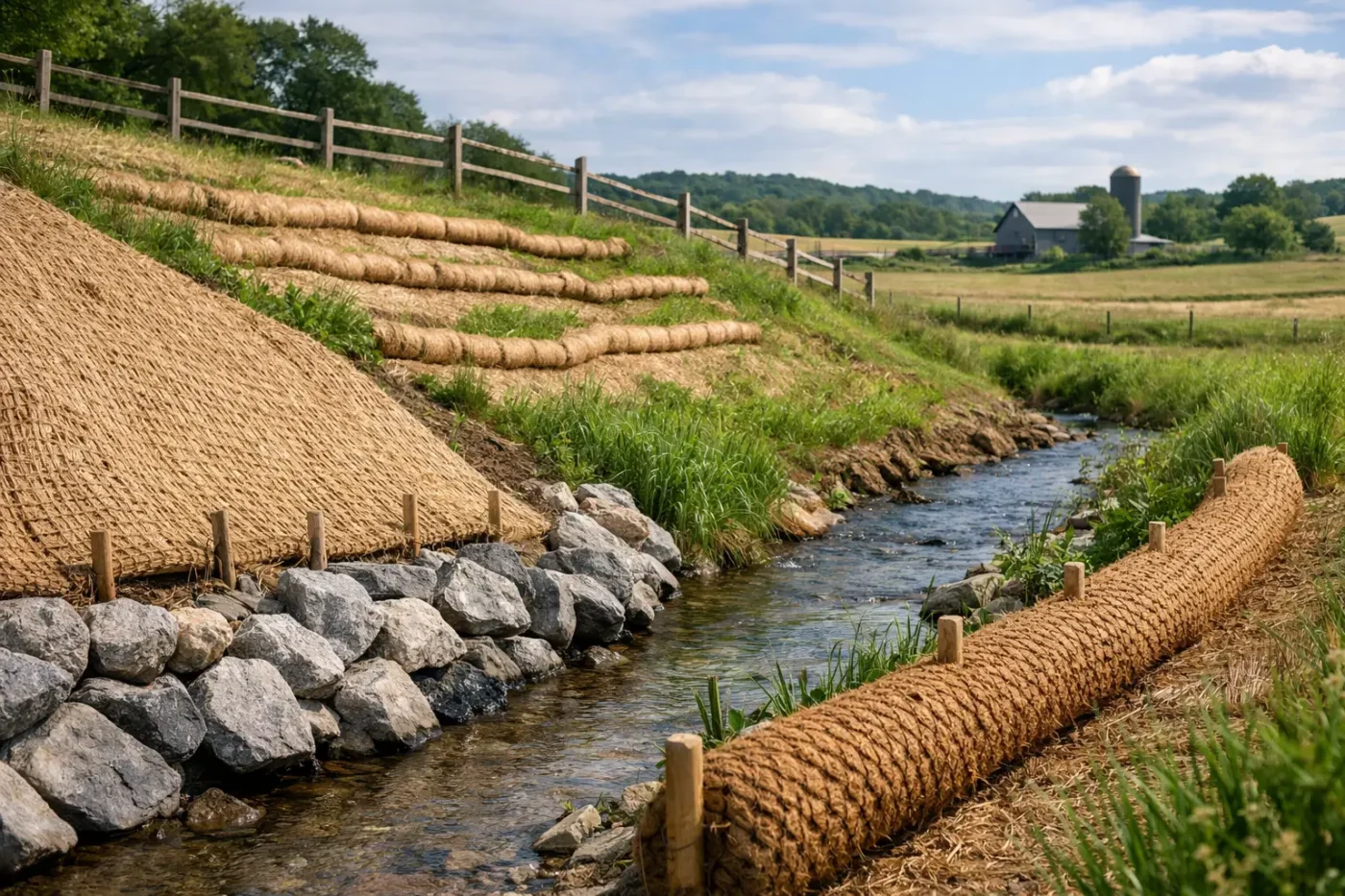
A washed-out driveway after a hard downpour is rarely just a driveway problem. Water may be arriving too fast from an upslope paddock, running along a fence line, spilling from a dam overflow or concentrating in a wheel rut. Effective erosion control starts by following that water path, then giving it a safer place to go before it takes soil, gravel and access with it.
For rural and semi-rural properties, erosion can affect far more than appearance. It can make tracks unsafe, undermine fence posts, cut through laneways, fill dams with sediment and carry topsoil away from productive ground. The right fix depends on the land shape, soil type, rainfall, vegetation and how the area is used. A quick load of gravel may help in the short term, but it will not solve a drainage issue underneath.
Start With the Cause, Not the Damage
The visible washout is often the end result of a bigger water-management problem. Before repairs begin, look uphill and upstream. Identify where runoff begins, where it gathers speed and where it is being forced into a narrow channel.
On many acreage properties, common trouble spots include driveway edges, steep access tracks, shed pads, stock laneways, culvert outlets, dam spillways and disturbed ground following clearing or excavation. Bare soil on a slope is especially vulnerable. Once water creates a small rut, each following storm tends to deepen and widen it.
A practical site assessment should consider the grade of the land, the natural fall, existing drains, soil condition and the amount of water expected in a serious rain event. It also needs to account for traffic. A road that works for a family ute may fail quickly under regular tractor, float, truck or machinery use if the base and drainage are not built for the load.
Erosion Control Needs Water to Keep Moving
The aim is not to stop water altogether. It is to slow, spread, divert or safely carry it away without stripping soil. Water sitting on a road surface, pouring down a steep track or discharging from a pipe onto bare ground will eventually create damage.
Shape roads and tracks to shed water
A well-formed rural road should encourage water off the running surface rather than down its length. Depending on the site, this may involve a crossfall, table drains, spoon drains, mitre drains, turn-outs or carefully placed culverts. The road material and compaction matter, but drainage is what gives that surface a chance to last.
Cross drains need a safe outlet. Sending water into an unprotected low point, across a neighbour’s boundary or towards a building simply transfers the problem. Where water leaves a culvert or drain at speed, the outlet may need rock protection, vegetation or another stabilised treatment to prevent scour.
On steep ground, shorter drainage runs are generally easier to manage than one long run that gathers volume and speed. The exact spacing depends on slope, soil and rainfall, so it is worth designing for the property rather than copying a solution from a flatter block nearby.
Protect exposed soil quickly
Ground cover is one of the most reliable forms of erosion protection. Grass, pasture, mulch and suitable vegetation reduce the force of raindrops, hold surface soil together and slow runoff. This is particularly valuable after land clearing, forestry mulching, trenching, pad construction or roadworks.
That said, vegetation is not an instant answer. Seeded ground needs time, moisture and protection from washouts while it establishes. On vulnerable slopes or drainage lines, mulch, erosion-control matting, rock or temporary diversion works may be needed first. Heavy mulch can also move in a major storm if it is placed without regard for slope and water flow.
Forestry mulching can be useful where dense regrowth or weeds are contributing to unmanaged runoff, while leaving organic material across the ground can help shield soil. It is not a substitute for drainage design on its own, but it can form part of a sensible vegetation and erosion-management plan.
Match the Treatment to the Location
Different areas of a property need different erosion-control measures. A dam spillway, for example, has to handle concentrated flows without failing. A lightly used paddock drain may be better managed with reshaping and revegetation. A driveway that carries daily traffic needs a properly prepared base, drainage and wearing surface.
Rock is often used where water velocity is too high for bare soil or grass alone. It can protect culvert outlets, creek approaches, drain crossings and spillways when correctly sized and installed. Randomly tipped rock may look substantial but can be undermined if the ground beneath it has not been prepared or if water finds a path around the edges.
For a small gully, reshaping the land to create a wider, gentler flow path can be more effective than trying to armour every metre. For a larger active erosion area, staged work may be the sensible option: first redirect damaging water, then stabilise the soil, then establish long-term cover.
Fencing also has a role. Keeping cattle, horses or vehicles out of soft drains, creek banks and newly restored areas gives vegetation a chance to establish. Stock pressure around dams and drainage lines can turn a manageable issue into a muddy, eroding mess, especially during wet periods.
Avoid the Quick Fixes That Fail After Rain
A few common responses can make erosion worse. Filling a rut with loose soil often creates material for the next storm to carry away. Grading a road smooth without restoring fall and drainage can leave it looking good for a week, then channel water straight down the centre.
Blocked culverts and neglected table drains are another frequent cause of damage. Leaf litter, silt, grass and loose gravel reduce capacity until water overtops the road or finds an easier path around the structure. Regular maintenance is far cheaper than rebuilding a section of access after a major washout.
Be cautious about directing runoff into natural waterways, neighbouring land or areas near buildings. Changes to drainage can have legal, environmental and practical consequences. Larger works near creeks, wetlands, dams or drainage lines may require specific approvals or advice, particularly where there are mapped waterways, sensitive vegetation or downstream impacts.
Build Erosion Prevention Into Property Works
The best time to plan erosion control is before machinery starts, not after the first rain. When constructing a shed pad, arena, access road or fence line, consider how surface water will behave once the ground profile changes. Small decisions during construction can prevent expensive repairs later.
For example, a new building pad can interrupt a natural flow path. Without a planned drain or diversion, water may pond against the pad or run around its edge and cut into adjacent ground. Excavation spoil should also be placed thoughtfully. Loose piles on a slope can wash into drains, dams or tracks if left exposed.
Fence construction benefits from the same thinking. Posts set in low, wet ground may be affected by scour, while access along a boundary can create wheel ruts that become drainage channels. Planning crossing points, turning areas and drainage around gateways protects both the fence investment and the land around it.
Agtech Fencing & Rural Services approaches these jobs with the wider property outcome in mind. Combining earthworks, drainage, vegetation management and fencing capability can reduce the need to coordinate several contractors while keeping the sequence of works practical.
A Simple Inspection Routine Pays Off
Walk the property after substantial rain, once it is safe to do so. Fresh stormwater reveals more than a dry-day inspection ever will. Look for muddy water crossing roads, scour at culvert outlets, sediment deposits, standing water, exposed roots, new rills on slopes and drains that are overflowing or cutting deeper.
Take photos from the same spots over time. This helps show whether an area is stable, slowly worsening or responding to repair work. It is also useful when discussing a scope of work with a contractor, insurer or local authority.
Most erosion damage is easier and more affordable to manage early. A shallow rut, a blocked drain or a bare patch beside a track may not look urgent, but it can become a substantial repair after one intense storm. Give water a planned path, protect the soil around it and maintain the work before the next wet season tests it.
Erosion Control That Holds Up on Rural Land
A washed-out driveway after a hard downpour is rarely just a driveway problem. Water may be arriving too fast from an upslope paddock, running along a fence line, spilling from a dam overflow or concentrating in a wheel rut. Effective erosion control starts by following that water path, then giving it a safer place to go before it takes soil, gravel and access with it.
For rural and semi-rural properties, erosion can affect far more than appearance. It can make tracks unsafe, undermine fence posts, cut through laneways, fill dams with sediment and carry topsoil away from productive ground. The right fix depends on the land shape, soil type, rainfall, vegetation and how the area is used. A quick load of gravel may help in the short term, but it will not solve a drainage issue underneath.
Start With the Cause, Not the Damage
The visible washout is often the end result of a bigger water-management problem. Before repairs begin, look uphill and upstream. Identify where runoff begins, where it gathers speed and where it is being forced into a narrow channel.
On many acreage properties, common trouble spots include driveway edges, steep access tracks, shed pads, stock laneways, culvert outlets, dam spillways and disturbed ground following clearing or excavation. Bare soil on a slope is especially vulnerable. Once water creates a small rut, each following storm tends to deepen and widen it.
A practical site assessment should consider the grade of the land, the natural fall, existing drains, soil condition and the amount of water expected in a serious rain event. It also needs to account for traffic. A road that works for a family ute may fail quickly under regular tractor, float, truck or machinery use if the base and drainage are not built for the load.
Erosion Control Needs Water to Keep Moving
The aim is not to stop water altogether. It is to slow, spread, divert or safely carry it away without stripping soil. Water sitting on a road surface, pouring down a steep track or discharging from a pipe onto bare ground will eventually create damage.
Shape roads and tracks to shed water
A well-formed rural road should encourage water off the running surface rather than down its length. Depending on the site, this may involve a crossfall, table drains, spoon drains, mitre drains, turn-outs or carefully placed culverts. The road material and compaction matter, but drainage is what gives that surface a chance to last.
Cross drains need a safe outlet. Sending water into an unprotected low point, across a neighbour’s boundary or towards a building simply transfers the problem. Where water leaves a culvert or drain at speed, the outlet may need rock protection, vegetation or another stabilised treatment to prevent scour.
On steep ground, shorter drainage runs are generally easier to manage than one long run that gathers volume and speed. The exact spacing depends on slope, soil and rainfall, so it is worth designing for the property rather than copying a solution from a flatter block nearby.
Protect exposed soil quickly
Ground cover is one of the most reliable forms of erosion protection. Grass, pasture, mulch and suitable vegetation reduce the force of raindrops, hold surface soil together and slow runoff. This is particularly valuable after land clearing, forestry mulching, trenching, pad construction or roadworks.
That said, vegetation is not an instant answer. Seeded ground needs time, moisture and protection from washouts while it establishes. On vulnerable slopes or drainage lines, mulch, erosion-control matting, rock or temporary diversion works may be needed first. Heavy mulch can also move in a major storm if it is placed without regard for slope and water flow.
Forestry mulching can be useful where dense regrowth or weeds are contributing to unmanaged runoff, while leaving organic material across the ground can help shield soil. It is not a substitute for drainage design on its own, but it can form part of a sensible vegetation and erosion-management plan.
Match the Treatment to the Location
Different areas of a property need different erosion-control measures. A dam spillway, for example, has to handle concentrated flows without failing. A lightly used paddock drain may be better managed with reshaping and revegetation. A driveway that carries daily traffic needs a properly prepared base, drainage and wearing surface.
Rock is often used where water velocity is too high for bare soil or grass alone. It can protect culvert outlets, creek approaches, drain crossings and spillways when correctly sized and installed. Randomly tipped rock may look substantial but can be undermined if the ground beneath it has not been prepared or if water finds a path around the edges.
For a small gully, reshaping the land to create a wider, gentler flow path can be more effective than trying to armour every metre. For a larger active erosion area, staged work may be the sensible option: first redirect damaging water, then stabilise the soil, then establish long-term cover.
Fencing also has a role. Keeping cattle, horses or vehicles out of soft drains, creek banks and newly restored areas gives vegetation a chance to establish. Stock pressure around dams and drainage lines can turn a manageable issue into a muddy, eroding mess, especially during wet periods.
Avoid the Quick Fixes That Fail After Rain
A few common responses can make erosion worse. Filling a rut with loose soil often creates material for the next storm to carry away. Grading a road smooth without restoring fall and drainage can leave it looking good for a week, then channel water straight down the centre.
Blocked culverts and neglected table drains are another frequent cause of damage. Leaf litter, silt, grass and loose gravel reduce capacity until water overtops the road or finds an easier path around the structure. Regular maintenance is far cheaper than rebuilding a section of access after a major washout.
Be cautious about directing runoff into natural waterways, neighbouring land or areas near buildings. Changes to drainage can have legal, environmental and practical consequences. Larger works near creeks, wetlands, dams or drainage lines may require specific approvals or advice, particularly where there are mapped waterways, sensitive vegetation or downstream impacts.
Build Erosion Prevention Into Property Works
The best time to plan erosion control is before machinery starts, not after the first rain. When constructing a shed pad, arena, access road or fence line, consider how surface water will behave once the ground profile changes. Small decisions during construction can prevent expensive repairs later.
For example, a new building pad can interrupt a natural flow path. Without a planned drain or diversion, water may pond against the pad or run around its edge and cut into adjacent ground. Excavation spoil should also be placed thoughtfully. Loose piles on a slope can wash into drains, dams or tracks if left exposed.
Fence construction benefits from the same thinking. Posts set in low, wet ground may be affected by scour, while access along a boundary can create wheel ruts that become drainage channels. Planning crossing points, turning areas and drainage around gateways protects both the fence investment and the land around it.
Agtech Fencing & Rural Services approaches these jobs with the wider property outcome in mind. Combining earthworks, drainage, vegetation management and fencing capability can reduce the need to coordinate several contractors while keeping the sequence of works practical.
A Simple Inspection Routine Pays Off
Walk the property after substantial rain, once it is safe to do so. Fresh stormwater reveals more than a dry-day inspection ever will. Look for muddy water crossing roads, scour at culvert outlets, sediment deposits, standing water, exposed roots, new rills on slopes and drains that are overflowing or cutting deeper.
Take photos from the same spots over time. This helps show whether an area is stable, slowly worsening or responding to repair work. It is also useful when discussing a scope of work with a contractor, insurer or local authority.
Most erosion damage is easier and more affordable to manage early. A shallow rut, a blocked drain or a bare patch beside a track may not look urgent, but it can become a substantial repair after one intense storm. Give water a planned path, protect the soil around it and maintain the work before the next wet season tests it.