
Farm Track Grading for Safer, Stronger Access
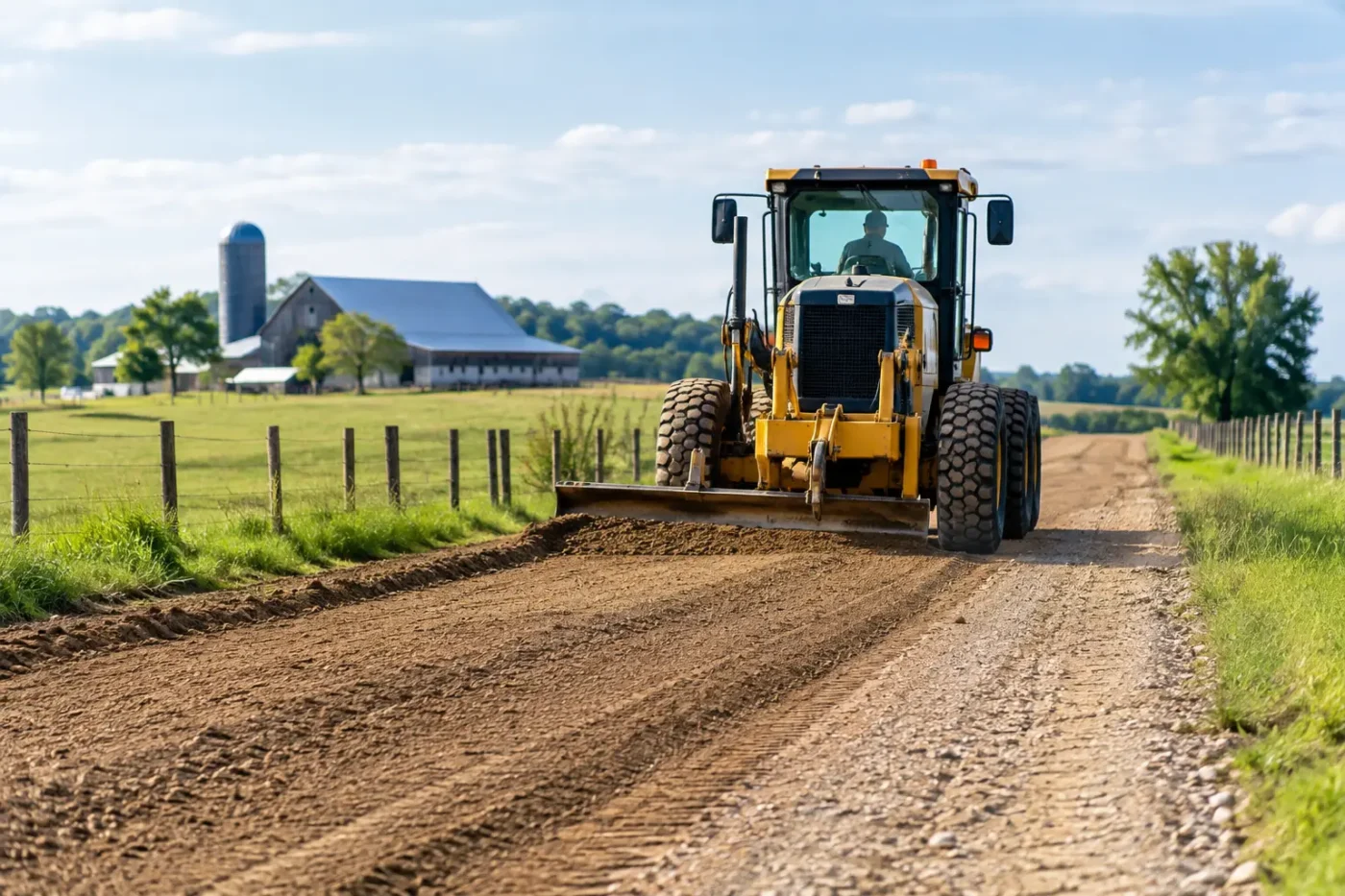
A farm track can look acceptable in dry weather, then become a boggy, rutted problem after one decent fall of rain. Farm track grading is what turns a rough access route into a practical surface that carries utes, livestock trailers, machinery, feed deliveries and emergency vehicles with far less risk of damage or getting stuck.
For rural properties, a track is not just a driveway. It may be the only way to reach a paddock, water point, shed, stock yards, dam or boundary fence. Getting the levels, drainage and surface right protects that access and reduces the ongoing cost of patching holes after every wet spell.
What farm track grading actually involves
Grading is more than running a machine over the surface to make it look flat. A properly graded farm track is shaped so water leaves the running surface, the base remains stable and vehicles can travel it safely in changing conditions.
The work usually starts by assessing the existing route. This includes the slope of the land, where water naturally travels, the condition of the soil, soft spots, existing washouts and the type of traffic using the track. A light-use track to a back paddock has different requirements from an all-weather access road used by trucks, horse floats or regular machinery.
Once the route is understood, earth is cut, shifted and compacted as needed to create a consistent formation. The finished surface should have enough crossfall or camber to shed water without making vehicles feel unstable. On sloping country, the drainage plan matters even more. Water that is left to run down the wheel tracks will quickly cut channels into the surface and carry gravel away.
Drainage decides how long a track lasts
Most failed rural tracks have a water problem before they have a gravel problem. Adding more gravel over a wet, poorly shaped base may improve the appearance for a short time, but it will not stop the track from breaking up if runoff has nowhere to go.
A reliable grading job considers where water starts, where it crosses the track and where it can be discharged without causing erosion further downhill. Depending on the property, that may involve table drains, spoon drains, turnouts, culverts, cross drains or small diversion banks. Each needs to suit the site. Sending water into a neighbouring property, a creek line, a dam wall or a steep exposed gully can create a bigger issue than the original rut.
Culverts need particular attention. If they are too small, poorly bedded or blocked by debris, water backs up across the road. If the outlet is not protected, fast-moving water can scour out the bank below it. In higher rainfall areas across the Mid North Coast and Northern Rivers, allowing for intense downpours is often the difference between a track that holds together and one that needs rebuilding.
Getting the shape right
A track needs a controlled fall across and along its surface. On relatively level ground, a gentle crown through the centre encourages water to run to either side. On a hillside, an outfall or carefully designed crossfall may be more appropriate, provided runoff is managed safely.
There is no single grade that suits every farm. Soil type, traffic volume, terrain and rainfall all affect the final design. Clay country can become slick and soft when wet, while sandy or decomposed surfaces may scour more easily. Steep tracks need a different approach again, often with staged drainage measures to slow and redirect water before it gains speed.
The aim is not to make every section perfectly level. A dead-flat track holds puddles, and a track that is over-crowned can be uncomfortable or unsafe for loaded vehicles. Good workmanship is about practical levels that suit how the road will actually be used.
Building up weak sections
Soft, wet or heavily trafficked sections may need more than reshaping. If the base is pumping under tyres or showing deep wheel ruts, the weak material may need to be removed, dried, stabilised or covered with suitable road base. In some locations, geotextile fabric can help separate soft subgrade from imported material, reducing the chance of gravel disappearing into mud.
The right aggregate depends on the site and the intended traffic. Well-graded road base that compacts properly is generally a better choice than loose, round stone. Gravel alone is not a cure-all, though. It needs a firm formation beneath it and proper compaction after placement.
When a quick maintenance grade is enough
A maintenance grade can be a cost-effective option when the base is sound and the damage is mainly surface-level. Light corrugations, shallow potholes, loose material and minor wheel marks can often be corrected by scarifying the surface, reshaping it and compacting it while conditions are right.
Timing matters. Working a bone-dry track can create dust and leave material difficult to compact. Working it when saturated can damage the formation and make soft areas worse. The best window is often when there is enough moisture for the material to bind, but not so much that machinery sinks or smears the surface.
A more substantial rebuild is usually the better call where there are repeated washouts, widespread potholes, standing water, deep ruts or a track that has been built up over years without addressing drainage. It costs more upfront, but repeatedly grading a failed base can become the expensive option.
Farm track grading around gates, sheds and stock areas
Access tracks often fail at the places used most. Gateways become churned up by turning vehicles and stock movement. Shed approaches collect runoff from roofs and hardstand areas. Feed-out zones can develop deep ruts from wet-weather traffic, while dam and water-point tracks may be used at the worst time of year.
These high-use areas may need a wider formation, stronger base, improved drainage or a different surface material. A turning area for a truck or horse float should be planned for real vehicle movements, not just the width of the straight track. It is far easier to shape sufficient room during earthworks than to repair fence lines, gates and shoulders after vehicles start cutting corners.
If fencing, trenching, dam clean-outs or pad preparation are also on the job list, coordinating the work can avoid duplicated machine time and disturbed ground. Agtech Fencing & Rural Services can combine practical earthworks with rural property infrastructure works, helping landholders sequence a project sensibly rather than bringing in separate contractors for each small stage.
What to discuss before work starts
A clear site discussion avoids surprises and leads to a better result. Explain who uses the track, what vehicles need access, whether it must remain open during works and where the worst wet-weather problems occur. If there are underground services, water lines, irrigation, drainage pipes or known soft ground, identify them before machinery arrives.
It also helps to agree on the finish. Some owners need a functional paddock track that is easy to maintain. Others need a clean, durable all-weather entrance to a house, shed, arena or commercial site. Both are valid, but they require different levels of preparation, material and finishing.
Ask how spoil, vegetation and removed material will be managed. On many rural jobs, suitable excavated material can be reused for filling low areas or forming banks. Unsuitable material may need to be stockpiled, spread or removed. Planning this early keeps the site tidy and prevents unnecessary handling later.
Looking after the track after grading
Even a well-built track needs occasional attention. Check drains and culvert inlets after heavy rain, particularly where leaves, sticks and silt can collect. Clear minor blockages before water is forced back over the running surface.
Keep heavy traffic off soft sections when possible, especially immediately after sustained rain. Where a hole begins to form, repair it early rather than continually driving around it and widening the damage. Regular light maintenance is generally cheaper than waiting for a track to become impassable.
A good farm track should make work easier, not add another job to the list. When drainage, levels and base preparation are handled properly from the start, the result is safer access that stands up to the demands of a working rural property.