

Horse Arena Design That Works on Rural Land
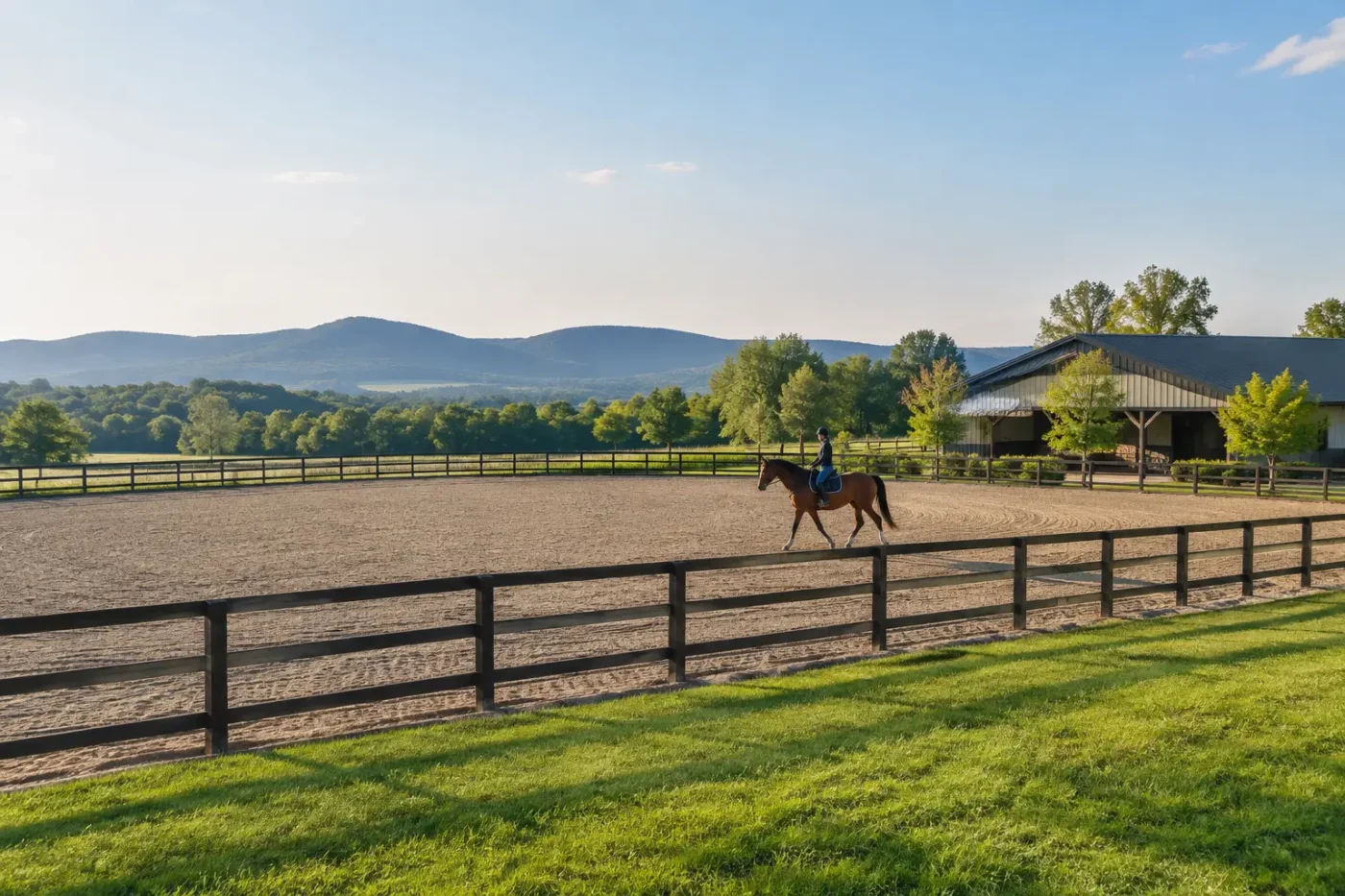
A good horse arena design is not judged when the surface is freshly levelled. It is judged after heavy rain, through a dry summer, under regular hoof traffic and when you need to use it without losing half a day to puddles, dust or repairs. Getting the groundwork right before the fence and surface go in saves plenty of frustration later.
For rural and acreage properties, an arena needs to suit the land as much as it suits the riding discipline. Soil type, fall across the site, runoff from nearby hills, access for machinery and the number of horses using the space all affect the finished result. A small private arena can be a straightforward project, but it still needs a proper plan.
Start Horse Arena Design With the Intended Use
The first question is simple: what will the arena be used for? A dressage-focused arena, jumping arena, round yard and general riding space each need different dimensions, fencing and surface performance.
A standard dressage arena measures 20 by 60 metres, though many private properties choose a larger working area around it to allow for warm-up, poles and safer turns. For general flatwork and jumping, 40 by 60 metres is a practical starting point where room allows. Smaller arenas can still work well for groundwork, lessons and exercising horses, but tight spaces can limit course layouts and put more wear on the track around the edge.
It also pays to think ahead. If you expect to add lights, a covered area, a viewing space, wash bay or extra stables later, allow for service access and drainage now. Retrofitting drains or moving fences after the arena is built is generally more costly than allowing for them at the preparation stage.
Choose the Site Before Choosing the Surface
A level-looking paddock is not automatically the right location. The best site is one with sensible access, enough room for excavation equipment and material deliveries, and a natural fall that can be managed without sending water across the riding area.
Avoid low points where water already gathers. Likewise, be cautious about building directly below a slope, shed roofline or road drainage outlet. During a downpour, runoff can carry silt onto the surface, block drains and leave an arena soft or uneven.
The existing ground needs to be assessed properly. Clay-based soils, common across many regional NSW properties, can hold water and move with wet and dry conditions. Sandy ground may drain readily but can require careful compaction and a well-designed base to stop the surface from mixing into the subgrade. Rocky sites may need excavation and rock removal before a consistent platform can be formed.
A small, controlled crossfall is usually required to move water away, but an arena should never feel sloped underfoot. The aim is a firm, even formation beneath the surface, with drainage doing the hard work rather than a steep grade.
Drainage Is Not an Optional Extra
Poor drainage is one of the main reasons an arena becomes unreliable. Water sitting in the surface can make footing slippery, cause base materials to soften and create uneven areas as horses repeatedly work around puddles.
Effective drainage may involve shaping the site, installing spoon drains around the perimeter, using subsurface agricultural drains where conditions call for them, and directing water to a suitable legal discharge point. The right approach depends on the property. A site with free-draining natural soil may need less underground drainage than a clay-heavy block, but every arena needs a clear plan for where water will go.
Keep clean runoff away from the arena where possible. Diversion drains uphill of the site can prevent stormwater entering the work area in the first place. This is often a better result than trying to drain large volumes of water out after they arrive.
Build a Stable Base for Consistent Footing
An attractive top layer cannot compensate for poor preparation underneath. The subgrade must be stripped of organic material, roots and soft pockets, then trimmed and compacted to the required levels. Any unsuitable material should be addressed before base layers are placed.
A geotextile fabric may be useful between the subgrade and aggregate base, particularly on soft or reactive ground. It helps separate materials and can reduce contamination of the base by fine soil. It is not needed on every site, but where it suits the ground conditions, it can add useful long-term protection.
The base itself needs to be selected, placed and compacted properly. This is not a job for simply spreading road base over a paddock and hoping the sand will cover it. Layer thickness, compaction and final levels all matter. A stable base supports the riding surface, maintains drainage paths and helps prevent ruts at gateways, along fence lines and in high-traffic working areas.
Machinery access is also part of the build. Excavators and Positrack equipment can prepare the formation, remove roots and unsuitable material, shape drains and spread material accurately. Planning truck access before work starts avoids damage to finished driveways, wet paddocks and newly prepared ground.
Select a Surface That Suits Your Horses
There is no single best arena surface. The right choice depends on your discipline, local climate, budget, maintenance commitment and available water.
Washed sand is widely used because it can provide a forgiving, consistent riding layer when matched to a sound base. However, not all sand performs the same way. Particle shape, grading and fines content affect drainage, compaction and how deep the footing rides. Locally available material needs to be assessed for suitability rather than selected on colour alone.
Additives such as fibre, wax-coated products or rubber can change the feel and stability of a surface. They may reduce movement, improve cushion or help manage moisture, but they also increase initial cost and can introduce extra maintenance requirements. For a private arena used a few times each week, a well-built sand surface may be the sensible option. For intensive training or competition use, a more specialised footing may be worth considering.
Surface depth is equally important. Too shallow and horses may work directly into the base. Too deep and the footing can become tiring, unstable or difficult to maintain. The ideal depth depends on the material and the work being done, so it should be set with the supplier and contractor rather than guessed after delivery.
Fencing, Gates and Safe Edges
Arena fencing needs to contain horses safely without creating unnecessary hazards. Post and rail fencing is a popular choice for equine properties because it is visible, strong and presents a clean finish. Steel posts, purpose-made equine mesh and other systems can also suit particular layouts and budgets.
Avoid sharp edges, protruding wire, narrow gate openings and fence designs that invite a horse to put a leg through. Gates should be wide enough for arena grooming equipment, utes and machinery to enter without clipping posts or tearing up the edge of the surface. Position them where traffic will not create a permanent wet or churned-up corner.
A buffer between the riding surface and fence line is worthwhile. Horses working close to a hard fence can be difficult to manage, especially in smaller spaces. A defined edge also makes maintenance easier and helps keep the surface where it belongs.
Plan for Water, Dust and Ongoing Maintenance
Even the best-built arena needs regular care. Harrowing or grooming redistributes the surface, breaks up compacted areas and manages hoof marks. How often this is needed depends on use, weather and footing type, but irregular maintenance is the quickest way to lose consistency.
Water is often necessary to control dust and help some surfaces bind properly. Before choosing a surface, consider whether you have a reliable water source, tank capacity and a practical way to apply it. A surface that performs well with regular watering may not be the right fit for a property where water is limited during dry periods.
Keep perimeter drains, grates and outlets clear of leaves, manure, sand and washed-in debris. Check fence tension, gate latches and edge boards as part of routine property maintenance. Small repairs done early protect the investment in the whole arena.
Build the Arena Around the Property
A well-planned arena is more than a rectangle of sand. It is a working part of the property, connected to access tracks, stables, yards, water supply and drainage. The best result comes from looking at the full site before equipment arrives, not treating excavation, drainage, fencing and surfacing as separate jobs.
For landholders across the Mid North Coast, New England and Hunter regions, changing soil conditions and heavy rainfall events make that planning especially worthwhile. Agtech Fencing & Rural Services can help bring the groundwork, drainage, arena preparation and equine fencing together in a practical sequence. Start with the ground beneath your horses’ feet, and the rest of the arena has a far better chance of working as it should.