
Best Farm Track Surfaces for NSW Properties
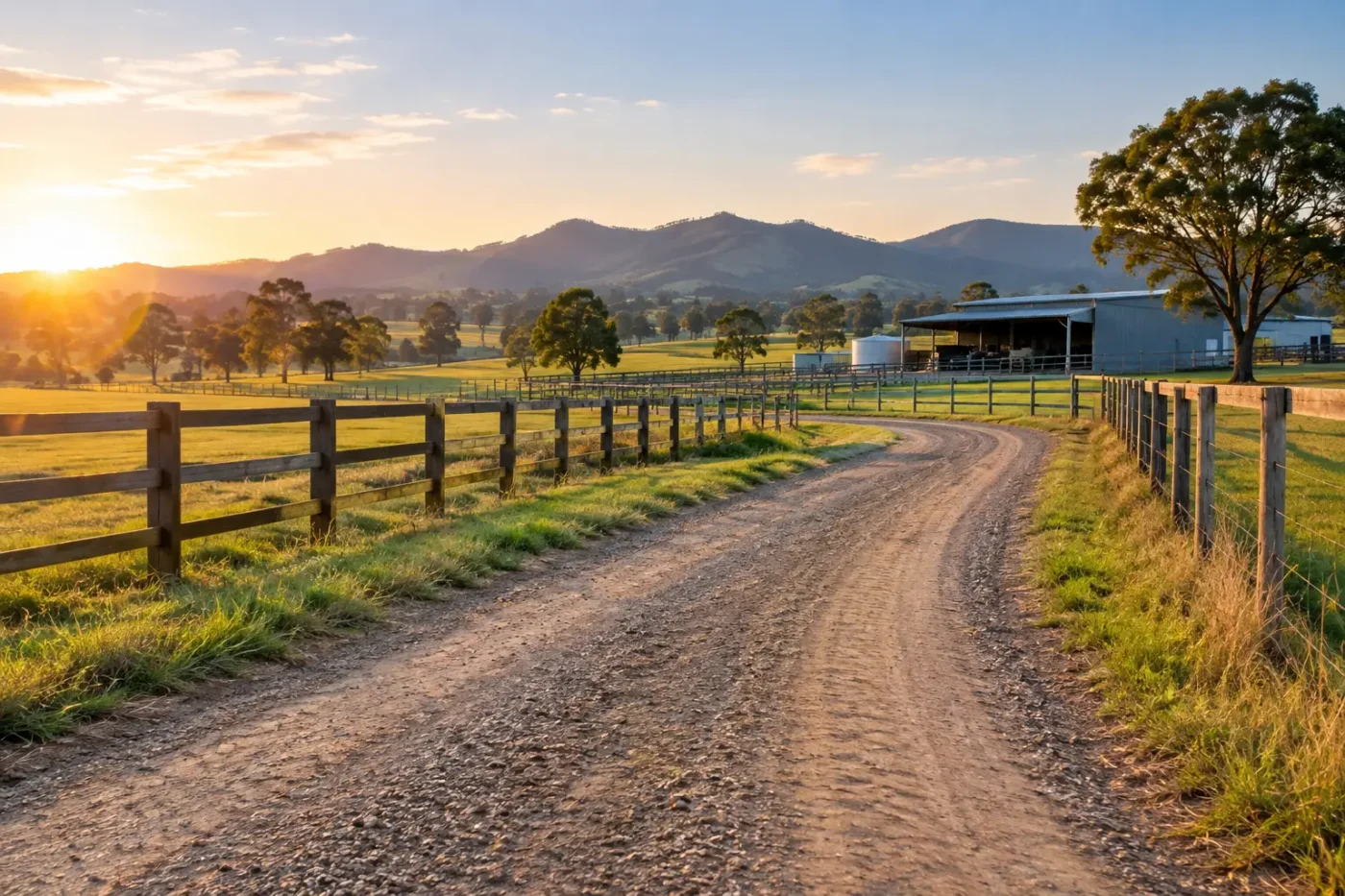
A farm track that turns to slop after rain, develops deep wheel ruts or washes out on the first steep section is more than an inconvenience. It slows work, damages vehicles and can cut off access when you need it most. The best farm track surfaces are the ones matched to the ground beneath them, the loads travelling over them and the water moving across the property.
For rural properties across NSW, there is no single material that suits every driveway, paddock lane or machinery track. A light-use track across firm ground needs a different approach to an all-weather access road carrying loaded stock trailers, feed deliveries, fire trucks or machinery floats. Getting the base, drainage and surface right from the start is where long-term value is found.
What Makes the Best Farm Track Surfaces?
A good farm track needs to carry traffic without holding water. That sounds simple, but it depends on a combination of subgrade condition, slope, surface material, compaction and drainage. If any one of these is overlooked, even quality gravel can disappear into soft ground or be pushed aside by repeated traffic.
The best surface is not always the hardest or most expensive option. On dry, stable country, a properly shaped natural-earth track may do the job. On clay soils, low-lying ground or steep country, a built-up road base with drainage is usually the more reliable investment.
Before choosing materials, look at how the track will be used. Consider whether it is a once-a-week paddock access route, the main entry to a residence, a laneway used by horses, or an essential route for livestock trucks and emergency access. Also consider the heaviest vehicle likely to use it, not just the daily ute traffic.
Start with the subgrade
The subgrade is the natural soil under the track. It determines how much preparation is required before any gravel goes down. Sandy or gravelly ground may only need trimming, shaping and compaction. Reactive clay, black soil, wet hollows and disturbed fill can require excavation, imported material, geotextile fabric or geogrid reinforcement to prevent the surface from pumping into the ground.
Putting a thin layer of road base over wet clay is a common false economy. It may look tidy for a short period, then tyres push the material down and the track starts to rut. Preparing the formation properly gives the surface material something stable to work on.
Drainage does the heavy lifting
Water is the main reason farm tracks fail. A track should be shaped so water sheds to the sides rather than running along wheel lines. The finished surface generally needs a modest crown or crossfall, with table drains where needed to carry runoff safely away.
On sloping sites, water bars, mitre drains or cross-drainage points may be needed to stop water gathering pace down the road. Culverts must be sized for the catchment, positioned at natural flow paths and protected at the inlet and outlet where erosion is likely. The right drainage design protects not only the track but adjoining paddocks, dams, fences and gateways.
Farm Track Surface Options and Where They Work
Natural earth tracks
A shaped and compacted earth track can be practical for low-traffic paddock access on firm, free-draining ground. It is often the most economical option where the existing soil has enough gravel content and the route is not exposed to frequent heavy traffic.
The trade-off is maintenance. Earth tracks are more vulnerable to wet weather, wheel ruts and erosion, particularly where clay is present. They are best suited to routes where occasional temporary access issues are manageable, rather than a main access road that must remain open in all conditions.
Gravel and crushed rock
Gravel or crushed rock is a common choice for rural tracks because it provides traction, drains better than clay and can be graded back into shape over time. The material needs to be selected for the job. A well-graded crushed product containing a mix of particle sizes and fines generally locks together better than clean, round river gravel.
For light-use tracks, a compacted gravel layer over a prepared base may be enough. Main access roads and machinery routes often need a deeper pavement built in layers. The material should be spread to an even depth, watered if necessary and compacted properly. Simply tipping gravel into potholes creates soft patches and rarely fixes the underlying issue.
Locally available quarry material can be a sensible option, provided it suits the intended use and the road is designed around the site. Material that performs well on one property may not suit another, especially where soil and rainfall conditions differ.
Road base for high-traffic access
Road base is generally the better choice for driveways and farm tracks that carry regular vehicle traffic, heavier machinery and delivery trucks. When laid over a stable formation and compacted correctly, it creates a firmer, more durable running surface than loose gravel.
A road base track still needs maintenance. Traffic, rain and dry weather can all affect the surface over time, and periodic grading may be required to restore the crown and remove corrugations. However, it usually provides a more dependable all-weather result than a lightly gravelled earth road.
For properties with a long entry road, it can be worth concentrating the strongest construction on steep sections, wet areas, creek approaches, sharp corners and gateways. These are the points that receive the most braking, turning and wheel spin.
Recycled materials
Crushed recycled concrete and other approved recycled aggregates can be a cost-effective option in some locations. They can provide a firm surface and reduce the need for virgin quarry material, but consistency matters. Material should be clean, appropriately graded and suitable for the intended road construction.
It is not the right choice for every site. Some recycled products may be too coarse, contain excessive fines or behave differently when wet. A practical assessment of the material, site drainage and required finish should come before committing to a large load.
Sealed surfaces for selected areas
A bitumen or concrete surface is not necessary for most farm tracks, but it can make sense in high-use areas. Steep house driveways, frequently used loading zones, tight turning circles, wash-down areas and approaches to sheds can benefit from a sealed finish.
Sealing a poor base does not solve a drainage or subgrade problem. The pavement underneath still needs proper preparation, and water must be directed away from the edges. Used in the right locations, a sealed section can reduce dust, loose stone and ongoing maintenance while leaving the rest of the track as compacted road base.
Match the Construction to the Traffic
Traffic loading changes the design. A ute travelling a track twice a day is very different from a loaded semi, concrete truck, tractor with implements or a low-loader carrying an excavator. Heavy vehicles need a wider, stronger formation with sound edges, adequate turning space and pavement depth that will not fail under concentrated wheel loads.
Think about seasonal use as well. A route that only carries light traffic most of the year may still need to accommodate hay deliveries, livestock transport or fire service vehicles during difficult conditions. Designing for the heaviest realistic use helps avoid expensive repairs later.
Gateway areas deserve particular attention. They are prone to rutting because vehicles slow, turn and often stop there. Extending the stronger surface beyond the gate, maintaining drainage and allowing enough width for trailers can make day-to-day access far easier.
Common Mistakes That Shorten Track Life
Most failures can be traced back to water, inadequate base preparation or using the wrong material. Building the track too low allows runoff to sit in the wheel paths. Cutting drains without suitable outlets can shift the problem further downhill. Spreading fresh gravel over mud hides the issue rather than fixing it.
Another mistake is making a track excessively steep where a better alignment is possible. A slightly longer route with manageable grades often performs better, is safer in wet conditions and requires less maintenance. Where steep grades cannot be avoided, strong surface material, cross-drainage and erosion control become even more important.
Clearing vegetation should also be done carefully. Roots, soft organic material and loose topsoil need to be removed from the road formation, but surrounding vegetation can help stabilise batters and slow runoff. The goal is a usable track that works with the landscape rather than directing water into the wrong place.
A Practical Approach to Farm Track Construction
The best result starts with a site inspection and a clear plan for traffic, drainage and finish. The route should be set out to avoid wet ground where practical, reduce unnecessary grades and allow safe movement for the vehicles using it. Earthworks can then establish the formation, drains and culvert locations before base materials are placed and compacted.
For larger property works, it is often efficient to coordinate track construction with dam clean-outs, drainage, trenching, clearing or building pad preparation. One well-planned earthworks program can reduce double handling and leave the property with access that supports the next stage of work.
Agtech Fencing & Rural Services can help landholders assess track routes, drainage requirements and practical material options before machinery starts moving. A properly built farm track should make every job on the property easier, from checking stock to getting machinery and emergency vehicles where they need to go.